Evidence: Unsubstantiated Explanation: Not enough data yet
The World's Oldest Shipwreck and What the Turkish Find Really Shows
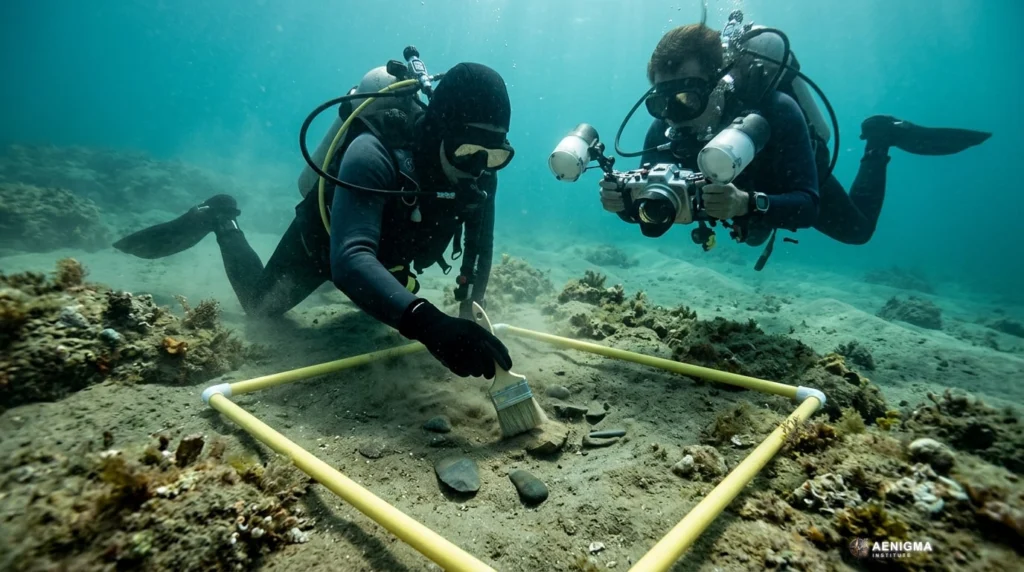
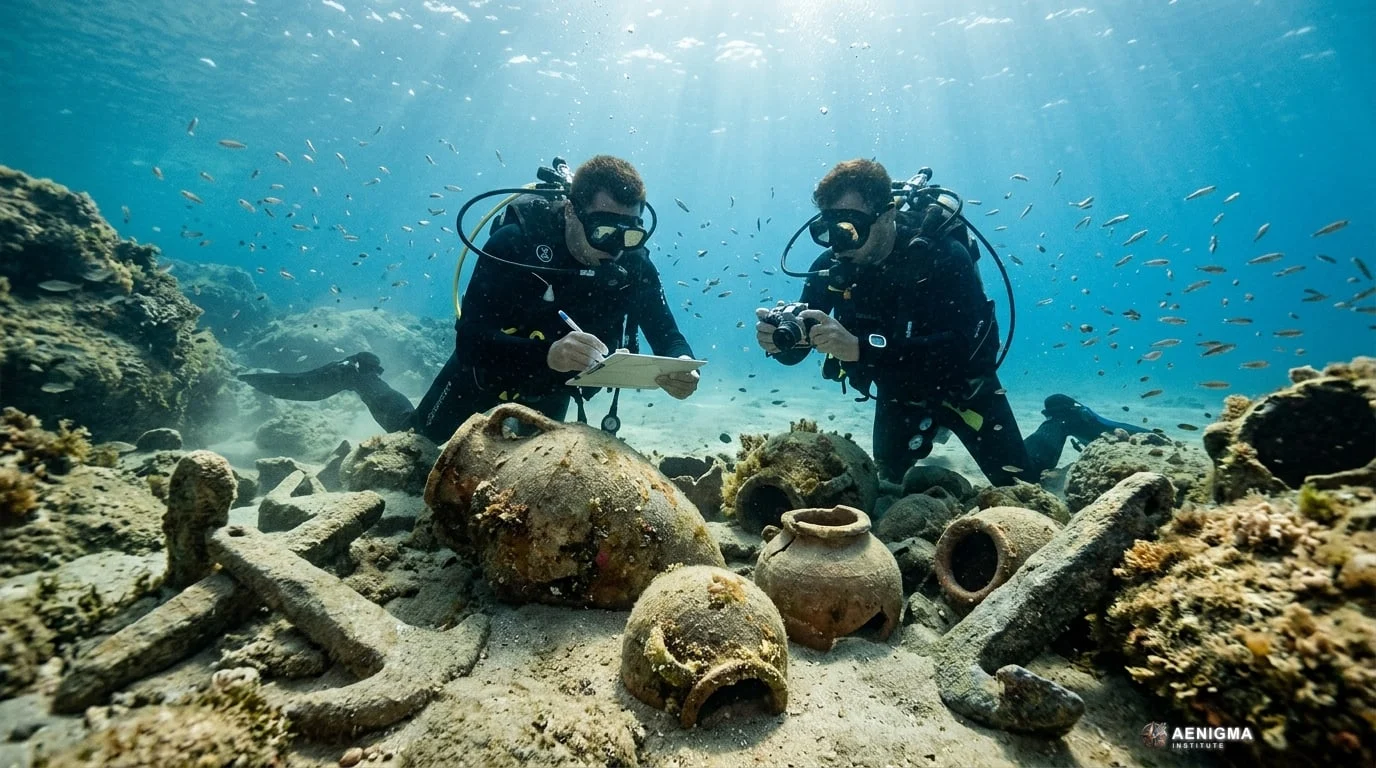
The world's oldest shipwreck has reportedly been located off the coast of Kekova in Turkey, drawing global interest to an underwater assemblage attributed to the Early Bronze Age. Divers and researchers documented stone anchors and more than thirty storage jars resting thirty meters below the surface. The current evidence remains unsubstantiated, awaiting detailed material analysis and excavation to clarify the age and nature of the site.
Why AENIGMA is covering this
The claim of discovering the world's oldest shipwreck touches on fundamental questions about the origins of long-distance trade, navigation, and state-level organization in the ancient world. The third millennium BC was a transformative period marked by the emergence of urban communities, specialized craft production, and intensifying demand for copper, tin, and timber across the Eastern Mediterranean. Verifying an authentic merchant vessel from this formative era would provide invaluable physical evidence for early maritime routes. At the same time, public fascination with underwater exploration often leads to sensationalized claims where preliminary sightings are mistaken for conclusive archaeological proof. Media reports frequently conflate a concentration of ancient jars with an intact, fully preserved ship, generating narratives that leap ahead of empirical verification. Reporting on such discoveries with strict adherence to verified facts helps readers appreciate the true complexity of maritime archaeology. Examining the Kekova assemblage in the context of established sites like Dokos and Uluburun highlights the rigorous methods required to study deep-water heritage. Distinguishing between what divers observe on the seabed and what laboratory analysis subsequently confirms ensures that ancient seafaring is understood through careful science rather than transient headlines.
What happened
International news outlets, including Newsbomb, CNEWS, and Tencent, reported the discovery of what is being presented as the world's oldest known shipwreck off the coast of Kekova in southern Turkey. The underwater site consists of a concentration of ancient storage vessels and heavy stone anchors resting on the seabed at a depth of approximately thirty meters. Observers noted that the ceramic vessels appear characteristic of the Early Bronze Age, leading to suggestions that the wreck dates between 2600 and 2400 BC. The announcement triggered widespread interest across maritime archaeology circles and the general public. Discoveries of prehistoric watercraft are exceptionally rare because organic materials, such as wooden hulls, ropes, and sails, deteriorate rapidly in the warm, oxygen-rich waters of the Mediterranean. When an assemblage containing prehistoric cargo is identified, it immediately challenges existing chronologies and offers a rare window into early maritime technology and trade. The initial reports focused on the sheer antiquity of the site, presenting it as an intact merchant vessel that carried commercial goods along the Anatolian coastline more than four millennia ago. Such declarations quickly circulated through international channels, framing the find as a record-breaking archaeological milestone. However, the initial announcement reflects the early phase of fieldwork, where preliminary underwater observation precedes formal scientific excavation and material testing.
What we know
The site lies at a depth of thirty meters near Kekova, an island and coastal district in Antalya province renowned for its submerged ruins and rich maritime history. Field surveys identified an assemblage that includes over thirty ceramic storage jars alongside several perforated stone anchors scattered across the seabed. This specific combination of heavy anchoring stones and uniform transport jars typically marks the resting place of an ancient seafaring cargo. In underwater archaeology, when ship timber is absent or buried beneath sediments, researchers rely primarily on ceramic typology to determine the chronological framework. Pottery styles, rim profiles, base designs, and manufacturing techniques evolved in identifiable sequences across different regions and periods. The storage jars documented at Kekova have been tentatively linked to ceramic forms known from the Early Bronze Age II and III horizons of the Eastern Mediterranean, roughly spanning 2600 to 2400 BC. Prehistoric wrecks from this era are exceedingly scarce anywhere in the world. Until recently, the assemblage discovered near the Greek island of Dokos in the Argolic Gulf held the reputation as the earliest known underwater cargo site, dating to roughly 2200 BC. Like the Kekova find, the Dokos site preserved no wooden hull structure; its identity as a wreck rests on a dense concentration of hundreds of Early Helladic ceramic vessels and stone grinding tools spread across a rocky incline. Another famous benchmark is the Uluburun wreck, excavated off the coast of Kaş near Kekova, though it dates to the Late Bronze Age around 1300 BC and featured an exceptionally well-preserved hull alongside copper ingots, tin, and royal gifts. The geographic position of Kekova makes it a natural waystation for ancient navigation. The southern coast of Anatolia forms a vital maritime highway linking the Aegean, Cyprus, and the Levantine coast. Capes, sheltered bays, and offshore islands offered shelter from seasonal winds, but sudden storms and treacherous submerged reefs also claimed many vessels navigating close to the rocky shoreline.
What we don't know
Crucial details about the nature and true age of the Kekova site remain unresolved. It is currently unknown whether any portion of the ship's wooden hull survives buried beneath the sand and marine sediment. In Mediterranean conditions, wood-boring organisms such as shipworms (Teredo navalis) consume exposed timber within decades, leaving only ceramic and stone elements visible unless deep mud or sand creates an anoxic protective barrier. The precise chronology of the assemblage is also unconfirmed. Typological comparison of ceramics provides an estimated time window, but without organic samples suitable for radiocarbon dating or stratified excavation layers, establishing a definitive date within two centuries is challenging. Ceramics can remain in use over extended periods, and similar vessel forms occasionally persisted across several generations in coastal Anatolian workshops. It is not yet determined whether the scatter represents a single ship that foundered in a catastrophic wrecking event, a cargo jettisoned by a crew trying to save an endangered vessel, or an accumulation of lost gear and discarded jars at a customary anchorage over decades. Natural sea currents and seabed topography can concentrate debris from multiple events into a single depression, creating an appearance of a unified assemblage where multiple distinct episodes actually took place. The origin of the cargo and the identity of the mariners also remain unknown. Without petrographic analysis of the clay fabric and chemical residue testing of the vessel interiors, specialists cannot yet state whether the jars were manufactured locally along the Lycian coast, produced in the Cyclades, or imported from the Levant.
What is claimed
Media coverage and preliminary public reports claim that this underwater assemblage represents the oldest shipwreck ever discovered anywhere on Earth. By placing the date between 2600 and 2400 BC, the reporting positions the vessel centuries earlier than the Dokos wreck and well over a millennium older than the Uluburun and Cape Gelidonya wrecks. The reports further claim that the assemblage reflects an organized merchant vessel engaged in long-distance maritime commerce during the height of the Early Bronze Age. According to these accounts, the presence of more than thirty storage jars points to a standardized shipment of agricultural surplus, such as olive oil, wine, or grain, carried alongside raw materials between early urbanizing coastal centers. Some narratives describe the find as an intact ship resting on the sea floor, evoking an image of a fully preserved vessel rather than a scatter of durable artifacts. These claims suggest that the Kekova discovery will revolutionize our understanding of early bronze-smelting supply networks and seafaring capabilities in the Eastern Mediterranean.
What is verified
At present, the only directly verified fact is the presence of an underwater artifact scatter off the Kekova coast at a depth of thirty meters, comprising over thirty ceramic storage jars and several stone anchors. The physical existence of these artifacts on the seabed has been documented through underwater visual surveys and photographic recording. The international media accounts reported by Newsbomb, CNEWS, and Tencent confirm that this find has been announced and promoted publicly under the banner of the world's oldest shipwreck. However, the scientific evidence supporting the claim remains formally classified as unsubstantiated, and the explanation status stands as insufficient data. No excavated hull timbers have been recovered, documented, or dated. No radiocarbon determinations from secure archaeological contexts have been released. While the stone anchors and ceramic forms exhibit characteristics consistent with Early Bronze Age assemblages known from land excavations in Anatolia and the Aegean, formal confirmation that they constitute a single ship from the mid-third millennium BC requires comprehensive archaeological fieldwork.
Competing explanations
- Possible: The vessel is identified as an Early Bronze Age merchant vessel (c. 2600–2400 BC) based on typological analysis of over 30 storage jars and stone anchors found at a depth of 30 meters off Kekova.
What would change our assessment
The assessment of the site would shift fundamentally if systematic underwater excavation uncovers preserved structural wood beneath the seabed. If surviving keel timbers, planking, or mortise-and-tenon joinery are found, they would confirm beyond doubt that the artifact scatter represents a true vessel rather than jettisoned ballast or an anchorage dump. Furthermore, intact wood or plant fibers would permit high-precision accelerator mass spectrometry radiocarbon dating, establishing a firm chronological anchor. Petrographic and geochemical analyses of the ceramic fabric would also significantly alter the evaluation. By examining thin sections of the pottery under a polarizing microscope and testing trace elements through X-ray fluorescence, specialists could match the clay recipes to specific geological formations in Anatolia, Crete, or the Levant. Identifying the production center of the jars would determine whether the vessel operated within a local cabotage network or engaged in interregional trade. Organic residue analysis using gas chromatography-mass spectrometry on scrapings from the interior walls of the jars would verify the cargo's composition. Detecting biomarkers for beeswax, tartaric acid, or fatty acids would demonstrate whether the containers held wine, olive oil, animal fats, or tree resin. Finally, a complete photogrammetric map of the seabed, documenting the spatial distribution of every jar, stone weight, and anchor, would allow archaeologists to reconstruct the wrecking process and assess the integrity of the site.
Sources
Protocol AENIGMA-EF-0.1