Evidence: Unsubstantiated Explanation: Not enough data yet
Viking Coins in Norway: What the Rare Royal Penny Really Shows
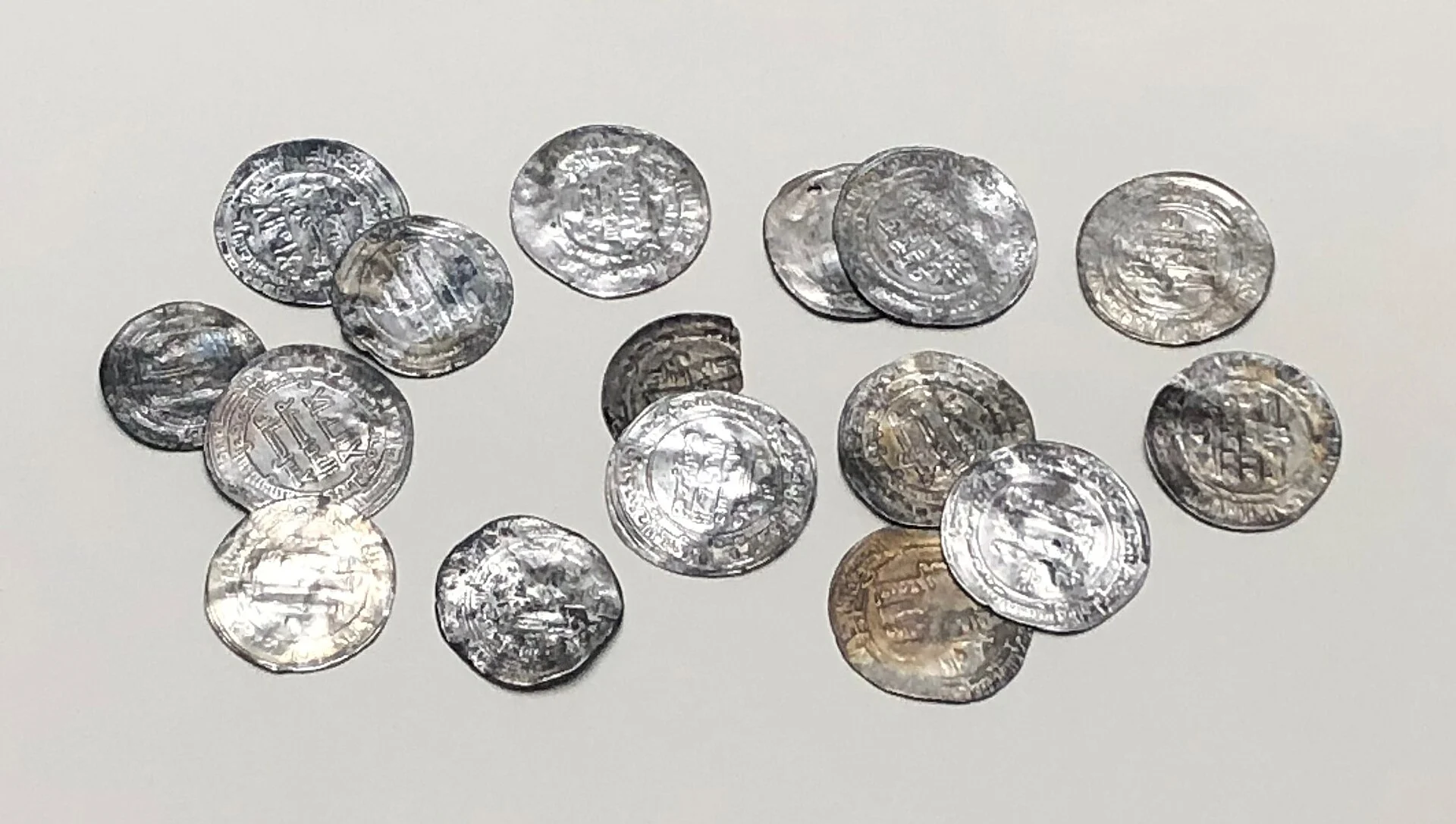
Viking Age coins from a massive hoard in Norway include an exceptionally rare silver penny linked to King Olaf II Haraldsson, according to reporting by Smithsonian Magazine. The find reopens questions about how early Scandinavian monarchs asserted royal authority and adopted European monetary traditions prior to national minting systems. Current numismatic evaluations classify the precise production circumstances as unsubstantiated, leaving crucial historical details open to further research.
Why AENIGMA is covering this
AENIGMA covers the Mørstad hoard to examine how archaeological evidence illuminates the formation of early states without relying on romanticized legend. Scandinavian numismatics provides crucial insight into the economic transition from an unminted bullion economy—where silver was weighed and cut—to a regulated monetary system supervised by central rulers. Investigating these shifts allows readers to understand how political power, religious changes, and trade systems intersected during the eleventh century. The rare Olaf penny illustrates the complex boundary between raw trade silver and royal prestige goods. Before King Harald Hardrada established a systematic, ubiquitous domestic coinage system later in the eleventh century, Scandinavian rulers experimented intermittently with minting. Documenting the survival of these rare interim issues clarifies the experimental nature of early medieval statecraft in Northern Europe. Furthermore, focusing on verified material aspects such as knife cuts grounds historical discussions in real human behavior. These small physical traces reveal how ordinary traders navigated volatile monetary environments, relying on simple practical tests to protect themselves against fraud. Tracking the rigorous investigation of such finds ensures that public understanding remains rooted in observable evidence rather than unverified speculation.
What happened
Specialists examining a massive assemblage of approximately 5,500 Viking Age silver coins recovered in Norway identified an extraordinarily scarce penny associated with King Olaf II Haraldsson. Smithsonian Magazine reported that researchers view the single specimen as a find of major historical significance due to its extreme scarcity in Scandinavian contexts. The piece formed part of an extensive accumulation known as the Mørstad hoard, which was buried during the eleventh century. The discovery immediately drew international attention because domestic Norwegian coinage from the early eleventh century is notoriously limited. While foreign silver flowed extensively across northern trade networks during this era, local royal issues were produced only intermittently. Identifying an intact silver penny carrying royal attribution provides a direct glimpse into early administrative experiments preceding the establishment of permanent domestic mints. The recovery of the wider coin parcel represents one of the most substantial monetary assemblages documented from medieval Norway. Curators and specialists are now conducting detailed physical evaluations of each individual coin to trace its origin, weight standard, and metallurgical composition. Within that broader cataloging effort, the single Olaf penny stands out as a distinct object requiring dedicated study. The hoard itself entered modern collection facilities under standard heritage protocols governing archaeological items. Controlled laboratory inspection allows numismatists to analyze surface wear, secondary markings, and alloy consistency under magnification. These preliminary steps ensure that the artifact is protected from environmental degradation while establishing the foundational baseline for subsequent historical analysis.
What we know
The physical hoard contains roughly 5,500 silver pieces, reflecting the diverse currency streams that moved across Northern Europe during the late Viking Age. Hoards of this period typically contain a blend of Anglo-Saxon pennies, German deniers, Islamic dirhams, and fragmentary bullion known as hacksilver. Among these thousands of specimens, numismatists confirmed the presence of a penny bearing iconography associated with the reign of King Olaf II Haraldsson, who ruled Norway from 1015 until 1028. Microscopic examination of the coin surface revealed distinct knife cuts along the edges, commonly known to numismatists as peck marks. In early medieval silver economies, recipients frequently nicked coins with small knives to test the purity of the metal and confirm that the core was solid silver rather than plated base metal. These deliberate test marks establish that the penny circulated actively as everyday currency within commercial transactions rather than resting as a pristine ceremonial piece. Chronological indicators place the final deposition of the Mørstad hoard in the 1040s. The presence of coin types struck through the opening decades of the eleventh century aligns with broader patterns of hoard formation across the North Sea region. The Olaf penny had already spent years or decades moving through mercantile networks before being concealed alongside the larger assemblage. Archaeological specialists rely on strict cataloging criteria when handling numismatic hoards of this magnitude. Each piece is weighed, photographed, and measured to identify die linkages, which show whether multiple coins came from the same engraved stamp. In the case of the rare Olaf penny, comparative samples are so scarce that finding matches in existing Scandinavian or British reference catalogs remains a rare occurrence.
What we don't know
The exact geographic location of the mint that struck the coin remains unconfirmed. While the penny bears markings associating it with Olaf Haraldsson, historians do not have contemporary administrative records detailing active royal workshops in Norway during his reign. It is unknown whether the coin was produced by itinerant Anglo-Saxon moneyers operating briefly in Norway or manufactured abroad under royal commission. The total volume of this coinage originally produced remains entirely unknown. Because early Norwegian issues survive in such small numbers, researchers cannot determine whether the penny was part of a regular, short-lived currency issue or an experimental demonstration of prestige that never achieved broad distribution. Without surviving dies or documentary records, estimating the scale of the original issue relies on incomplete statistical models. The personal motivations behind the concealment of the Mørstad hoard also remain inaccessible. Hoards could be deposited during times of military threat, hidden as long-term family savings, or placed in the earth as dedicated votive offerings. Archaeologists cannot reconstruct the individual choices or emergencies that prevented the owner from recovering such a substantial fortune during the eleventh century. Furthermore, the precise chain of custody between the coin’s initial striking in the 1020s and its final deposition in the 1040s cannot be traced. The coin could have changed hands hundreds of times across different regional markets, or it may have been held within an elite treasury before entering broader circulation. The physical peck marks confirm that it was handled and verified by merchants, but its exact itinerary remains completely unrecorded.
What is claimed
One prevailing interpretation suggests that the coin was minted under King Olaf II Haraldsson between roughly 1024 and 1028 as a deliberate assertion of Christian royal authority and European-style statehood. Under this view, the ruler sought to emulate contemporary English and continental monarchs by producing domestic coinage bearing his name and Christian imagery. Minting coins served as an ideological statement of sovereign control over territory, faith, and commerce, demonstrating that Norway was adopting Western political models. Proponents of this view propose that the coin was meant to function within a standardized monetary framework, even if domestic infrastructure was still rudimentary. The introduction of Christian symbols on currency was a common strategy used by newly converted rulers across Scandinavia to reinforce the religious transformation of their realms. According to this explanation, the penny represents an intentional milestone in the transition toward institutionalized statehood before the king lost power in 1028. Some historical evaluations also suggest that the hoard itself reflects the volatile political conditions of mid-eleventh-century Norway. The period between Olaf Haraldsson’s reign and the accession of Harald Hardrada witnessed shifting alliances, dynastic competition, and frequent military movements. Under this narrative, hoarding silver was a direct response to regional insecurity, preserving wealth that would later be forgotten or abandoned due to conflict.
What is verified
Verified facts are confined to the material attributes of the coin and the documented composition of the hoard. The Mørstad assemblage contains approximately 5,500 pieces of silver, recovered and cataloged under formal museum custody. The specimen in question exhibits physical characteristics, inscriptions, and artistic motifs corresponding to known types associated with King Olaf Haraldsson. The existence of the coin and its presence within the buried assemblage are documented physical realities. The presence of knife cuts across the coin's surface is independently confirmed through optical examination. These peck marks represent authentic behavioral evidence from the Viking Age, demonstrating that the object was subjected to standard mercantile verification practices. This confirms that the coin was treated as commercial silver bullion and traded on the basis of its metal quality rather than being preserved as an untouchable sacred relic. Chronological boundaries for the hoard’s burial are supported by the youngest coin types present within the broader parcel, which point securely to the 1040s. The physical integrity of the hoard establishes that early eleventh-century coins remained in active circulation alongside later domestic and foreign issues for several decades. Beyond these verified physical traits and baseline chronological ranges, broader historical reconstructions regarding the exact intentions of King Olaf remain provisional interpretations.
Competing explanations
- Possible: The coin was minted under King Olaf II Haraldsson between roughly 1024 and 1028 as an assertion of Christian royal authority and European-style statehood before circulating and being deposited with the Mørstad hoard in the 1040s.
What would change our assessment
A definitive reassessment of the coin’s origins would require the discovery of matching dies or die-linked specimens in secure archaeological layers. If future excavations reveal an eleventh-century workshop site with discarded crucibles, die tools, or coin blanks in a known administrative center, specialists could confirm the presence of domestic minting infrastructure. Such evidence would transform the interpretation from a plausible hypothesis into a verified historical fact. Advanced metallurgical profiling could also reshape current understandings. Non-destructive X-ray fluorescence or lead isotope analysis comparing the penny's alloy with regional ore sources and contemporary European currencies might identify the origin of the silver. If the trace elemental profile matches specific Anglo-Saxon or German mining regions, researchers could trace the raw material networks that supplied Olaf’s moneyers. Conversely, if compositional analysis reveals metal profiles or die characteristics identical to known foreign mints, the hypothesis of domestic Norwegian production would face severe challenges. If new comparative finds demonstrate that similar coins were produced outside Norway as imitation issues by regional traders, the attribution to an official royal program would need to be substantially revised. Discovery of contemporary textual sources or charter references from the eleventh century would likewise provide critical clarification. While documentary survival from this era in Norway is minimal, any contemporary record mentioning currency regulation, taxation in coin, or royal moneyers would clarify whether Olaf's issue was an organized administrative policy or an isolated symbolic gesture.
Sources
- Smithsonian Magazine (supports)
Protocol AENIGMA-EF-0.1