Evidence: Unsubstantiated Explanation: Not enough data yet
Medieval English Graves and What High Lead in Teeth Really Shows
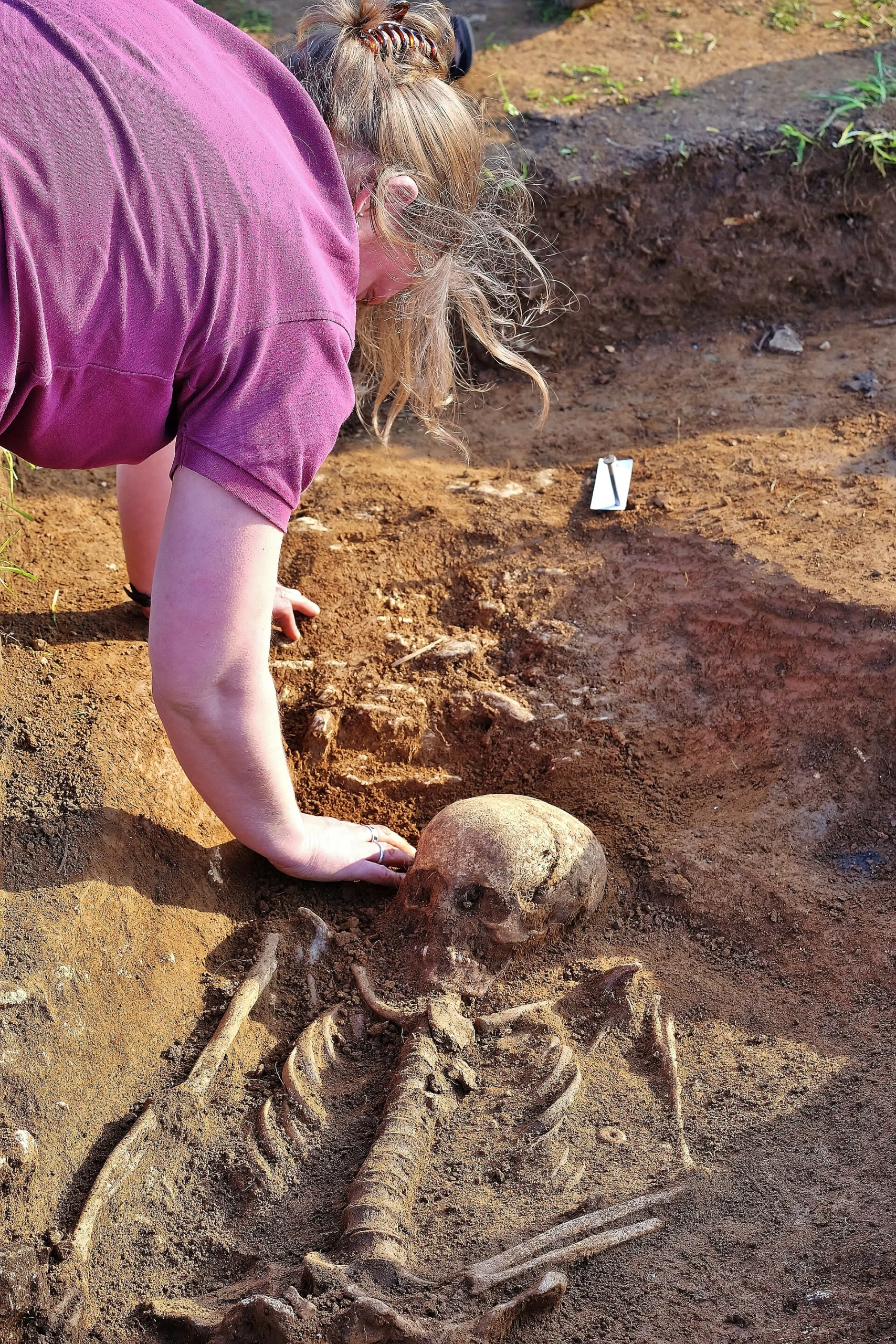
Medieval English skeletons have drawn widespread attention after reports revealed elevated concentrations of lead preserved in their dental enamel. The chemical signatures reflect early industrial exposure during childhood, pointing toward renewed post-Roman metalworking activities while also indicating sharp social divides between armed elites and working communities. While media coverage has highlighted the scale of this toxic exposure, broader archaeological confirmation across different regions remains incomplete.
Why AENIGMA is covering this
AENIGMA covers this topic because it demonstrates the critical intersection of modern bioarchaeological science and long-standing historical questions. For decades, debates concerning the post-Roman economy relied heavily on fragmentary historical texts and sparse material culture, leaving the scale of technological and industrial continuity unresolved. By analyzing microscopic elemental traces trapped inside ancient human teeth, researchers can interrogate the physical reality of the past with quantitative rigor. The findings also emphasize the deep antiquity of human environmental impacts and occupational health disparities. Public perception frequently assumes that significant environmental contamination began with the modern Industrial Revolution, viewing ancient and medieval eras as periods of pristine ecological balance. Demonstrating that extractive metallurgy dispersed dangerous levels of toxic pollutants through early medieval communities challenges popular assumptions about historical environments. Furthermore, the clear correlation between mortuary status and lead accumulation highlights how inequality operated on a biological level long before modern labor regulations. Reporting on these investigations ensures that our audience receives a balanced, evidence-grounded assessment of how past societies organized labor, consumed resources, and bore the physical consequences of their industrial endeavors.
What happened
Medieval English burials have revealed unexpected geochemical evidence regarding the physical environment and daily exposure of communities living centuries after the end of Roman administration. Analytical reporting published by Phys.org highlighted research examining human skeletal remains, where scientific investigation detected high accumulations of lead sealed inside dental enamel. Rather than reflecting an isolated incident or localized contamination, the chemical traces suggest that toxic airborne particulates and metallurgical byproducts entered the human food web and respiratory pathways across notable segments of the population. The historical context surrounding early medieval Britain involves complex cultural and economic transitions. Following the collapse of imperial Roman infrastructure, large-scale industrial endeavors such as deep-vein mining, organized quarrying, and extensive smelting networks were widely thought to have experienced substantial downturns. The detection of elevated toxic metal signatures within populations from subsequent centuries suggests that extractive metallurgy, particularly the mining and smelting of galena ores for silver extraction and lead production, experienced a meaningful revival. Media coverage rapidly framed these results around the sheer burden of heavy metal exposure carried by everyday individuals. The presence of toxic metals embedded in human remains captures broad public curiosity because it connects abstract economic histories directly to the lived biology of past individuals. However, understanding the exact geographic reach and societal implications requires examining how these metals were incorporated into physical human tissues and what bioarchaeologists can reliably deduce from skeletal chemistry.
What we know
Archaeological science relies on tooth enamel as one of the most reliable and stable archives for reconstructing past human environments. Unlike skeletal bone tissue, which continuously remodels, resorbs, and regenerates throughout a person's life to repair micro-damage and maintain calcium homeostasis, dental enamel does not remodel once mineralization is complete. The permanent teeth that develop during childhood capture the trace elements, dietary signatures, and isotopic ratios present in water, air, and nutrition precisely during those formative developmental years, permanently locking them in place. Because permanent tooth enamel forms during early life and remains biochemically inert thereafter, it functions as a pristine childhood biomarker. Environmental toxicologists and bioarchaeologists examine these mineral matrices using mass spectrometry and micro-sampling techniques to quantify elemental concentrations. When lead is ingested or inhaled, its divalent cations substitute for calcium within the hydroxyapatite crystal lattice of forming teeth. A high concentration of lead inside adult enamel consequently provides an immutable chronological anchor, proving conclusively that the individual suffered heavy metal intake during early developmental years rather than acquiring it during late adulthood or through post-mortem burial diagenesis. The analytical data also reveal clear patterns of social stratification across the examined populations. Bioarchaeological analysis demonstrates that individuals buried with high-status grave goods and specialized weapons consistently exhibited markedly lower lead concentrations in their tooth enamel than non-elite counterparts. Mortuary customs in early medieval cemeteries frequently distinguished individuals through specific burial inclusions, and these social distinctions directly correlate with the biological record of industrial pollutant absorption. This biochemical disparity suggests that privileged individuals may have lived further away from smelting operations, consumed cleaner water sources, or avoided direct physical involvement in the labor-intensive processing of metal ores. In contrast, non-elite community members experienced disproportionately high physiological burdens. The skeletal record thus captures physical manifestations of economic role and social standing preserved across centuries.
What we don't know
Despite the compelling biochemical data, significant gaps remain regarding the precise logistical and industrial landscape of this period. The available evidence does not specify the exact geographic locations of the mines, processing hearths, or smelting furnaces responsible for dispersing lead particulates across the surrounding landscape. Historical metallurgical landscapes often leave subtle surface traces, particularly when subsequent agricultural activity or later industrial developments have disturbed early medieval work areas. It is also not known how widely this phenomenon was distributed across the British Isles as a whole. While specific cemeteries yielded human remains bearing pronounced lead signatures, bioarchaeologists do not yet possess uniform geochemical maps covering every contemporary community. Whether these high concentrations were localized phenomena tied to specific regional drainage basins and prevailing wind corridors, or whether atmospheric lead deposition affected the broader island population evenly, cannot be established from the current data. Furthermore, the precise vectors of exposure remain partially unresolved. While smelting fumes and particulate emissions represent prime candidates, domestic pathways such as lead-glazed ceramics, pewter drinking vessels, cosmetic pigments, and contaminated cistern water systems have caused lead poisoning in various historical contexts. Pinpointing the exact proportion of contamination derived from airborne industrial fumes versus contaminated culinary tools requires deeper contextual data that current skeletal samples cannot alone supply. The health outcomes experienced by these individuals also cannot be fully reconstructed from elemental counts alone. Although modern clinical medicine understands the severe cognitive and neurological harm caused by lead exposure during childhood, ancient skeletal remains only document the physical accumulation of the element. Establishing how chronic toxicity shaped individual lifespans, morbidity rates, and community vitality requires comprehensive demographic and paleopathological frameworks that are not yet available.
What is claimed
Public reports and news summaries have widely emphasized the notion that early medieval England was unexpectedly poisoned by intensive metalworking on a scale rivaling classical industrial peaks. Media accounts described populations carrying enormous burdens of toxic metals, presenting the findings as proof that ordinary medieval citizens lived in an environment saturated with metallurgical pollution. Among researchers evaluating the analytical data, a prominent competing explanation suggests that these high concentrations of lead in permanent childhood tooth enamel document active post-Roman mining and smelting operations starting from the mid-seventh century onward. According to this framework, the biological evidence provides indirect documentation of early medieval industrial recovery, illustrating an expanding economy that mined local ores to produce coinage, roofing materials, and ecclesiastical luxury goods. Some popular interpretations extended this argument further, speculating that widespread cognitive impairment and chronic illness from environmental poisoning may have shaped broader social dynamics and cultural decisions during this historical era. While compelling as narrative history, such assertions stretch beyond what direct isotopic and elemental measurements can verify on their own.
What is verified
What stands as verified is the physical presence of elevated lead concentrations within the permanent tooth enamel of specific early medieval individuals, as reported through scientific media coverage. The biochemical principle underlying this finding is entirely established: dental enamel does not remodel after mineralization, ensuring that any lead incorporated into the hydroxyapatite matrix reflects real childhood exposure rather than post-depositional contamination or late-life intake. It is also verified that the data show a distinct bioarchaeological correlation between grave wealth and toxic burden. Individuals interred alongside weaponry and high-status mortuary goods demonstrate lower lead levels than individuals buried without such elite markers. This differential accumulation provides demonstrable physical evidence that social position influenced environmental vulnerability in medieval society. What remains unverified is the total geographic extent of this toxic exposure across early Britain and the assumption that all detected lead originated solely from local smelting installations. The overarching hypothesis that these values prove a nationwide resumption of industrial-scale mining from the mid-seventh century remains a plausible interpretation rather than a fully verified fact.
Competing explanations
- Possible: High concentrations of lead in permanent childhood tooth enamel document active post-Roman mining and smelting operations from the mid-seventh century onward.
What would change our assessment
The current evaluation of this archaeological problem would change substantially with the recovery and rigorous excavation of undisturbed industrial sites dating securely to the early medieval period. Discovering operational furnace installations, slag heaps, casting debris, and associated habitation deposits with coherent stratigraphic sequences would directly connect human biological markers with tangible manufacturing facilities on the ground. Applying high-resolution lead isotope ratio analysis across human remains, ore sources, and historical artifacts would also dramatically advance scientific clarity. Lead possesses unique isotopic signatures depending on the geological age and formation of the ore deposit from which it was extracted. Matching the isotopic ratios found within the dental enamel of afflicted individuals directly to specific English ore fields, such as those in the Peak District, the Mendips, or the northern Pennines, would conclusively verify the regional origins of the pollutant. Expanding systematic sampling to broader skeletal series across diverse regional geographies and chronological horizons would clarify whether these toxic burdens were pervasive or localized. If comparative analyses of contemporary populations from non-mining regions demonstrate negligible lead burdens, researchers could rule out generalized atmospheric deposition and focus strictly on local environmental contamination. Conversely, finding uniform exposure across all territories would necessitate re-evaluating the broader atmospheric reach of early medieval industry.
Sources
- Phys.org (supports)
Protocol AENIGMA-EF-0.1