Evidence: Unsubstantiated Explanation: Not enough data yet
Kültepe: what the Hellenistic mosaic and building layers really show
Excavations at Kültepe reported by Ta Nea have revealed a preserved mosaic floor alongside four successive Hellenistic architectural layers uncovered by a joint Turkish-South Korean team. The discovery draws fresh attention to the settlement's later life following its Bronze Age peak as an international trading hub. Because technical stratigraphic analyses and material dating reports have not yet been published in full, the wider historical conclusions remain unsubstantiated.
Why AENIGMA is covering this
Reporting on this discovery provides vital balance to the public understanding of Anatolian archaeology, which often categorizes famous ancient sites through a single historical era. Kültepe’s name is universally associated with Bronze Age merchants and archaic cuneiform texts, leaving its late antique, classical, and Hellenistic manifestations largely unfamiliar to wider audiences. Tracing its multi-period continuity deepens public appreciation for the resilience of ancient communities over millennia. Covering preliminary reports with care also demonstrates how rigorous fieldwork operates before international consensus is reached. Distinguishing between the tangible discovery of stone walls and mosaic pavements and the speculative interpretations of political history protects readers from sensationalized accounts. Following the ongoing field research of the Turkish-South Korean mission allows observers to witness how modern archaeological science systematically documents, dates, and contextualizes our shared material heritage.
What happened
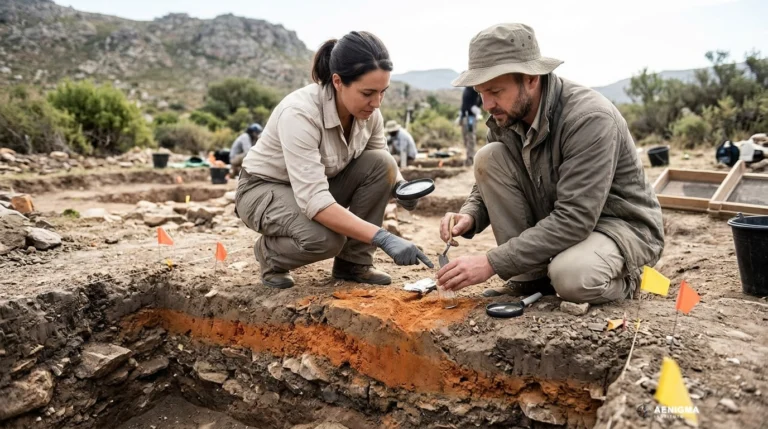
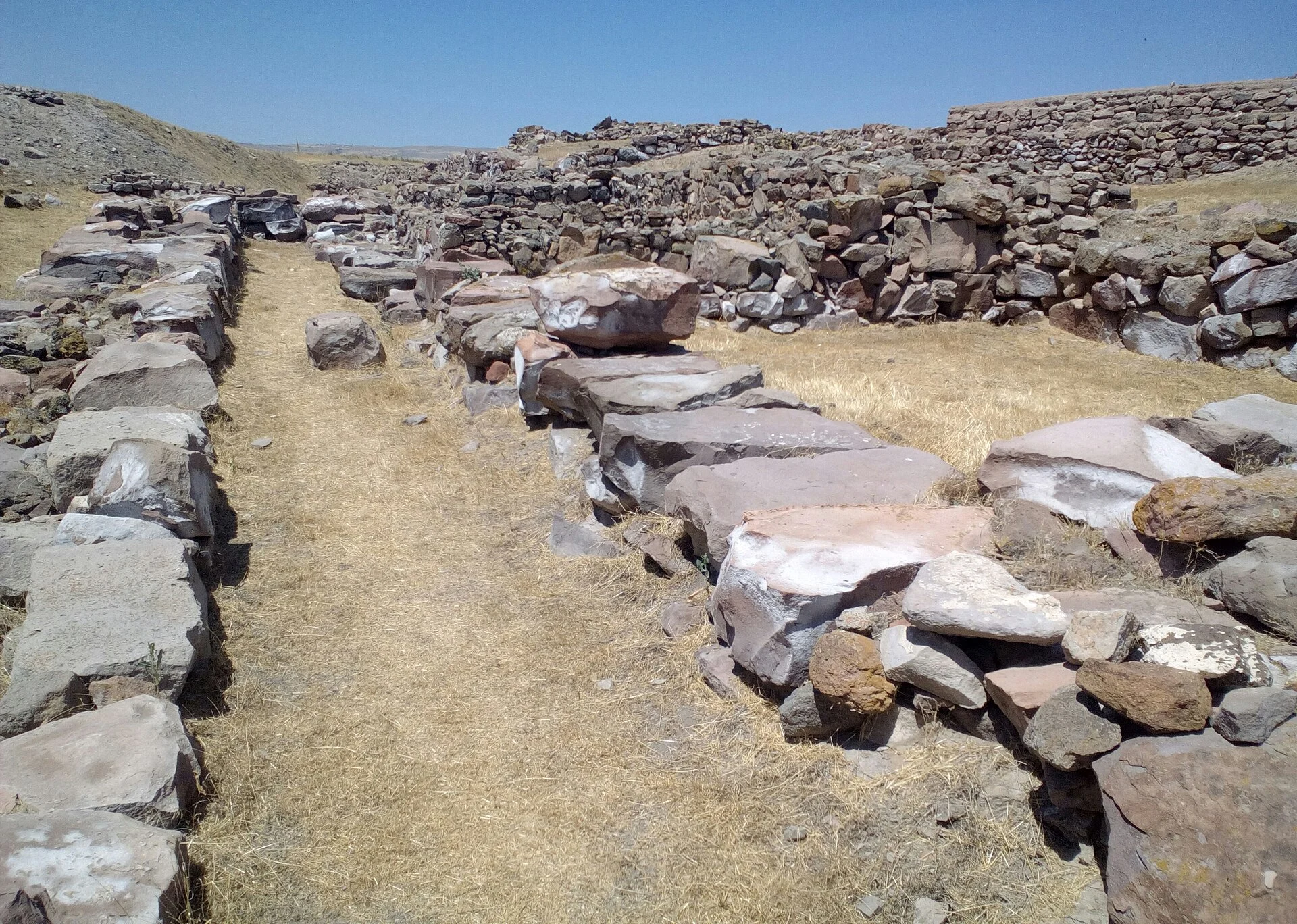
Archaeological fieldwork at the ancient mound of Kültepe in central Turkey has exposed a mosaic floor alongside four successive architectural strata dating to the Hellenistic era, as reported by Greek newspaper Ta Nea. The discovery was brought to light through an ongoing collaborative initiative between Turkish and South Korean researchers investigating the multi-period stratigraphy of the site. Excavators identified structural remains showing sequential occupation phases spanning the centuries between the collapse of the Persian Empire and the consolidation of Roman authority. The uncovered mosaic displays deliberate structural preparation, featuring clear foundation layers beneath the decorative surface that illustrate the regional adoption of classical paving traditions. Rather than representing an isolated domestic renovation, the architectural remains indicate four consecutive construction horizons, where walls, floor surfaces, and circulation spaces were repeatedly rearranged over time. The team’s preliminary documentation records structural adaptations that suggest vibrant civic or administrative activity during a period previously overshadowed by the site’s older history. Following the public announcement of the finds, attention focused on the rare architectural continuity documented within this part of the settlement. While Kültepe is celebrated across world archaeology for its second-millennium BC merchant quarters, these Hellenistic remains demonstrate substantial urban vitality centuries after the decline of the Bronze Age kingdoms. Excavators have stabilized the newly cleared architectural elements and pavement sections to protect the exposed materials from weathering while comprehensive recording continues across the sector.
What we know
Kültepe, located near modern Kayseri, holds a monumental place in Near Eastern archaeology as the ancient city of Kanesh and the central hub of Old Assyrian merchant colonies known as the karum. During the early second millennium BC, thousands of cuneiform clay tablets were recorded here, preserving rich administrative, legal, and economic transactions that established the site as an indispensable benchmark for Bronze Age history. Yet the prominent tell and surrounding lower town were not abandoned when those early trade networks shifted, serving instead as a living landscape through Hittite, Phrygian, Persian, and later Greco-Roman cultural phases. The Hellenistic period in central Anatolia began in the late fourth century BC with the campaigns of Alexander the Great and the subsequent establishment of successor kingdoms, including the regional rule of the Kingdom of Cappadocia. During these centuries, local Anatolian populations engaged extensively with Mediterranean architectural conventions, adopting Greek architectural forms, civic institutions, and luxury crafts. While coastal cities in Ionia and the Aegean possess abundant Hellenistic remains, deep inland Anatolian plateaus offer fewer well-preserved urban architectural sequences from this transition. Mosaic floors from this cultural horizon represent a sophisticated technological craft requiring meticulous sub-floor engineering. Typically constructed using a layered foundation—starting with a rough stone bed, followed by lime-rich mortar, fine setting beds, and carefully placed tesserae or pebbles—these pavements served elite residential or public gathering spaces. Finding four distinct, superposed architectural levels directly associated with such flooring provides concrete evidence that human activity at Kültepe was recurrent, highly organized, and invested in durable material culture during the final centuries BC.
What we don't know
Important details regarding the absolute timeline and specific historical nature of these Hellenistic strata remain unresolved in current records. It is not yet known whether the four sequential construction levels correspond to sudden political shifts, such as military transitions within the Hellenistic dynasties, or represent gradual, localized renovations by indigenous Cappadocian elites over multiple generations. Without published radiocarbon series or closely dated numismatic profiles from the sealed floor deposits, the chronological boundaries of each level cannot be settled with certainty. The exact social function of the building containing the mosaic floor also remains unidentified. Excavators have not published sufficient structural plans or diagnostic artifact assemblages to confirm whether the complex served as a wealthy private residence, an administrative office, a guest house, or a civic sanctuary. Furthermore, the overall geographic extent of the Hellenistic settlement across the wider mound is still being assessed, leaving open questions about the density and demographics of the town during this phase. Technical questions regarding the material origins of the pavement also require further investigation. It is currently unknown whether the stones, tesserae, and binding limes were gathered from nearby alluvial deposits and local quarries or brought from Mediterranean coastal networks. Until petrographic and compositional analyses of the mortars and decorative elements are completed, the commercial logistics behind the pavement's installation cannot be determined.
What is claimed
Media coverage and preliminary team descriptions present the discovery as an extraordinary archaeological treasure that fundamentally redefines the post-Bronze Age importance of Kültepe. Accounts highlight the sequence of four continuous building phases as proof that the city remained an influential, prosperous urban centre throughout the Hellenistic epoch rather than a diminished rural outpost. Commentators also suggest that the mosaic floor and associated buildings reflect high-status spatial planning directly connected to royal Cappadocian administration. In these interpretations, the consecutive reconstructions reveal an unbroken tradition of elite patronage, suggesting Kültepe held a central civic position in regional trade and politics right up to the onset of the Roman Empire. These broader historical claims, while plausible, currently exceed the primary physical evidence made accessible to the wider scientific community.
What is verified
Physical investigations have verified the presence of an in situ mosaic floor built over prepared sub-floor layers at Kültepe, as well as the immediate architectural presence of four identifiable structural strata. The joint Turkish-South Korean field mission has documented these superposed stone foundations, occupational levels, and floor matrices through standard field excavation procedures. The stratigraphy visibly demonstrates repeated rebuilding campaigns within the same sector of the mound. Verified field documentation also establishes that the architectural phases belong to the Hellenistic cultural horizon, characterized by diagnostic building techniques and ceramic traditions recognizable to regional specialists. The physical integrity of the floor demonstrates intentional structural preparation and skilled workmanship consistent with late Hellenistic paving practices in the eastern Mediterranean world. Beyond these material observations, broader historical syntheses regarding regional administrative centrality remain preliminary interpretations.
Competing explanations
- Possible: The mosaic floor and four successive Hellenistic architectural strata represent continuous occupation and spatial restructuring of Kültepe during the Hellenistic period (323–30 BC).
What would change our assessment
The evidentiary status of the discovery would be significantly strengthened by the publication of an exhaustive stratigraphic monograph detailing each architectural layer. Critical material proof would include datable coins recovered from sealed floor matrices, diagnostic pottery groups found in primary destruction or construction fills, and high-resolution radiocarbon determinations from secure organic samples. Such data would establish precise calendar horizons for each of the four building phases, resolving ambiguity surrounding the pace of the reconstructions. Comprehensive architectural plans mapping the entire building complex would clarify its function within the Hellenistic settlement. If further clearance reveals public administrative features, dedicatory inscriptions, or monumental peristyle courtyards, the claim of high-status civic importance would gain solid physical backing. Conversely, if future work shows the mosaic to be an isolated private renovation within an otherwise sparse village layout, assessments of the site's Hellenistic scale and prominence would require downward revision.
Sources
- ΤΑ ΝΕΑ (supports)
Protocol AENIGMA-EF-0.1