Evidence: Insufficient data Explanation: Not enough data yet
Early human ochre: what 60,000-year-old eland proteins really show
Type I collagen peptides from eland have been detected within a 60,000-year-old ochre sediment layer in South Africa, according to reports published in Proceedings of the Royal Society B: Biological Sciences and Archaeology Magazine. The find provides direct biochemical evidence of animal matter preserved alongside mineral pigments in a warm Middle Stone Age environment. Current data confirm the presence of the proteins, but whether they represent deliberate compound paint recipes or incidental residue from hide processing remains undetermined.
Why AENIGMA is covering this
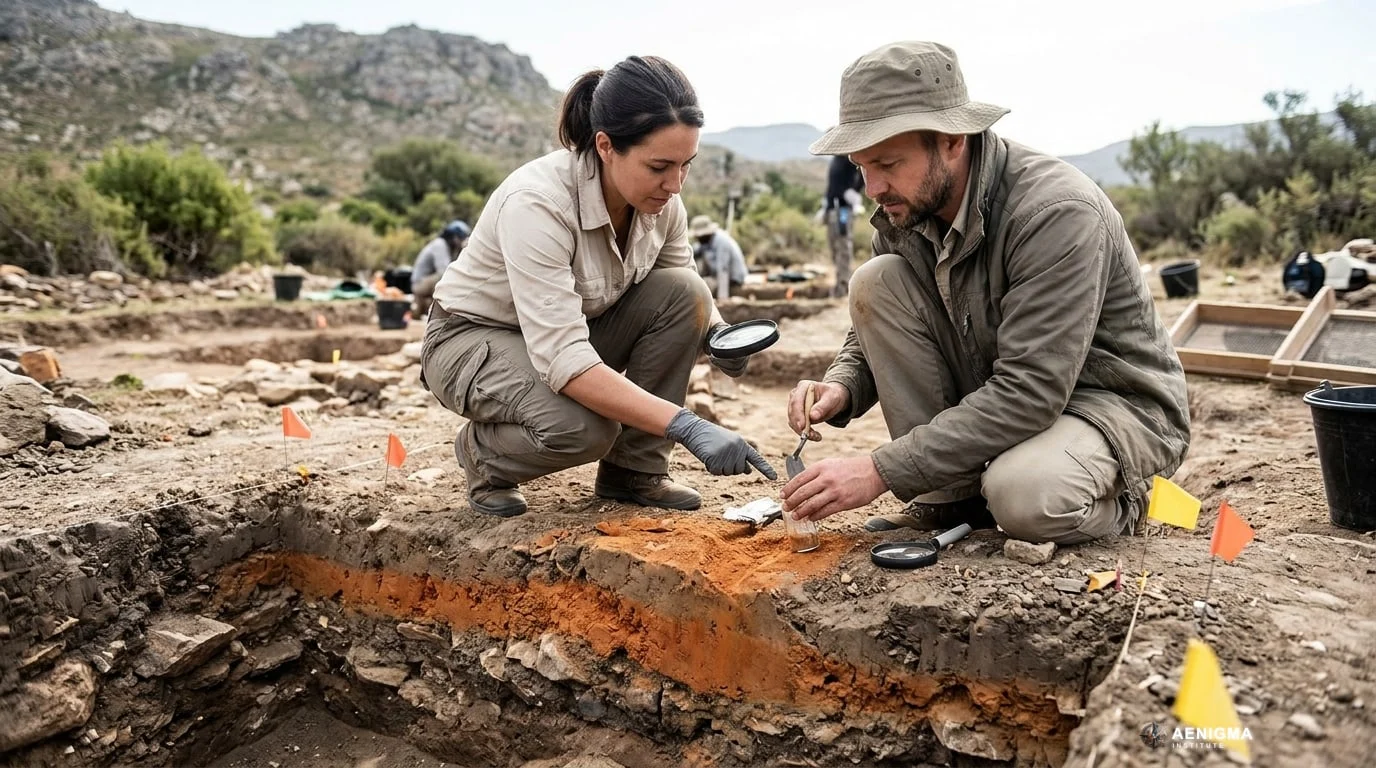
AENIGMA covers this discovery because it marks an important step forward in the study of early human material culture and archaeological science. Methodologically, retrieving identifiable animal proteins from 60,000-year-old warm-climate sediments challenges long-standing assumptions about the limits of organic survival in Middle Stone Age archaeology. While ancient DNA is rarely preserved in such thermal settings, paleoproteomics offers a durable scientific window into early organic technologies. The development of complex compound materials is considered a key behavioral indicator in human cognitive evolution. Knowing whether Middle Stone Age foragers engineered multi-component recipes with animal products illuminates the technical planning and raw-material knowledge of our ancestors. Covering the ongoing debate allows readers to follow how modern biomolecular tools transform archaeological inquiry from broad speculation into verifiable physical observation. Finally, this case highlights the vital scientific boundary between direct physical observation and behavioral interpretation. The identification of eland collagen is an empirical biochemical fact, yet the human actions that created the residue remain subject to rigorous testing. By reporting the evidence accurately without overstating conclusions, the publication upholds an evidence-first understanding of human prehistory.
What happened
Biochemical testing of an ochre-rich sediment layer dating to approximately 60,000 years ago in South Africa has revealed surviving animal proteins identified as eland type I collagen. The findings, reported in Proceedings of the Royal Society B: Biological Sciences and covered by Archaeology Magazine, highlight a rare instance of organic preservation within a Middle Stone Age archaeological context. Researchers isolated the peptide sequences directly from the sedimentary matrix, establishing an association between mineral pigment residues and large antelope tissues. The recovery of identifiable ancient proteins from southern African sediments represents an important technical milestone for African palaeoproteomics. In warm and fluctuating semi-arid climates, ancient genetic material degrades rapidly, often leaving long gaps in the organic record. Protein survival inside mineral-bound microenvironments demonstrates that specific geochemical conditions can shield delicate biomolecules from microbial degradation over tens of thousands of years. The presence of eland tissue within the ochre deposit has prompted multiple behavioral interpretations. Archaeologists have long debated whether Middle Stone Age populations combined mineral powders with animal fats or blood to formulate composite adhesives and paints, or whether such materials mixed casually during hide working. The new peptide data confirm that eland tissue was indeed present within the ochre horizon, opening a detailed inquiry into early material technologies.
What we know
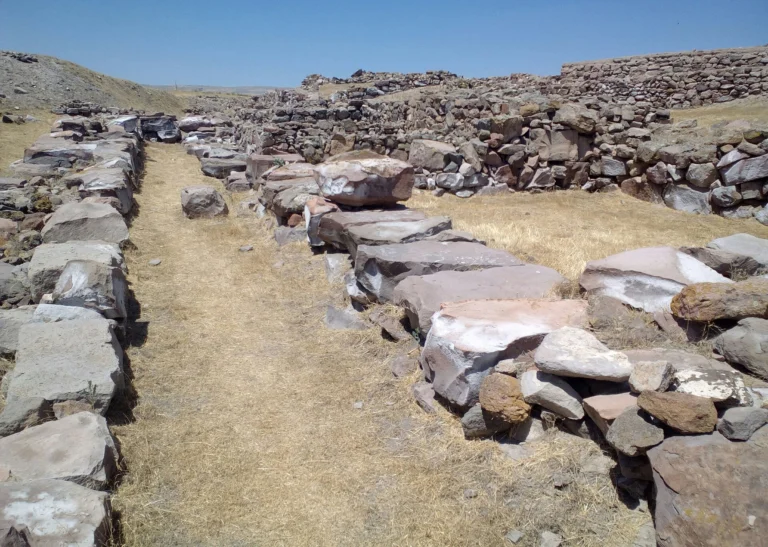
The physical evidence consists of type I collagen peptides recovered directly from a 60,000-year-old ochre-bearing sedimentary layer. Laboratory mass spectrometry matched the extracted peptide fingerprints specifically to the eland, a large African antelope that holds deep symbolic and economic importance in regional foraging traditions. The mineral component of the matrix is characterized by concentrated red ochre powder distributed across the archaeological horizon. Type I collagen is the primary structural protein found in animal connective tissues, including skin, bone, tendons, and hide. Its triple-helix structure gives it considerable mechanical strength and, under favorable circumstances, greater chemical stability than many other biological molecules. When collagen fragments bind tightly to fine-grained mineral surfaces, such as iron oxides and clay minerals common in ochre, the mineral matrix can protect peptide bonds from hydrolysis. The sedimentary context displays a complex lateral surface structure where the ochre and sediment particles are integrated. Stratigraphic analysis places the deposit firmly within the Middle Stone Age of southern Africa, a critical period associated with modern human cognitive and behavioral innovations. During this epoch, early humans regularly transported, ground, and modified ochre minerals across numerous shelter sites in the region. Microscopic examination indicates that the pigment particles and the organic matter share the same depositional horizon. The association is direct and physical, rather than an accidental juxtaposition from unrelated geological strata. This confirmed association anchors the discovery within the cultural layer of the shelter.
What we don't know
The biochemical data do not reveal the exact human activity that brought the eland collagen and the ochre together. It is not currently known whether the protein derived from fresh blood, rendered bone marrow, melted fat, connective tissue, or scraped animal skin. Because collagen is ubiquitous across mammalian anatomy, peptide identification alone cannot pinpoint the specific anatomical product used at the site. It is also unknown whether the ochre layer represents an intentionally engineered compound mixture or an accumulated workshop floor residue. An intentional compound would involve human artisans deliberately blending pulverized pigment with a proteinaceous liquid binder to create paint, mastic, or symbolic body coatings. Alternatively, the same chemical signature could form if hunters repeatedly prepared or softened eland skins by rubbing them with ground red ochre, leaving dislodged dermal collagen embedded in the discarded mineral dust. The spatial extent of the residue across the broader settlement area remains unmapped in published reports. Researchers have not established whether the collagen-ochre mix was localized to a single activity locus, such as an adhesive preparation hearth, or dispersed widely across the shelter living floor. Without comparative spatial sampling from adjacent excavation squares, the behavioral scale of the practice cannot be fully quantified. Finally, the preservation mechanism itself is not completely understood across the site. It is not known why collagen survived in this particular sediment micro-niche while organic remains typically disintegrate in neighboring strata. Environmental variables such as soil acidity, moisture percolation, and localized mineral chemistry require further longitudinal testing.
What is claimed
Two competing explanations have been advanced to interpret the presence of eland collagen inside the ochre layer, both assessed as possible based on the current evidence. The first explanation proposes that Middle Stone Age people intentionally blended eland-derived animal products with ochre powder to manufacture compound mixtures, such as specialized binders, body paint, or adhesives. Proponents of this view point to the complex lateral structure of the sediment surface, arguing that it reflects intentional preparation, mixing, and application of a liquid or pasty formulation. The second explanation holds that the protein traces resulted from processing or treating eland hides with red ochre at the shelter location. In this scenario, powdered ochre served as an abrasive, preservative, or coloring agent applied to animal pelts during tanning or scraping. The friction of the treatment would naturally shed microscopic collagen fibers directly into the loose ochre residue, generating the observed geochemical signature without any deliberate production of liquid paint. Some external commentaries have suggested that the find demonstrates complex ritual recipes and advanced artistic composition among early humans. While these interpretations draw on regional ethnographic accounts where eland carry profound cosmological weight, researchers emphasize that cultural beliefs cannot be read directly from isolated biochemical residues. The material traces show physical contact between ochre and eland tissues, while symbolic motives remain unverified hypotheses.
What is verified
The verified findings are strictly biochemical and geological. Mass spectrometric analysis has definitively verified the sequence signatures of type I collagen belonging to an eland within the designated ochre horizon. The taxonomic assignment is supported by clear diagnostic peptide markers that separate this species from other sympatric African herbivores. The dating of the sediment layer to approximately 60,000 years ago is verified through standard Middle Stone Age geochronological techniques applied to the shelter stratigraphy. The stratigraphic integrity of the layer shows no signs of post-depositional disturbance or modern animal burrowing, confirming that the collagen is contemporary with the ancient ochre deposition. The physical cohesion between the mineral grains and the peptide residues is also verified by sedimentary analysis. The ochre is not simply lying above or below the organic trace; rather, the biological matter is embedded directly within the fine lateral matrix. This demonstrates that the two components entered the archaeological record during the same depositional window. Beyond these biochemical and physical parameters, behavioral interpretations remain unverified. The verification confirms the material presence of eland protein in the ochre layer, while the purpose, method of mixing, and social meaning of that association remain subjects of ongoing investigation.
Competing explanations
- Possible: Humans intentionally blended eland-derived animal products with ochre powder to create compound mixtures or binders, supported by the complex structure of the lateral sediment surface.
- Possible: The protein traces resulted from processing or treating eland hides with red ochre at the shelter location.
What would change our assessment
A definitive shift between the compound binder hypothesis and the hide-processing hypothesis would require specific micro-contextual and chemical discoveries. If microscopic analysis identifies specialized tool cut-marks, scraping micro-wear, or characteristic dermal skin-grain impressions within the ochre matrix, the hide-processing explanation would gain decisive support. Conversely, finding ochre mixtures sealed within container shells or preserved on stone weapon hafts alongside plant resins would strongly corroborate the intentional adhesive or paint recipe model. Advanced lipid biomarker analysis could also alter the current assessment. Because collagen alone does not reveal whether whole tissue, fat, or blood was introduced, isolating preserved fatty acids, cholesterol derivatives, or blood-specific proteins such as hemoglobin would clarify the biological source material. Identifying blood proteins would point toward a binding recipe or weapon hafting mastic, whereas finding skin-surface lipids would indicate pelt preparation. Broader systematic sampling across multiple Middle Stone Age sites in southern Africa would establish whether this association was an isolated incident or part of a widespread regional tradition. Recovering identical eland-ochre compounds across multiple contemporary sites would indicate a standardized cultural technology rather than an accidental local occurrence. Improvements in high-resolution spatial mapping of the excavation floor could also change the evaluation. If 3D mapping demonstrates that the protein-rich ochre is restricted to a hearth feature associated with tool manufacture, an adhesive-making function would become the most probable explanation. If the residue is spread diffusely across discard zones, hide working would be favored.
Sources
- Proceedings of the Royal Society B: Biological Sciences (supports, primary)
- Archaeology Magazine (supports)
Protocol AENIGMA-EF-0.1