Evidence: Unsubstantiated Explanation: Not enough data yet
Ramesses II Delta Statues: What Farmland Discoveries Really Show
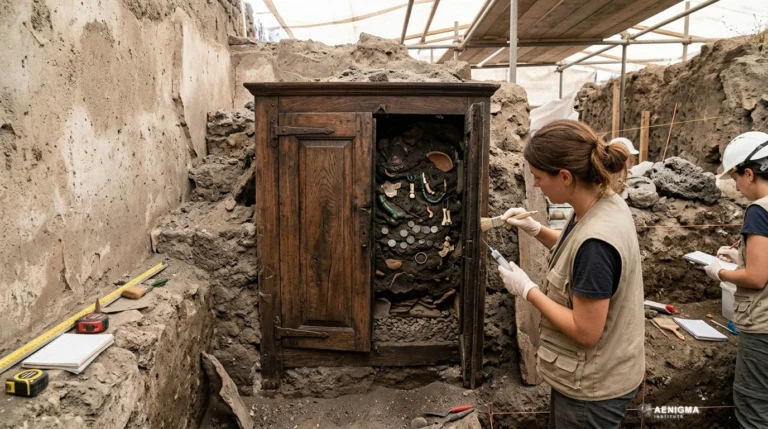
Ramesses II and his monumental building projects have re-entered headlines after agricultural work in the Nile Delta revealed colossal stone elements and inscribed pink granite blocks. Media reports describe the finds as remnants of an extensive New Kingdom sanctuary complex near Behbeit El Hagar. While rescue archaeology has confirmed the presence of carved granite fragments, full architectural reconstructions remain premature without comprehensive stratigraphy.
Why AENIGMA is covering this
Agricultural discoveries in Egypt regularly capture international attention because they dramatize the tension between ancient heritage and modern land use. The Nile Delta constitutes Egypt's agricultural heartland, where intensive farming, population expansion, and high groundwater represent constant pressures on unexcavated cultural layers. Stories of farmers plowing into pharaonic monuments resonate deeply with the public imagination. Covering these findings provides a vital opportunity to separate genuine archaeological field rescue from sensationalized reporting. In regions like Behbeit El Hagar, where monuments are notoriously fragmented and difficult to preserve, public clarity about what constitutes confirmed evidence versus provisional field hypotheses is essential for understanding how Egyptian archaeology truly works on the ground. Furthermore, examining these discoveries highlights the logistical realities of Delta archaeology. By explaining the scientific methods needed to differentiate authentic in situ temples from redeposited ancient building stone, readers gain an evidence-first view of ancient history that values meticulous stratigraphy over instant sensational claims.
What happened
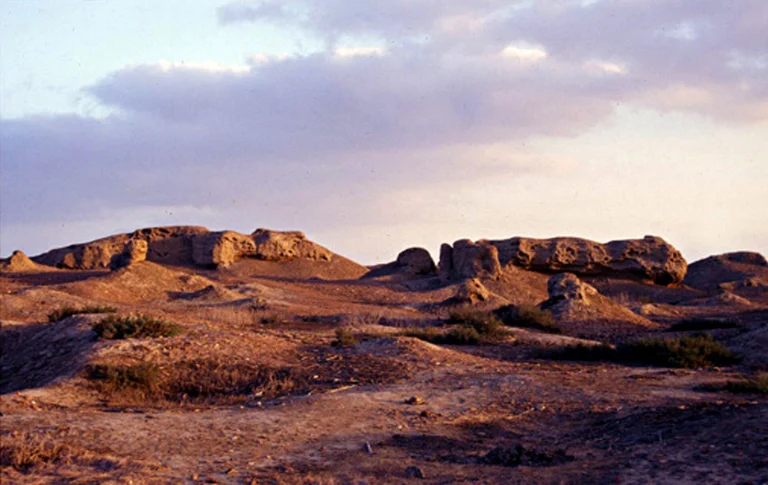
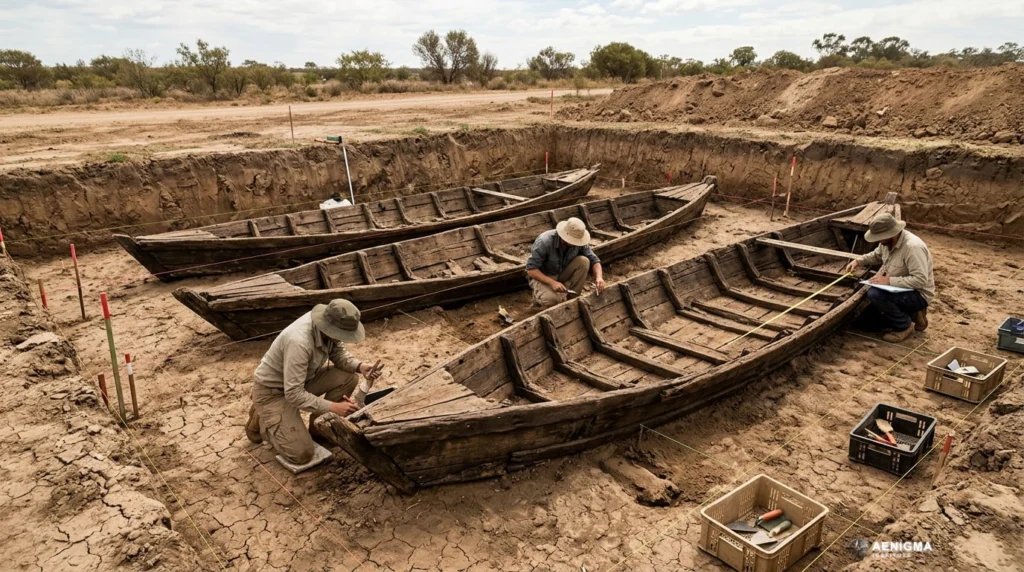
Reports emerged through coverage by Ecozen and Live Science detailing how routine plowing in an agricultural field in the Nile Delta unexpectedly exposed worked stone surfaces beneath the topsoil. The initial clearing revealed dense, finely dressed pink granite blocks along with fragmented sections of colossal statuary bearing royal iconography. Authorities and rescue archaeologists were called to inspect the terrain, where deeper soundings uncovered further monumental architectural pieces embedded within the damp alluvium. Media interest gathered rapidly around the possibility that the field hid an undocumented religious structure associated with Ramesses II. The location sits in proximity to Behbeit El Hagar, a celebrated archaeological zone known primarily for its sprawling, collapsed temple of the goddess Isis dating to the Thirtieth Dynasty and Ptolemaic era. Because major architectural elements were discovered in 2017 in the same wider district, the sudden emergence of massive Ramesside granite fragments sparked immediate speculation that a grand royal precinct had been uncovered intact. Rescue teams faced immediate logistical challenges characteristic of Lower Egypt. The high water table, dense seasonal cultivation, and centuries of mud silt accumulation had shielded the stone from view, yet those same environmental factors severely complicate controlled horizontal clearance. Rather than an orderly exposed floor plan, the investigators encountered isolated massive blocks, shifted columns, and partial statuary whose original structural relationships could not be determined at a glance.
What we know
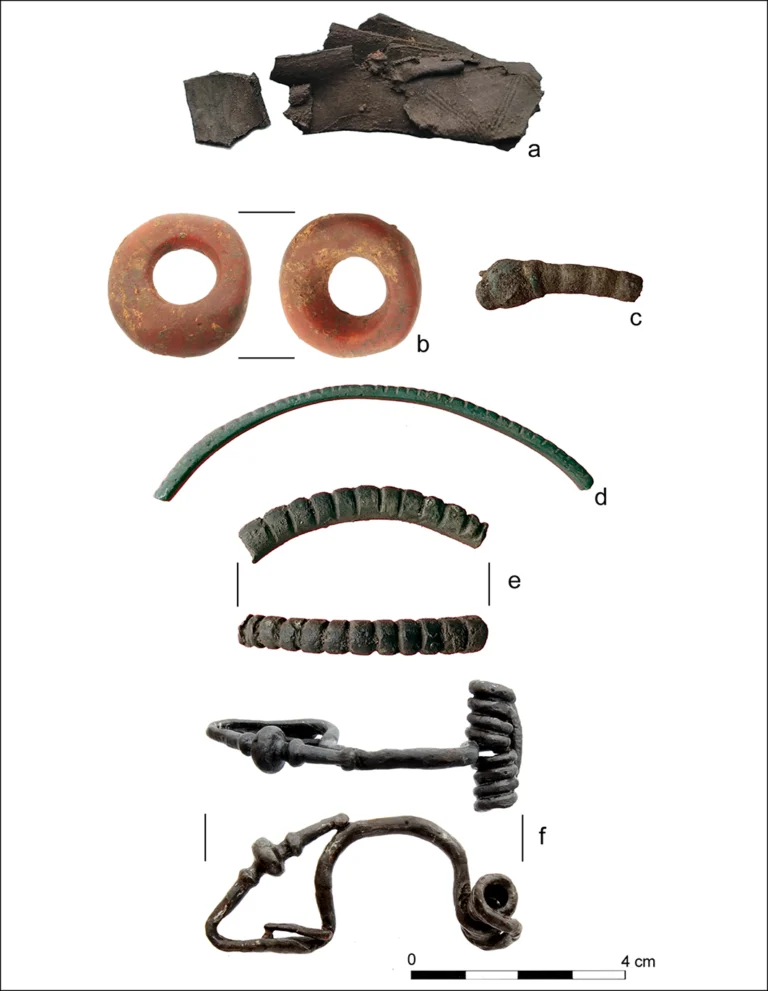
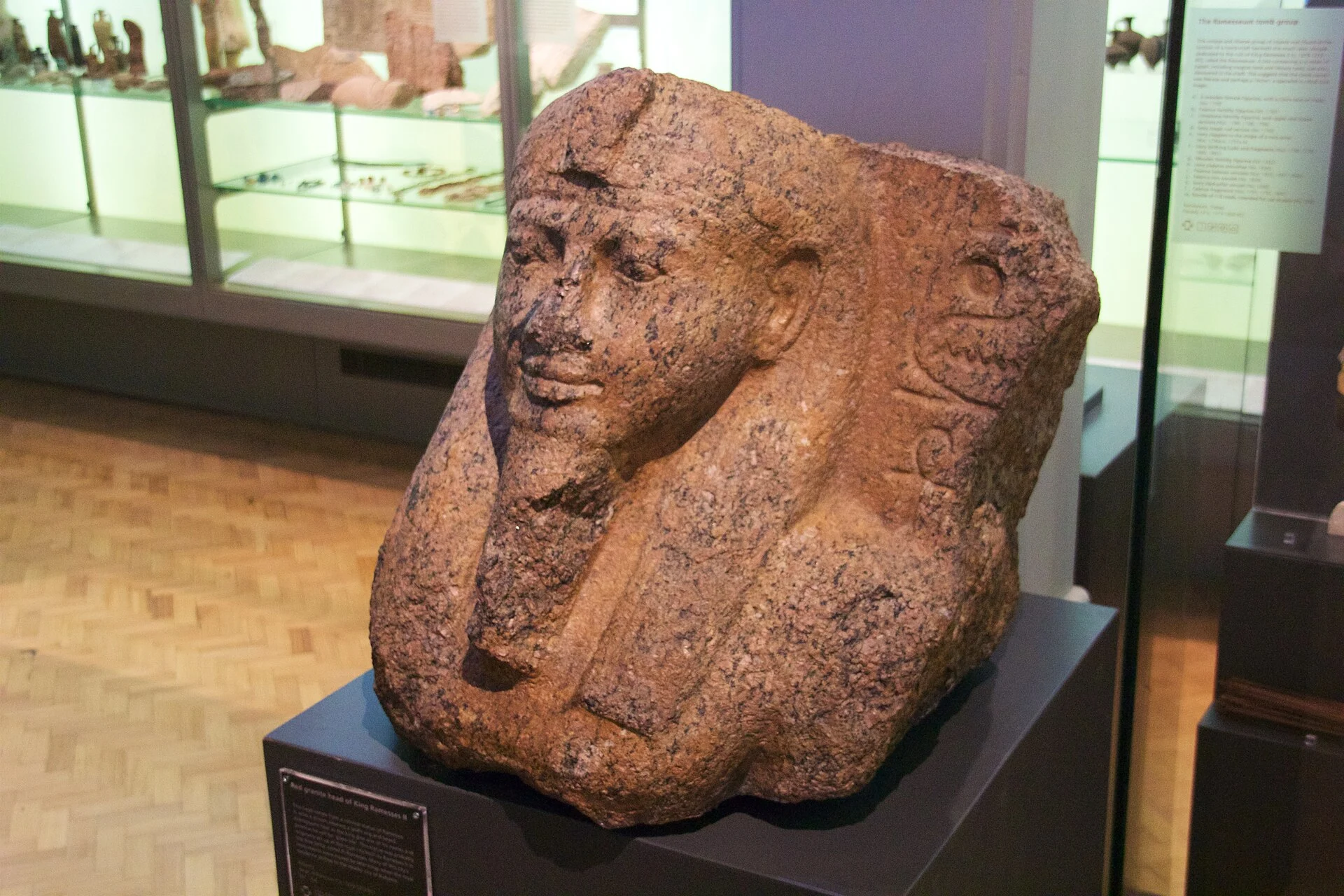
The physical items documented so far consist of carved pink granite architectural blocks and fragmented colossal statuary. Pink granite is not native to the Delta; it originates in the southern quarries of Aswan and had to be floated hundreds of kilometers downstream on barges during the annual Nile flood. Its presence in the central Delta signifies a high-status, state-sponsored construction effort rather than a local rustic shrine. Inscriptions visible on several surviving surfaces link the iconography to Ramesses II, the prominent Nineteenth Dynasty pharaoh who ruled during the thirteenth century BCE. Ramesses II was responsible for transforming much of the eastern and central Delta into monumental showpieces of royal authority and religious devotion, most famously at his capital of Pi-Ramesses. Delta sites frequently feature heavy monumental landscaping, where colossal portraits of the sovereign and divine triads served both as architectural supports and political statements. Geographically, the find sits within the regional orbit of Behbeit El Hagar, an ancient cultic center that flourished across several dynasties. Architectural discoveries made there in 2017 showed that the territory contains multiple stratified building phases, some of which were dismantled or repurposed during subsequent regimes. The Delta's soft alluvial soils, combined with intense building programs across two millennia, routinely produced overlapping horizons where older New Kingdom blocks were reused in Late Period or Greco-Roman foundations. Documented rescue measurements record individual block dimensions and describe partial statue limbs and torsos. These physical elements have been stabilized in situ or moved slightly to prevent further degradation from soil moisture and agricultural machinery. Their material, finishing style, and monumental scale reflect the standard repertoire of Ramesside imperial stonework.
What we don't know
Crucial details regarding the original architecture remain entirely unverified. It is not currently known whether the colossal statues and inscribed blocks stood as part of a standalone temple dedicated during the Nineteenth Dynasty, or if they represent salvaged material brought from an adjacent site during antiquity. The phenomenon of talatat and monumental block reuse, known technically as spolia, was widespread throughout the Nile Delta as later builders scavenged durable granite from decaying New Kingdom edifices. The ground plan of the putative sanctuary cannot be deduced from the published observations. Rescue excavations in agricultural environments often expose only narrow trenches or rescue pits dictated by modern field boundaries and drainage ditches. Consequently, the orientation of the monument, the existence of an enclosure wall, the layout of courtyards, and the presence of hypostyle halls remain completely unknown. Stratigraphic sequencing has not been published in detail. Without deep cross-sectional profiles linking the granite blocks to secure occupational deposits, sealed ceramic assemblages, and dated organic layers, researchers cannot pinpoint when the structure fell into disuse. It remains uncertain whether the complex was leveled by seismic activity, systematically demolished for building material, or submerged beneath shifting distributaries of the ancient Nile.
What is claimed
Widespread accounts suggest that a complete, lost temple complex of Ramesses II has been identified beneath the plowing line. Popular retellings often assume that the presence of colossal statue fragments indicates the exact spot where a massive sanctuary entrance once stood, complete with towering pylons and sacred processional avenues. Some narratives go further by suggesting that this discovery directly bridges the timeline between New Kingdom royal religion and the massive Isis temple ruins at Behbeit El Hagar. In this reconstruction, the site is framed as a continuous sacred center where Ramesside worship transitioned seamlessly into the massive Late Period cult of Isis, offering an intact narrative of local architectural continuity over more than a thousand years. Media reports also occasionally present the statues as fully intact monuments merely waiting to be hauled from the earth. Such characterizations overlook the heavily weathered and fragmented reality of Nile Delta stone, which has spent millennia subjected to changing groundwater chemistry, salt crystallization, and agricultural irrigation cycles.
What is verified
Verified documentation is restricted to the specific physical finds recovered by the rescue teams. A series of heavy granite blocks bearing Ramesside epigraphy and fragments of colossal statuary have genuinely been drawn out of the field or mapped within open rescue cuts. These stones display typical royal titulary and artistic conventions of the Nineteenth Dynasty. It is also verified that the discovery occurred through non-archaeological means—specifically farm plowing—which triggered state intervention to safeguard the artifacts. The surrounding terrain matches the documented characteristics of the central Delta flood plain, where silt deposits accumulate over centuries, raising the ground level meters above ancient occupation surfaces. Additionally, the historical context connects credibly with prior field observations in the wider Behbeit El Hagar area. In 2017, official missions documented substantial architectural elements in the vicinity, proving that significant monumental stone deposits lie preserved beneath modern cultivation. Beyond these localized, physical confirmations, claims of a fully mapped temple precinct or an unprecedented historical sequence remain unverified.
Competing explanations
- Possible: The colossal statues and inscribed pink granite blocks belong to major New Kingdom royal building and monumental landscaping initiated under Ramesses II at the site.
What would change our assessment
The current classification of the site as an unverified temple complex would change if systematic, multi-disciplinary excavations were conducted and published. A decisive step would be the exposure of in situ foundation trenches containing foundation deposits, which ancient Egyptian builders placed at the corners of sanctified structures. Finding such ritual deposits would establish that the granite blocks were laid for this specific building, rather than dragged in as recycled material during the Saite, Persian, or Ptolemaic periods. Non-invasive subsurface surveys could also radically alter the interpretation. While modern agricultural fields present high electrical and moisture conductivity, careful geophysical survey—such as electrical resistivity tomography or controlled ground-penetrating radar—could trace buried mudbrick enclosure walls and outline the actual footprint of the complex without disturbing crops. Finally, the publication of comprehensive epigraphic drawings and translation of all recovered inscriptions would provide clear historical parameters. If the texts record specific dedicatory formulas mentioning local deities or regional administrative boundaries, researchers could finally determine whether the site functioned as an independent royal temple, a filial shrine of a nearby capital, or an architectural annex tied directly to the early phases of the Isis sanctuary.
Sources
- Ecozen (supports)
- Live Science (supports)
Protocol AENIGMA-EF-0.1