Evidence: Insufficient data Explanation: Not enough data yet
Celtic Helmet in Poland and What the Discovery Really Shows
Archaeological research published in Antiquity and reported by Phys.org identifies an early Iron Age bronze helmet alongside distinctive Celtic metalwork at Łysa Góra in northeastern Poland. The discovery reopens key questions regarding how far north Mediterranean and Central European interaction networks reached, and whether Celtic groups established direct enclaves near the Baltic. Current evidence remains insufficient to determine whether the artefacts mark a permanent settlement or arrived through long-distance exchange.
Why AENIGMA is covering this
The discovery at Łysa Góra represents one of the most geographically unexpected early Iron Age finds documented in Central and Eastern Europe in recent decades. Defensive bronze helmets from this period are remarkably scarce even within core La Tène heartlands, making the appearance of a complete specimen near the Baltic coast an extraordinary archaeological event. Documenting the find allows researchers and the public to reassess the sophistication, reach, and speed of prehistoric European trade connections. Reporting on this discovery also provides an essential opportunity to illustrate how modern archaeological science evaluates material culture without falling into sensational assumptions. When an exceptional artefact appears outside its traditional distribution map, popular narratives frequently invent romantic stories of wandering warriors, lost armies, or mystical sanctuaries. Examining the material through an evidence-first framework helps readers distinguish between concrete physical observations and interpretive historical hypotheses. Furthermore, the find underscores the historical importance of the Baltic Amber Route as an enduring geopolitical and economic artery connecting distant civilizations. Long before formal Roman merchant networks crossed the Danube, ancient communities established robust pathways to transport rare coastal resources southward in exchange for advanced metal goods. Tracing these connections through careful archaeological reporting provides an objective foundation for understanding the shared prehistoric roots of the European continent.
What happened
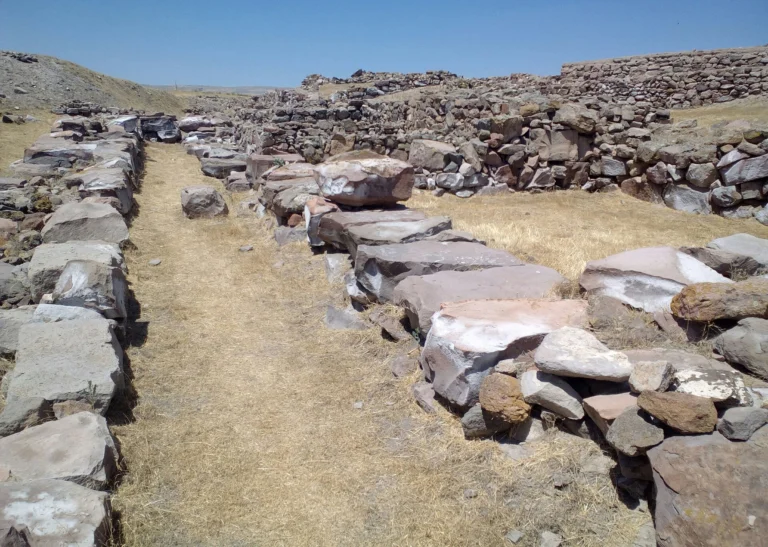
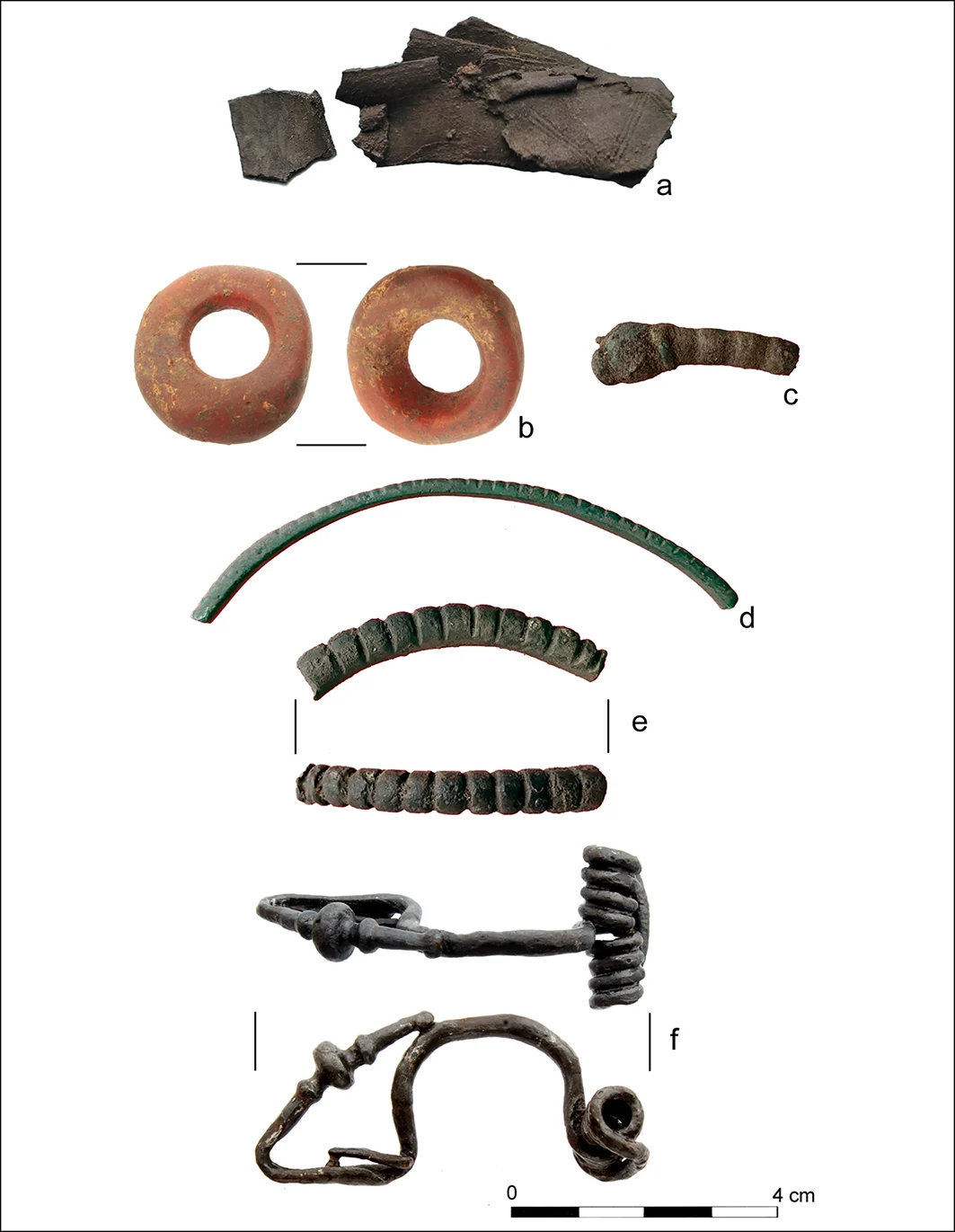
Research published in Antiquity and reported by Phys.org documents the discovery of a rare early Iron Age bronze helmet and related metal artefacts at the site of Łysa Góra in northeastern Poland. Field investigations recovered the distinctive headgear alongside personal ornaments, weapons, and tools exhibiting characteristic La Tène metallurgical traditions. The recovery took place within a fortified highland landscape located hundreds of kilometres north of the traditionally recognized borders of Celtic settlement. Excavations at the elevated topographic position revealed structured settlement layers, defensive features, and concentrations of bronze and iron objects. Systematic recovery methods and stratigraphic recording documented the relationship between local material culture and imported or foreign metalwork. The assemblage immediately attracted international attention because Celtic military gear, particularly defensive armour such as bronze helmets, appears exceptionally rarely outside core Central European and Mediterranean zones. Following field recovery, conservators treated the metallic surfaces to halt active corrosion and stabilize the fragile bronze alloy. Archaeometallurgical specialists examined the structural composition, casting technique, and stylistic hallmarks of the helmet to determine its technological pedigree. The documented sequence confirms that high-status metal items crafted within southern and central European artistic traditions reached the Baltic drainage basin far earlier than long-standing migration models suggested. The publication presents primary archaeological documentation from controlled field interventions rather than isolated surface chance finds. By establishing the physical presence of advanced metallurgy in northeastern Poland, the fieldwork reframes regional prehistory and the chronological horizon of transcontinental mobility.
What we know
The physical material recovered at Łysa Góra includes a sheet-bronze helmet, decorative bronze fittings, iron implements, and regional ceramics. The helmet demonstrates metallurgical techniques associated with early La Tène craftsmanship, including specialized hammering, shaping, and characteristic decorative elements common to Central European workshops. Its technological sophistication distinguishes it from local early Iron Age metalwork documented in northern Poland, which generally relied on simpler cast bronze forms and different decorative conventions. Stratigraphic observations confirm that the helmet was deposited within an occupied enclosure featuring defensive ramparts and occupational debris. Radiocarbon dates and typological cross-referencing place the horizon in the early to middle centuries of the first millennium BC. This chronological placement aligns the assemblage with the initial expansion of La Tène cultural influences across central Europe, long before Roman documentary sources began recording northern geographic traditions. Regional context demonstrates that the site occupies a strategic position overlooking natural river corridors that connect inland waterways to the Baltic coast. These water systems served as primary transit arteries for the movement of amber, furs, metals, and finished luxury items. Similar riverine bottlenecks across Central Europe consistently show concentrations of foreign prestige goods, confirming that physical geography dictated the paths of long-distance communication. Controlled excavation confirmed that the helmet was not buried in isolation as a solitary hoard, but existed alongside domestic materials, animal remains, and local craft residues. The spatial distribution of artefacts indicates that the site functioned as a focal point for regional communities, serving defensive, economic, or redistributive purposes. Comparable discoveries across the European continent indicate that elite metalwork frequently circulated into peripheral zones through diplomatic gift-giving, marriage alliances, or specialized mercantile activity.
What we don't know
Archaeological data collected to date do not reveal whether Celtic individuals lived permanently at Łysa Góra or if local leaders acquired foreign prestige goods through trade intermediaries. While the helmet and select ornaments demonstrate authentic La Tène technological features, the vast majority of everyday ceramics, structural foundations, and common tools reflect regional indigenous traditions. The material culture alone cannot resolve whether artisans travelled north, whether local craftspeople imitated southern models, or whether warriors returned from expeditions abroad with acquired equipment. It is not known whether the helmet arrived as an individual possession of a foreign warrior, as a trophy captured in military conflict, or as a diplomatic gift sealing an alliance between distinct regional groups. Early Iron Age societies regularly engaged in formal gift exchanges that moved high-status military accoutrements across immense geographical distances without necessitating widespread population migration. Without bioarchaeological data from associated human burials, researchers cannot reconstruct the geographic origins, diet, or mobility patterns of the individuals who deposited the gear. The social and administrative mechanisms governing trade along this section of the Baltic Amber Route remain completely unrecorded in historical records. Classical Greek and Roman written accounts from this period provide only vague geographic references regarding regions north of the Carpathian Mountains, offering no contemporary commentary on local power structures. Interpretations suggesting organized druidic networks, institutionalized slave trading posts, or formal Celtic colonies at the site represent unproven hypotheses that lack direct physical documentation. Further uncertainties involve the functional lifespan and deposition context of the helmet itself. The available documentation does not definitively establish whether the object was discarded during the destruction of the settlement, buried intentionally as a ritual offering, or lost during sudden warfare. Resolving these questions requires further targeted excavation, broader regional comparative surveys, and extensive micro-stratigraphic analysis.
What is claimed
Competing explanations focus on the social mechanisms responsible for transporting Central European military regalia to the Baltic hinterland. One school of thought suggests that members of a Celtic warrior elite or specialized merchant class physically travelled to Łysa Góra and established an enclave to directly control and coordinate trade along the Baltic Amber Route. Proponents of this view emphasize the extreme rarity of defensive bronze armour, arguing that such high-status protective gear would remain in the hands of trained Celtic warriors rather than passing freely through ordinary commercial exchange. An alternative explanation contends that the bronze helmet and associated metal ornaments moved through existing down-the-line exchange networks without requiring direct Celtic migration. Under this model, local northern elites acquired foreign status symbols through intermediate trade contacts, accumulating imported luxury goods to reinforce their political authority within their native communities. Advocates for this view point to the overwhelmingly local character of the residential architecture and domestic pottery found at the settlement, which shows no wholesale replacement by Celtic material traditions. More speculative discussions circulating in public commentary have proposed that the site served as a northern druidic ceremonial sanctuary or an organized centre for trans-European captive trafficking. These broader assertions extrapolate extensively from historical accounts written centuries later in different geographical contexts. While such scenarios capture public imagination, they remain interpretive constructions rather than demonstrated facts established by the archaeological record.
What is verified
Physical verification confirms the presence of an authentic early Iron Age sheet-bronze helmet excavated from stratified archaeological layers at Łysa Góra in northeastern Poland. Laboratory analysis and microscopic examination confirm standard La Tène metallurgical compositions and fabrication techniques, establishing that the object originated within Central European technological traditions. The spatial context demonstrates that the find is genuine, properly recorded in situ, and directly tied to an enclosed highland settlement site. Independent reporting and academic review in Antiquity authenticate that the discovery took place under formal archaeological oversight rather than unverified looting or illicit excavation. The chronological placement within the early Iron Age is verified through stratigraphic association and regional artifact typologies. These verified parameters confirm that prestigious Central European metalwork penetrated far into the Baltic basin significantly earlier than previously demonstrated by northern European site registers. What remains unverified is any permanent Celtic demographic presence, administrative authority, or formal military garrison at the site. The presence of foreign prestige items confirms contact and exchange, but it does not substantiate claims of ethnic migration, druidic leadership, or direct colonial dominance. At present, the evidence status and the explanation status for interpreting the social structure behind the find remain classified as insufficient data.
Competing explanations
- Possible: Members of a Celtic warrior elite or traders physically stayed at Łysa Góra to control and coordinate trans-European trade along the Baltic Amber Route.
- Possible: The prestigious bronze helmet and ornaments reached the Baltic region through intermediary trading networks rather than through the direct presence of Celtic communities.
What would change our assessment
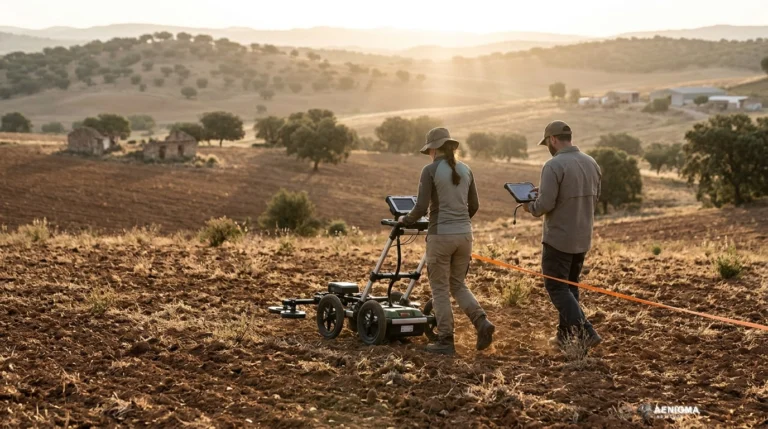
The assessment would shift toward confirming direct Celtic presence if controlled excavations uncovered well-preserved human remains directly associated with the assemblage whose multi-isotope analyses demonstrated non-local childhood origins. Strontium, oxygen, and lead isotope signatures extracted from dental enamel can identify whether individuals grew up in the geological terrains of Central Europe, such as Bohemia or southern Germany, before migrating to the Baltic lowlands. Ancient genomic sequencing could provide complementary insights into population affinities and trans-regional biological mobility. Conversely, the hypothesis of local acquisition through commercial networks would gain decisive support if petrographic and trace-element analyses demonstrated that the metallic objects, while styled after Celtic designs, were cast from regional metal supplies or crafted using local casting technologies. Uncovering metalworking workshops, casting moulds, and metallurgical slag showing local experimentation with foreign shapes would demonstrate indigenous adoption rather than foreign military occupation. Broad-scale geophysical mapping and expanded systematic excavations across Łysa Góra could also reveal domestic structures, storage facilities, or burial rituals characteristic of central La Tène societies. If residential architecture, daily culinary gear, and personal dress accessories prove overwhelmingly indigenous across all sectors of the settlement, the direct settlement model would become untenable. Until such systematic bioarchaeological, chemical, and spatial datasets are gathered, the find must be evaluated solely as an extraordinary indicator of early long-distance exchange.
Sources
- Phys.org (supports)
- Antiquity (Cambridge University Press) (supports, primary)
Protocol AENIGMA-EF-0.1