Evidence: Unsubstantiated Explanation: Not enough data yet
Bronze Age Treasure at Mezőkeresztes: What the Discovery Really Shows
A 3,000-year-old assemblage of spiral ornaments enclosed within a ceramic vessel, reported by regional news outlets including Lenta.ru and Rambler, was uncovered during investigations at the historic 1596 Mezőkeresztes battlefield in Hungary. The discovery highlights how prehistoric archaeological deposits can exist directly beneath or alongside early modern historical sites, demonstrating the complex multi-period nature of European landscapes. Current documentation remains unsubstantiated by formal excavation monographs, leaving critical questions about its depositional context unresolved.
Why AENIGMA is covering this
The report highlights the vital importance of multi-layered landscape archaeology in historic battlefields. Public reporting frequently conflates distinct historical eras simply because their physical remnants occupy the same plot of earth, creating a misleading impression that prehistoric treasures belong to the early modern military narrative. Covering this find allows clarification of how archaeologists separate distinct chronological horizons through precise stratigraphic analysis. Furthermore, the case provides an instructive look into contemporary archaeological conservation methods. The transition from crude field extraction to laboratory micro-excavation illustrates how contemporary science protects fragile organic context and chemical residues that would otherwise be permanently lost. Examining how such finds are documented and verified informs the public about the rigorous scientific standards required before an archaeological claim can be considered confirmed.
What happened
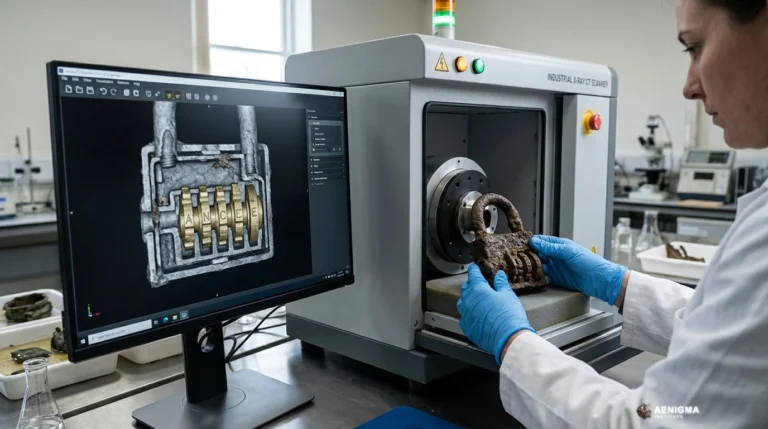
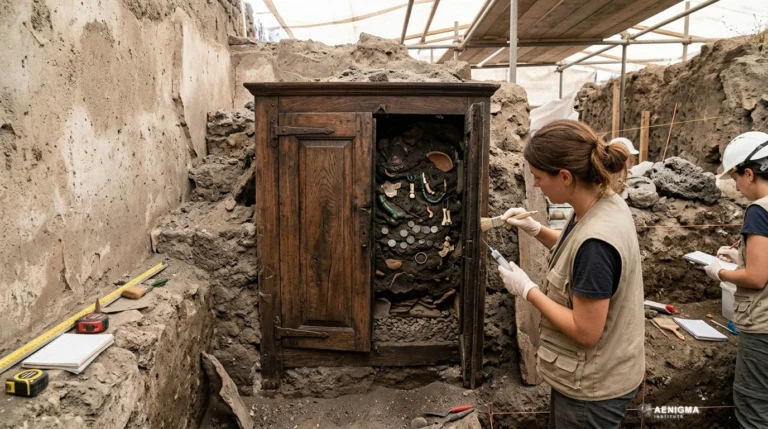
News outlets including Lenta.ru, Rambler, and Nauka Mail reported the discovery of a three-thousand-year-old metal hoard at the historical site of the Battle of Mezőkeresztes in Hungary. Field teams working in the area identified a buried ceramic container containing multiple spiral-shaped ornaments attributed to the late Bronze Age, tentatively dated between the thirteenth and eleventh centuries BC. The accounts indicate that the vessel was lifted intact within its surrounding sediment block to allow laboratory specialists to excavate its interior under controlled environmental conditions. The media reports emphasized the striking contrast between the prehistoric artifacts and the surrounding historical landscape, which is internationally famous for the massive 1596 clash between Ottoman and Habsburg armies. While popular reporting linked the two narratives because of their shared geography, archaeological field personnel clarified that the prehistoric cache was deposited roughly two and a half millennia before the sixteenth-century engagement took place. The intact block containing the ceramic pot and its metallic contents was transported to a conservation facility for micro-excavation. Laboratory conservators and researchers began carefully uncovering the internal elements layer by layer, seeking to document the precise positions of each spiral ornament and identify any surviving organic fibers, binding cords, or chemical residues. The investigative process remains active, with full specialist catalogs and scientific excavation reports pending formal release.
What we know
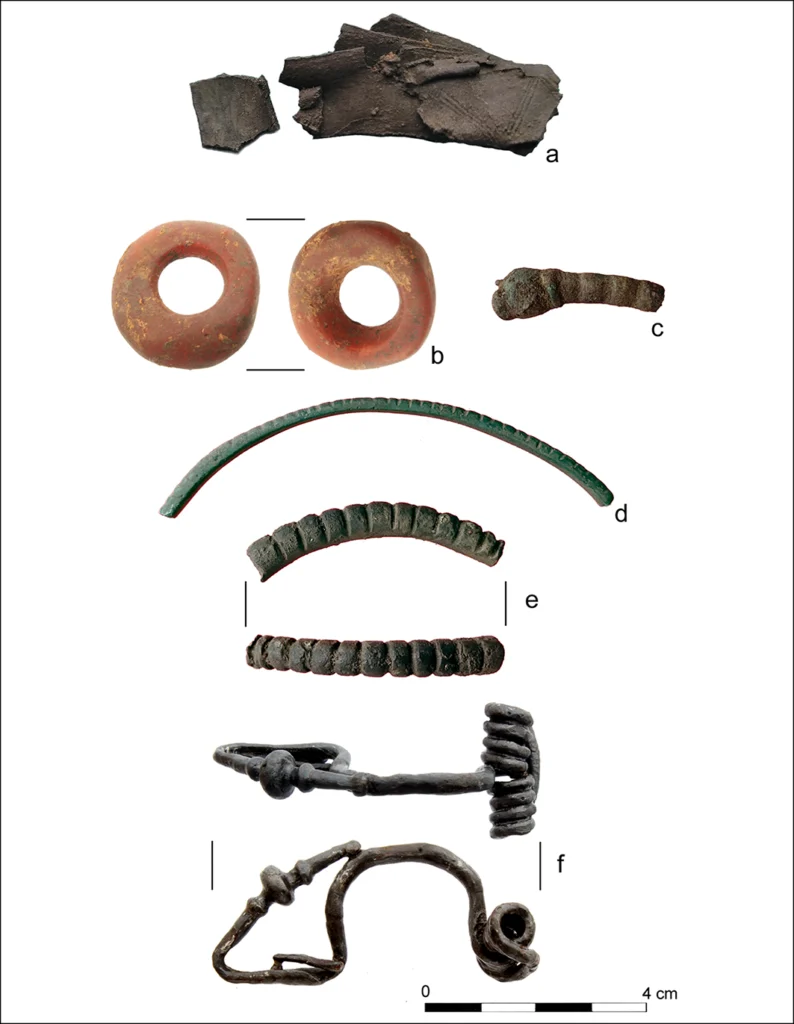
The physical objects described in regional reports comprise a prehistoric ceramic vessel holding an assemblage of bronze spiral ornaments. Stylistically, the items correspond to late Bronze Age metalworking traditions well documented across Central Europe and the Carpathian Basin between the thirteenth and eleventh centuries BC. During this broad horizon, communities frequently manufactured coiled bronze wire ornaments, arm rings, and spiral discs for personal display, social exchange, or ritual deposition. The geographical location of the recovery is the territory associated with the Battle of Mezőkeresztes, an engagement fought in late October 1596 between the forces of the Ottoman Empire and an allied Christian army led by Habsburg commanders. Battlefield survey projects across Europe regularly encounter objects from entirely unrelated epochs because fertile river terraces, natural transport corridors, and strategic elevated terrain were repeatedly occupied by humans across thousands of years. The presence of Bronze Age material within the general limits of an early modern battlefield is a recognized phenomenon in landscape archaeology. Technically, the recovery method involved block lifting, an established field conservation protocol. When delicate, corroded, or densely nested metal objects are encountered inside fragile earthenware, attempting to empty the vessel on an open excavation trench risks shattering the container, scratching delicate patinas, and destroying microscopic traces of textiles, leather, or organic padding. By securing the vessel within a plaster or bandage jacket together with the surrounding matrix, researchers preserve the micro-stratigraphy until microscopic tools, CT imaging, and residue sampling can be applied indoors. Documentary coverage currently exists in mainstream and popular scientific media, which summarize basic initial findings without presenting comprehensive stratigraphic cross-sections, isotopic analyses, or complete catalog entries. These accounts confirm the physical recovery of the artifacts and the application of laboratory micro-excavation, but they provide limited technical details regarding the broader settlement or funerary context from which the cache emerged.
What we don't know
It is not known whether the assemblage represents a votive offering or a secular store of accumulated wealth concealed during an episode of crisis. In European Bronze Age research, distinguishing between ritual depositions placed intentionally in sacred natural features and emergency wealth hoards meant to be retrieved later remains a persistent debate. Without detailed analysis of the immediate soil horizons, accompanying organic traces, or nearby structural features, the exact purpose of the deposition cannot be definitively determined. The full inventory and exact metallographic composition of the items inside the vessel remain unpublished. While spiral ornaments were identified, the total count, alloy ratios of copper, tin, and trace impurities like arsenic, antimony, or silver, and potential production techniques have not been described in scientific papers. It is also unknown whether lead isotope analyses have been conducted to trace the ores back to specific prehistoric mining regions, such as the Slovakian Ore Mountains or the eastern Alps. The precise taphonomic history of the find-spot is also undocumented in public accounts. It is not clear whether the vessel sat within an isolated pit dug into sterile subsoil, formed part of an extensive late Bronze Age settlement layer, or belonged to an eroded burial monument where skeletal remains had completely dissolved in acidic ground. Crucially, the degree to which sixteenth-century military activity disturbed, truncated, or covered the prehistoric horizon is not detailed in the available news releases.
What is claimed
Reports published across regional news platforms claim that researchers working on the Mezőkeresztes battlefield encountered a three-thousand-year-old hoard consisting of a decorated or plain ceramic pot filled with delicate spiral-shaped jewelry. These articles describe the objects as belonging to the late Bronze Age, highlighting the dramatic timeline that separates the buried artifacts from the Ottoman-era soldiers who fought above them centuries later. Several popular accounts characterize the find as a hidden cache of personal treasure or family wealth buried for safekeeping during a turbulent prehistoric era. Other commentary suggests that the deposit could have served a votive or ritual function, representing a collective community gift offered to chthonic powers or marking an ancestral territorial boundary in the landscape. Media presentations have also highlighted the micro-excavation process as a cutting-edge forensic endeavor capable of revealing preserved organic textiles, decorative cords, and unseen miniature artifacts tightly packed within the sediment-filled vessel. These reports present the conservation process as ongoing, anticipating broader historical conclusions once laboratory extraction and chemical testing conclude.
What is verified
Verified facts demonstrate that late Bronze Age metallic artifacts and pottery dating roughly between the thirteenth and eleventh centuries BC were indeed retrieved in the region of Mezőkeresztes. Independent archaeological knowledge confirms that spiral bronze ornaments are characteristic of this period across the Carpathian Basin, fitting established typologies for Central European metalwork of the late second millennium BC. It is also verified that the prehistoric hoard has no historical or cultural connection to the 1596 Battle of Mezőkeresztes. The chronological gap between the two events spans approximately 2,500 years. Modern battlefield investigations regularly recover multi-period material, and finding prehistoric artifacts on a sixteenth-century clash site is an expected outcome of deep stratigraphic research in historically dense regions. The use of block lifting and laboratory micro-excavation is a standard, verified conservation technique. Removing an entire soil block to a controlled laboratory environment ensures that fragile corrosion layers and micro-residues are preserved from environmental contamination and physical breakage. However, because peer-reviewed excavation reports, radiocarbon dates, and specialist catalogues have not yet been published, the evidentiary status of the discovery remains unsubstantiated under rigorous academic standards.
Competing explanations
- Possible: The vessel and spiral ornaments were intentionally cached together in the late Bronze Age (13th–11th centuries BC), either as a votive deposition or a hidden store of wealth.
- Possible: The artifacts predate the 1596 Battle of Mezokeresztes by roughly 2,500 years and have no contextual relationship to the Ottoman-Habsburg engagement.
What would change our assessment
The evidentiary status of the discovery would change with the publication of a formal, peer-reviewed excavation report authored by licensed archaeologists and conservation scientists. Such a monograph would need to provide high-resolution stratigraphic drawings, photographic records of the micro-excavation stages, and exact measurements of the vessel and its contents. Direct scientific dating and laboratory testing would substantially clarify the interpretation of the cache. Radiocarbon determinations carried out on organic remains preserved within the vessel, such as leather straps, woven fibers, or charcoal specks trapped in the fill, would provide an absolute calendar range that could refine or challenge the stylistic thirteenth-to-eleventh-century BC estimate. Comprehensive archaeometric studies would provide critical context. Metallographic examination via scanning electron microscopy, coupled with lead isotope analysis of the copper alloys, would confirm whether the bronze came from regional mining networks or long-distance trade. Detailed sedimentological and pollen analyses from the vessel interior could also reveal whether the pot contained agricultural produce, scented oils, or ceremonial substances at the moment it was placed in the ground. Clarification of the landscape context through geophysical survey and broader trenching around the find-spot would determine whether the cache was isolated or part of a broader settlement complex, cemetery, or ritual landscape. If extensive Bronze Age earthworks or habitation layers are mapped around the deposit, the interpretation of the site would shift from an isolated chance find to a structured prehistoric cultural settlement.
Sources
- Рамблер/новости (supports)
- Lenta.ru (supports)
- Наука Mail (supports)
Protocol AENIGMA-EF-0.1