Evidence: Unsubstantiated Explanation: Not enough data yet
Roman silver counterfeits: What the Baltic treasure claim shows
A media report describes the discovery of a Roman silver treasure containing 1800-year-old counterfeit coins. The find reportedly highlights a 250-year gap between the production of the coins and their burial during the Migration Period.
Why AENIGMA is covering this
The discovery of ancient hoards consistently draws public interest, as these finds offer a tangible connection to the economic and social realities of the past. The specific focus on counterfeit coins adds a layer of complexity to our understanding of ancient trade. It demonstrates that issues of forgery, inflation, and economic deception are not modern inventions but were prevalent challenges in antiquity. Examining claims like this one provides an opportunity to explore the sophisticated trade networks that existed outside the formal boundaries of the Roman Empire. It highlights how populations in regions like the Baltic interacted with Roman material culture, adapting it to their own economic systems. Furthermore, discussing the methods required to authenticate and analyze such finds helps clarify the rigorous scientific processes that underpin modern archaeology, distinguishing between initial media reports and verified historical data.
What happened
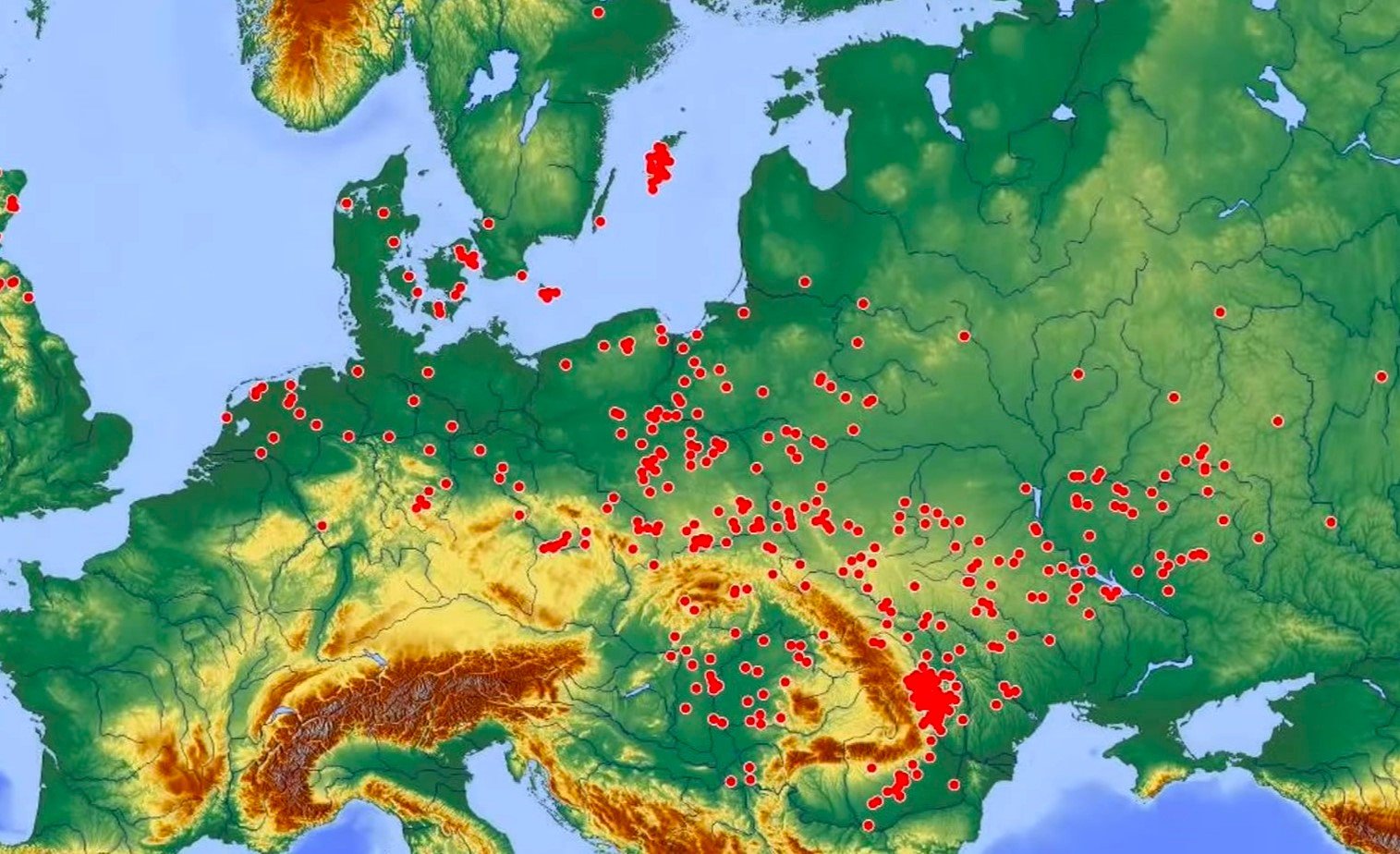
A recent report published by the French media outlet Science & Vie describes the discovery of a Roman silver treasure that includes 1800-year-old counterfeit coins. According to the publication, the find presents an unusual chronological puzzle, as there appears to be a 250-year gap between the time the coins were originally minted—or in this case, forged—and the time they were eventually buried in the ground. The burial is attributed to the Migration Period, a time of significant demographic and political upheaval across Europe that followed the decline of the Western Roman Empire. The report suggests that these counterfeit coins did not merely serve as a localized deception but were part of a broader economic phenomenon. They are hypothesized to have been manufactured in the region of present-day Ukraine before traveling extensive distances. Through established Eastern European trade networks, these forged silver pieces eventually reached the Baltic region, where they circulated alongside official Roman currency. The discovery brings attention to the complex nature of ancient economies, particularly in territories situated outside the formal borders of the Roman Empire, often referred to by Roman historians as Barbaricum. While the report outlines a fascinating narrative of ancient forgery and long-distance trade, the specific details regarding the excavation, the exact composition of the hoard, and the primary archaeological data remain unsubstantiated in the provided material. The current explanation status is categorized as insufficient data, meaning that while the historical context is plausible, the specific claims regarding this particular treasure require further formal documentation and scientific analysis to be fully assessed.
What we know
To understand the context of this claim, it is necessary to examine the established historical background of Roman coinage, ancient counterfeiting practices, and the economic networks that connected the Mediterranean to Northern Europe. The Roman monetary system, particularly during the first three centuries of the Common Era, relied heavily on the silver denarius. As the primary unit of daily commerce and military pay, the denarius was recognized and valued far beyond the borders of the empire. However, the production of counterfeit coins was a persistent issue in antiquity. Ancient counterfeiters frequently employed a technique to create what numismatists call 'fourrées'. This involved taking a core of base metal, such as copper or bronze, and wrapping it in a thin layer of silver foil. Once struck with forged dies imitating official Roman mints, the resulting coin looked and felt like a genuine silver denarius, at least until the silver plating began to wear off. The circulation of Roman coins outside the empire was driven by extensive trade networks. The Baltic region was particularly significant due to its abundance of amber, a fossilized tree resin highly prized by Roman elites for jewelry and decorative objects. The so-called Amber Road consisted of various overland and riverine routes connecting the Adriatic coast to the Baltic Sea, often utilizing the Vistula and Oder river systems. Along these routes, Roman merchants traded silver coins, glass, and manufactured goods for amber, furs, and slaves. Consequently, vast quantities of Roman silver flowed into Eastern and Northern Europe. In these regions, Roman coins were often valued not just as fiat currency, but as bullion—a reliable source of high-quality silver. The presence of counterfeit coins in these peripheral regions is a well-documented archaeological phenomenon. In areas where populations were less familiar with the exact weights, official portraits, and mint marks of the Roman state, high-quality counterfeits could more easily pass as genuine wealth. Furthermore, the concept of a 250-year gap between the production of a coin and its burial is entirely consistent with the economic behaviors observed during the Migration Period. The Migration Period, roughly spanning the 4th to the 7th centuries CE, was characterized by the movement of various Germanic, Slavic, and other peoples across Europe. During times of instability, burying wealth in the ground—creating a hoard—was a common method of safekeeping. Because silver retained its intrinsic material value regardless of the emperor depicted on the coin, older Roman denarii, and even well-made counterfeits that had not been identified as base metal, were kept in circulation or held as stored wealth for centuries after they were produced. It was not uncommon for a hoard buried in the 5th century to contain coins minted in the 2nd century.
What we don't know
Despite the historical plausibility of the narrative presented in the media report, several critical pieces of information regarding this specific discovery remain unknown. We do not know the exact geographical location of the find-spot, nor do we have details about the archaeological context in which the hoard was discovered. It is not known whether the treasure was found in an isolated rural landscape, within the remains of a settlement, or associated with a burial site. The exact number of coins in the hoard, and specifically the ratio of genuine Roman silver coins to the 1800-year-old counterfeits, has not been detailed in the provided facts. Furthermore, we do not know the specific methodology used to determine that the counterfeit coins were manufactured in present-day Ukraine. Tracing the origin of ancient counterfeits usually requires identifying specific die-links—matching the physical stamps used to strike the coins with other known examples from a specific region—or conducting complex metallurgical analyses to trace the trace elements in the metal ores. It is not known if such analyses have been completed and published for this hoard. Additionally, the exact criteria used to date the burial of the hoard to the Migration Period, 250 years after the coins were produced, are not specified. While this chronological gap is common, establishing the exact date of a hoard's deposition typically relies on the newest coin in the collection (the terminus post quem) or radiocarbon dating of associated organic materials, such as a cloth bag or a wooden container. We do not know what specific evidence was used to establish this timeline for this particular treasure.
What is claimed
The primary claim, as reported by Science & Vie, is that a recently discovered Roman silver treasure contains 1800-year-old counterfeit coins. It is claimed that there is a significant chronological gap of 250 years between the time these coins were manufactured and the time they were ultimately buried in the ground during the Migration Period. Regarding the origins and movement of these specific artifacts, a competing explanation suggests that the counterfeit coins were likely manufactured in the region corresponding to present-day Ukraine. It is further claimed that these forged coins did not remain in their place of origin but traveled significant distances, reaching the Baltic region via established Eastern European trade networks. Finally, it is claimed that upon reaching the Baltic, these counterfeits circulated seamlessly alongside official, genuine Roman currency, functioning as part of the regional economy before they were eventually gathered and buried as a hoard centuries later.
What is verified
At this stage, the evidence status for the specific details of this discovery is categorized as unsubstantiated. The information originates from a media report by Science & Vie, which is currently unverified in the context of formal archaeological literature. No peer-reviewed academic papers, official excavation reports, or institutional press releases have been provided to independently confirm the existence of the hoard, its exact contents, or the scientific data supporting the claims of its origin and burial date. What is verified as general historical knowledge is the broader context surrounding the claims. It is a verified historical fact that ancient counterfeiters produced fake Roman silver coins, often using base metal cores plated with silver. It is also verified that extensive trade networks connected the Roman Empire to the Baltic region, facilitating the movement of Roman silver into Eastern and Northern Europe. Furthermore, it is a verified archaeological phenomenon that Roman coins were often hoarded and buried centuries after their production, particularly during the turbulent centuries of the Migration Period. However, the application of these verified historical concepts to this specific, newly reported treasure remains unconfirmed.
Competing explanations
- Possible: The counterfeit coins were likely made in present-day Ukraine and reached the Baltic via Eastern European trade networks, circulating alongside official Roman currency.
What would change our assessment
To transition the evidence status of this discovery from unsubstantiated to verified, and to resolve the insufficient data regarding the explanations, several rigorous archaeological and scientific steps would be required. First and foremost, the publication of a formal, peer-reviewed archaeological report is essential. This report would need to detail the exact circumstances of the discovery, including precise stratigraphic data if the hoard was excavated under controlled conditions. Stratigraphy helps confirm the context of the burial and ensures the find has not been disturbed or mixed with materials from other eras. A comprehensive numismatic catalog of the hoard is also required. Experts would need to examine every coin, separating the genuine Roman issues from the counterfeits. To substantiate the claim that the counterfeits were made in present-day Ukraine, numismatists would look for die-links. If the fake coins in this Baltic hoard were struck from the same forged dies as fake coins previously excavated in documented workshops in Ukraine, this would provide strong evidence for their origin. Furthermore, archaeometallurgical analysis would be crucial. Techniques such as X-ray fluorescence (XRF) or Scanning Electron Microscopy (SEM) could be used to analyze the elemental composition of the coins without destroying them. Lead isotope analysis could potentially trace the geological origins of the copper or silver ores used by the counterfeiters, providing physical evidence to support or refute the proposed Ukrainian origin. Finally, to confirm the 250-year gap and the Migration Period burial date, archaeologists would need to identify the latest genuine coin in the hoard, which provides the earliest possible date the hoard could have been buried. If the hoard was found within a ceramic vessel or contained remnants of organic material, radiocarbon dating or thermoluminescence dating could provide independent verification of the burial timeline.
Sources
- Science & Vie (supports, unverified)
Protocol AENIGMA-EF-0.1