Evidence: Unsubstantiated Explanation: Not enough data yet
Tang Dynasty Tomb Murals: What a Blond Foreigner Really Shows
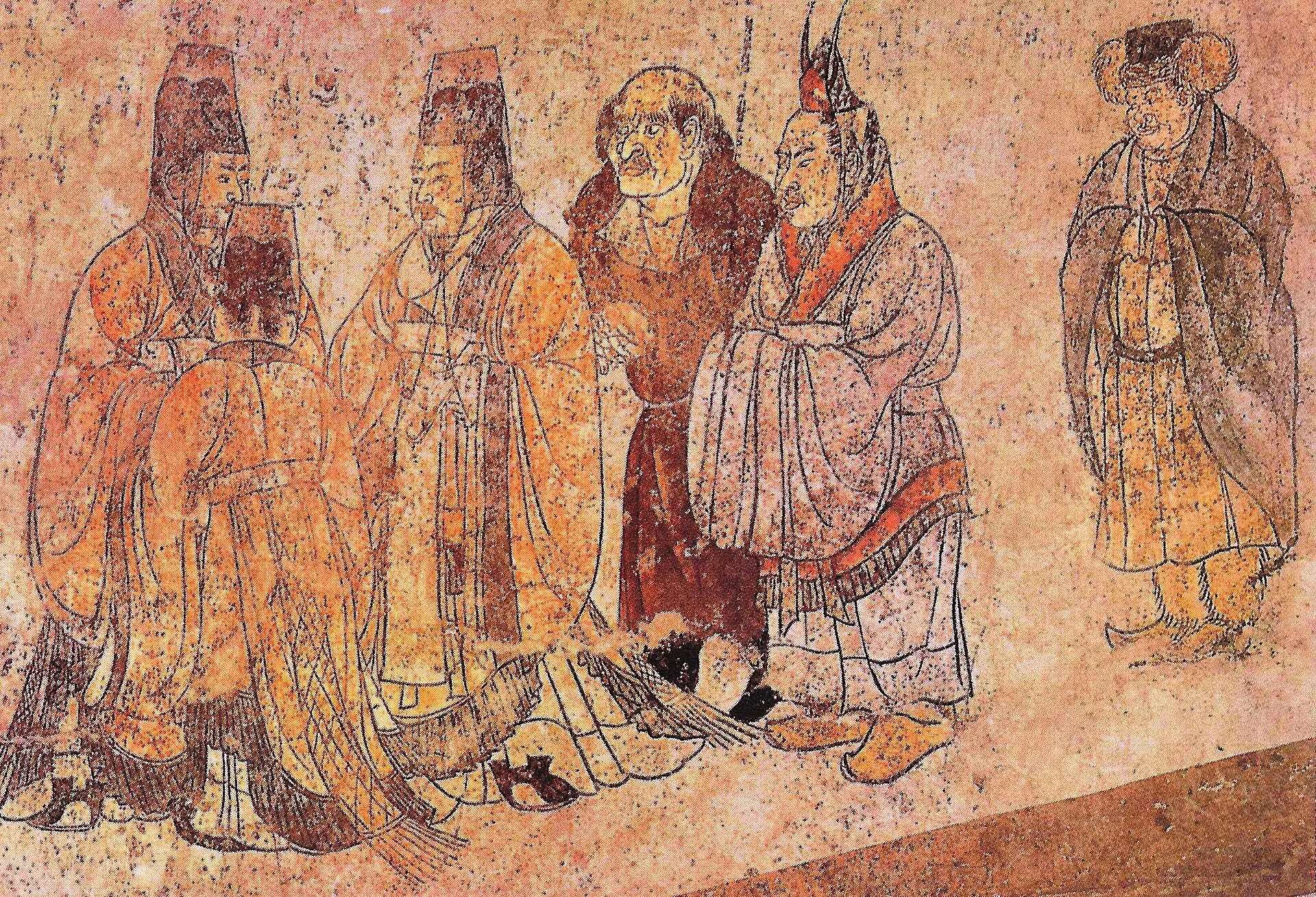
An 8th-century Tang Dynasty tomb features vivid murals depicting daily life, including a standout figure of a blond foreigner. The imagery highlights the deep cultural exchanges of the Silk Road and the prominent role of Central Asian traders in ancient China.
Why AENIGMA is covering this
The discovery of ancient murals provides a rare and immediate connection to the past, offering a visual narrative that texts alone cannot convey. This tomb highlights the profound interconnectedness of the ancient world, demonstrating that globalization and cross-cultural exchange are not exclusively modern phenomena. The Silk Road was a conduit not just for luxury goods, but for people, languages, and artistic traditions. By examining how a blond foreigner was depicted in an 8th-century Chinese tomb, we gain insight into how different cultures perceived and integrated with one another. These murals help reconstruct the social fabric of the Tang Dynasty, reminding us of a time when the exchange of ideas across vast distances shaped the daily lives and the afterlife visions of an entire empire. Understanding these historical interactions provides valuable context for the long history of human migration, trade, and cultural synthesis.
What happened
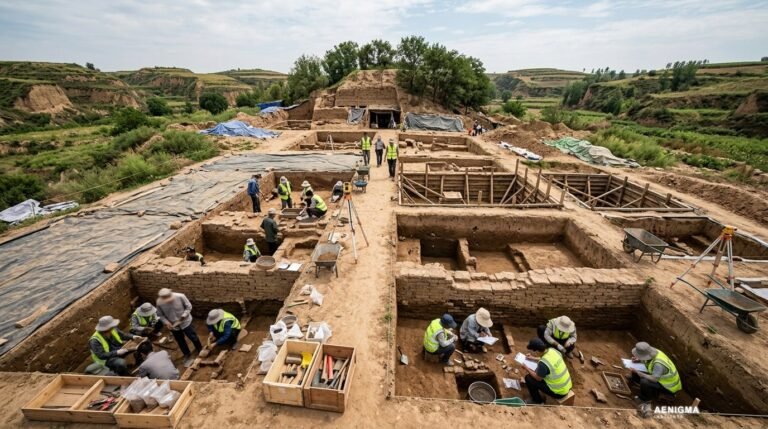
A recently detailed 8th-century Tang Dynasty tomb has drawn attention for its vibrant murals, which offer a vivid window into the daily life of ancient China. Among the traditional scenes of attendants and domestic life, one particular detail stands out: a figure depicted with blond hair and distinct non-Chinese facial features. The report from ZME Science highlights this striking visual, bringing the cosmopolitan nature of the ancient Chinese empire into sharp focus. Tang Dynasty tombs are renowned for their elaborate subterranean architecture and the extensive wall paintings that were designed to provide the deceased with a familiar, comfortable environment in the afterlife. When these spaces are brought to light, they typically reveal ramped passageways leading down to vaulted brick chambers. The walls of these corridors and burial rooms are covered in a layer of plaster, upon which artists painted intricate scenes of musicians, landscapes, celestial maps, and the daily routines of the elite. The presence of a blond foreigner in such a traditional funerary setting is a powerful visual reminder of the vast networks that connected the ancient world. Discoveries of this nature usually occur during systematic archaeological surveys or rescue excavations ahead of modern infrastructure projects. The murals offer a frozen glimpse into a society that was, at its height, one of the most open and diverse in the world. The vivid colors and dynamic postures of the figures reflect a confident empire that embraced external influences and integrated them into its own cultural fabric. The artwork captures the essence of an era where the boundaries between different cultures were frequently crossed by merchants, diplomats, and artisans.
What we know
The Tang Dynasty, which ruled China from 618 to 907 AD, is widely regarded as a golden age of cosmopolitan culture and artistic achievement. At the heart of this empire was the capital city of Chang'an, located near modern-day Xi'an. During the 8th century, Chang'an was arguably the largest and most populous city in the world, laid out in a strict grid pattern and housing over a million residents. This population included thousands of expatriates living in designated foreign quarters, particularly around the bustling Western Market. The Silk Road, a vast network of overland and maritime trade routes, funneled goods, ideas, and people directly into the heart of China. Among the most prominent travelers on these routes were the Sogdians. Originating from Transoxiana, a historical region in Central Asia encompassing parts of modern Uzbekistan and Tajikistan, the Sogdians were the premier merchants of the Silk Road. Their homeland was centered around oasis cities like Samarkand and Bukhara. They established trading colonies all along the routes leading into China, acting as vital middlemen who facilitated the exchange of Chinese silk for Central Asian horses, Indian spices, and Western glass. Sogdian men were often depicted in Chinese art with deep-set eyes, prominent noses, and full beards, sometimes with light or blond hair, wearing distinctive peaked hats and belted tunics. They were so integrated into Tang society that many served as officials, translators, and military commanders. The artistic style noted in the tomb, specifically the 'figure under the tree' motif, is a well-documented element of Tang funerary art. This composition typically features a central figure—often a sage, a scholar, or an attendant—standing or sitting beneath the stylized branches of a large tree. The motif has deep roots in earlier Chinese art, evolving from Buddhist depictions of deities and monks meditating in sacred groves. By the Tang Dynasty, it had been adapted into secular and funerary contexts. In tombs, these scenes were meant to evoke a sense of tranquility, leisure, and moral virtue, providing the deceased with an idealized environment for eternity. The trees themselves were often painted with meticulous attention to the leaves and bark, framing the human subjects and adding a sense of depth and natural beauty to the subterranean chambers. The creation of these murals involved applying a mixture of clay and straw to the brick walls, followed by a smooth layer of lime plaster, upon which mineral pigments were painted.
What we don't know
Despite the vivid details preserved in the plaster, much remains unknown about this specific tomb and its occupants. The current information does not provide the exact identity, social status, or profession of the person buried there. In Tang archaeology, such details are usually confirmed by the discovery of a muzhiming, a square stone epitaph placed near the entrance of the burial chamber. These stones are inscribed with the deceased's name, lineage, career milestones, and exact date of death. Without this epigraphic evidence, dating the tomb relies on stylistic comparisons of the murals and the typology of any surviving pottery or coins, which only provides a broad chronological window within the 8th century. It is unclear whether the tomb dates to the prosperous High Tang period or the more turbulent years following the devastating An Lushan Rebellion in the mid-8th century, an event that significantly altered the empire's relationship with foreigners. Furthermore, the exact nature of the blond figure's role in the mural remains a subject of interpretation. While the physical characteristics strongly suggest a Central Asian origin, we do not know if this specific individual represents a known associate of the tomb owner, a generalized symbol of wealth and exotic connections, or a standard artistic trope used by the painters of the era. Foreigners in Tang murals are often depicted as grooms tending to horses, entertainers performing exotic dances, or merchants offering tribute. The specific context of this figure within the broader narrative of the tomb's walls is not fully detailed. We also lack comprehensive data on the exact location of the tomb, the condition of the surrounding archaeological landscape, and whether the site had been disturbed by historical looting. Tomb robbing was a common fate for elite burials of this period, often resulting in the loss of the most datable artifacts and leaving only the murals behind for modern researchers to study.
What is claimed
The report highlights the tomb as a stunning and significant representation of daily life during the Tang Dynasty. The central claim surrounding the standout figure is that the blond individual represents a Sogdian from Central Asia. This interpretation posits that the inclusion of such a figure is a direct reflection of the extensive trade and cultural exchanges that occurred along the Silk Road. The presence of the foreigner is presented as evidence of the interconnected nature of 8th-century Chinese society, illustrating how deeply integrated Central Asian peoples were into the daily life and visual culture of the Tang empire. The murals are described as capturing the essence of this vibrant era, bringing the historical reality of a cosmopolitan society to life through the strokes of ancient painters. The artwork is seen as a testament to a time when foreign merchants were a familiar sight in Chinese cities, contributing to the wealth and diversity of the empire.
What is verified
While the specific identity of the tomb owner and the exact meaning of the blond figure remain under investigation, the broader historical context supporting these claims is thoroughly verified. The existence of the Sogdian people and their dominant role as middlemen on the Silk Road is an established historical fact, corroborated by extensive textual records in multiple languages and numerous archaeological discoveries across Asia. Letters written in the Sogdian language, found in abandoned desert outposts, detail their complex trading networks, diplomatic missions, and financial transactions. It is also verified that Tang Dynasty artisans frequently incorporated foreign figures into their art. Ceramic figurines, known as mingqi, found in countless Tang tombs, routinely depict Central Asian merchants, musicians, and camel drivers. These artifacts confirm that the physical traits associated with Sogdians—such as different hair colors, facial hair, and distinct clothing—were well known to Chinese artists and were a standard part of the visual vocabulary of the time. The 'figure under the tree' motif is similarly verified as a staple of Tang artistic expression, appearing in numerous excavated tombs across the Shaanxi and Henan provinces. The cosmopolitan nature of 8th-century China, characterized by a tolerance for foreign religions like Zoroastrianism, Manichaeism, and Nestorian Christianity, is a cornerstone of Chinese historical studies. The integration of foreign communities into the administrative and economic life of the Tang Dynasty is a well-documented reality of the era.
Competing explanations
- Possible: The blond figure is believed to represent a Sogdian from Central Asia, reflecting the extensive trade and cultural exchanges along the Silk Road.
What would change our assessment
To move the understanding of this specific tomb from a general observation to a fully substantiated historical record, several key pieces of archaeological evidence would be required. The discovery and translation of the tomb's epitaph stone would immediately clarify the identity of the occupant, providing exact dates and potentially explaining the connection to Central Asian figures. If the tomb owner were revealed to be a foreign official serving in the Tang court, or a Chinese merchant with extensive Silk Road ties, the presence of the blond figure would gain specific contextual meaning. Detailed stratigraphic reports from the excavation would help confirm the timeline of the tomb's construction and any subsequent entries or structural collapses. Scientific analysis of the murals themselves would also yield valuable data. Pigment analysis using techniques like X-ray fluorescence could determine the origins of the colors used. For instance, the use of imported lapis lazuli for blue pigments or specific lead-based reds would further underscore the Silk Road connections and the wealth of the tomb owner. Comparative studies matching the artistic style of these murals with other securely dated tombs could refine the chronological placement within the 8th century. Additionally, modern archaeological techniques, such as multispectral imaging, could be used to read faded pigments and reveal hidden details in the artwork, while ground-penetrating radar could help researchers understand the broader cemetery context and the spatial relationship of this tomb to others in the area.
Sources
- ZME Science (supports)
Protocol AENIGMA-EF-0.1