Evidence: Unsubstantiated Explanation: Not enough data yet
Subsurface Anomaly Identified in Giza Western Cemetery
A geophysical survey using Ground-Penetrating Radar (GPR) and Electrical Resistivity Tomography (ERT) recorded a subsurface anomaly in the Western Cemetery at Giza. Media reports hypothesize this could be an unexcavated tomb, though the data currently only indicates variations in subsurface physical properties. The evidence status is UNSUBSTANTIATED, and the explanation status is INSUFFICIENT_DATA.

Why AENIGMA is covering this
This topic is covered to clarify the distinction between geophysical anomalies and confirmed archaeological structures, addressing media reports that may present instrument readings as verified physical discoveries.
What happened
The media outlet Sciencepost reported that a subsurface anomaly was identified in an ancient cemetery near the Giza pyramids. This report stems from a study published in the peer-reviewed journal Archaeological Prospection, which details a recent geophysical survey conducted in the area.
What we know
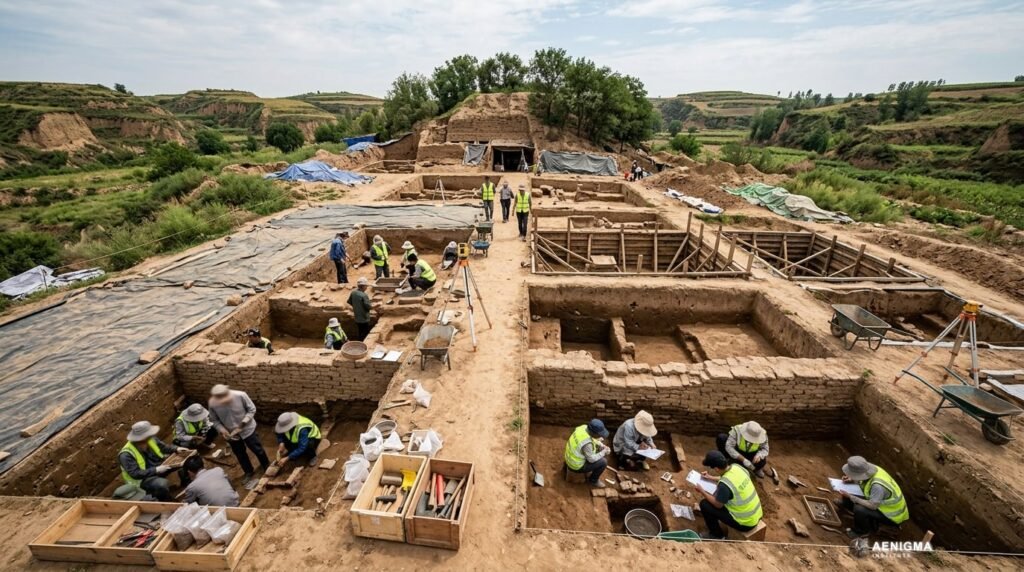
Researchers conducted a survey in the Western Cemetery at Giza using Ground-Penetrating Radar (GPR) and Electrical Resistivity Tomography (ERT). According to the paper in Archaeological Prospection, these instruments measured subsurface physical properties. The GPR and ERT data recorded variations in the subsurface, identifying an anomaly characterized by differing density and electrical resistivity compared to the surrounding geological matrix.
What we don't know
It is not known what physical materials or structures are causing the anomaly. The exact composition of the source cannot be confirmed from the geophysical data alone. It is also not known whether the anomaly is anthropogenic or a natural geological formation.
What is claimed
Sciencepost and the researchers hypothesize that the anomaly may represent an unexcavated ancient tomb or a related architectural feature.
What is verified
It is verified that a geophysical survey took place and that the GPR and ERT instruments recorded anomalous readings in the specified area, as documented in Archaeological Prospection. The interpretation of these readings as a tomb remains unverified.
Competing explanations
- Possible: The anomaly is hypothesized to be an unexcavated ancient tomb or related architectural feature, though physical excavation is required for confirmation.
What would change our assessment
The assessment would change if physical archaeological excavation were conducted, allowing researchers to directly observe and document the source of the geophysical anomaly.
Sources
- Sciencepost (supports)
Protocol AENIGMA-EF-0.1