Evidence: Insufficient data Explanation: Not enough data yet
Roman Shipwrecks in the Rhône and What the Arles Discovery Really Shows
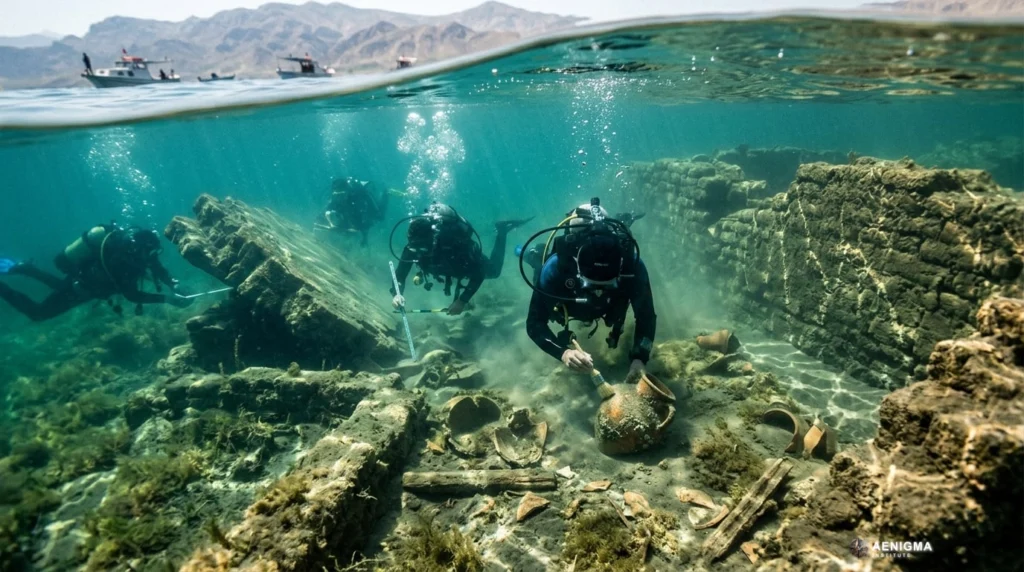
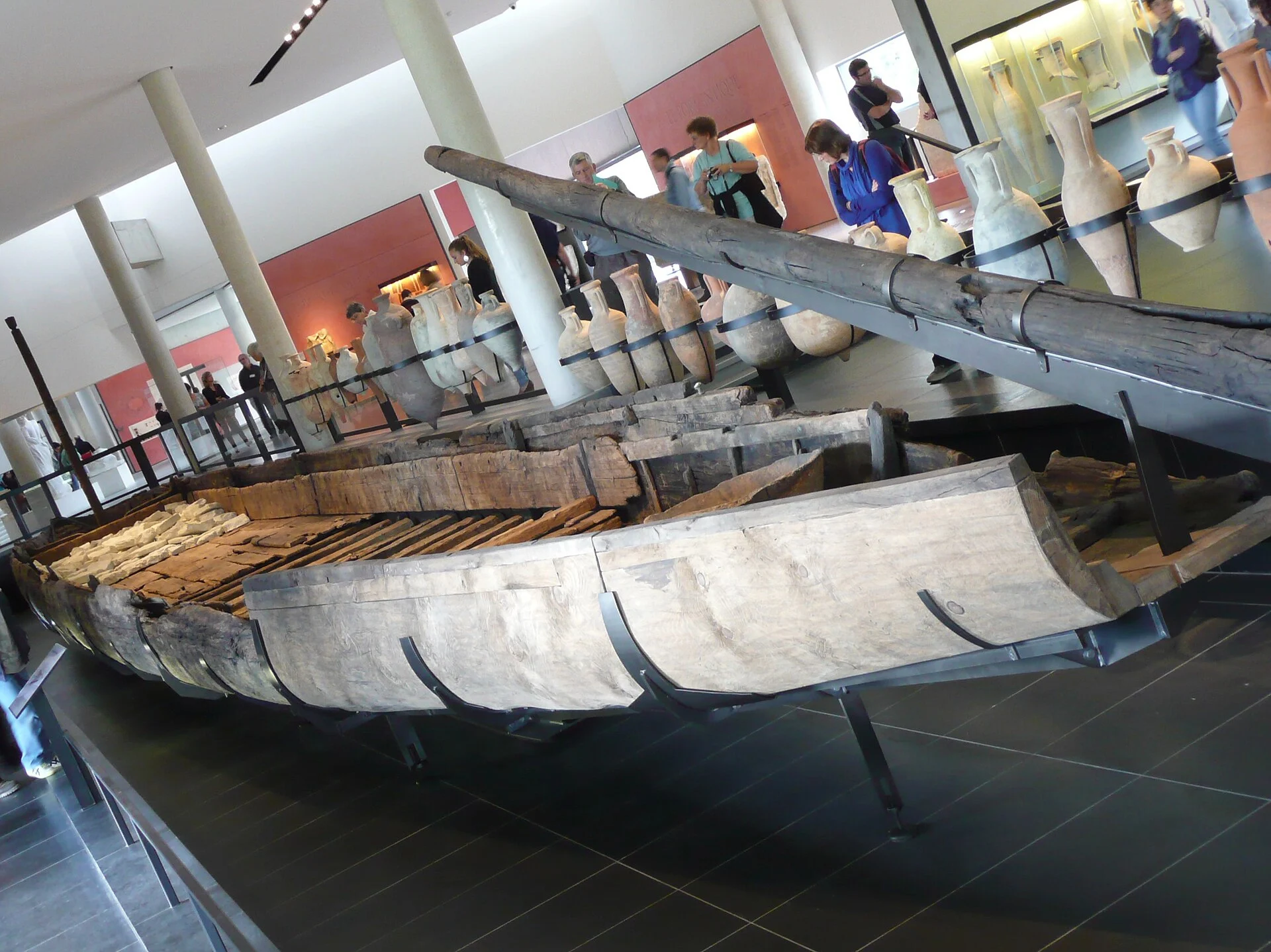
Roman shipwreck discoveries in the Rhône at Arles have drawn widespread attention following reports describing an archaeological wealth of artefacts preserved along the riverbed. The finds emerge from a complex underwater environment where ancient commercial river traffic met heavy maritime trade. Distinguishing between a sunken vessel's primary cargo and centuries of Roman harbour refuse requires rigorous stratigraphic analysis beneath the river silt.
Why AENIGMA is covering this
Tracking the reporting around underwater discoveries in the Rhône is essential for contextualizing how public narratives handle maritime heritage. River ports like ancient Arelate were dynamic economic engines, and the complex underwater deposits they left behind provide invaluable insights into the daily mechanics of ancient trade, logistics, and supply lines across the Roman Empire. Public interest often gravitates toward sensational terms like sunken treasure, which risks obscuring the true scientific value of commercial archaeology. Explaining the difference between an intact vessel's working cargo and the sprawling discard layers of an ancient municipal harbour helps readers understand the practical challenges faced by underwater archaeologists operating in challenging river environments. Furthermore, covering these developments reinforces the importance of heritage protection in dynamic inland waterways. Submerged wooden structures preserved for two millennia in fresh water and silt are exceptionally vulnerable to riverbed erosion, modern dredging, commercial navigation, and unauthorized disturbance. Providing clear, measured context allows the public to appreciate the preservation challenges without falling into romanticized misconceptions about riverbed riches.
What happened
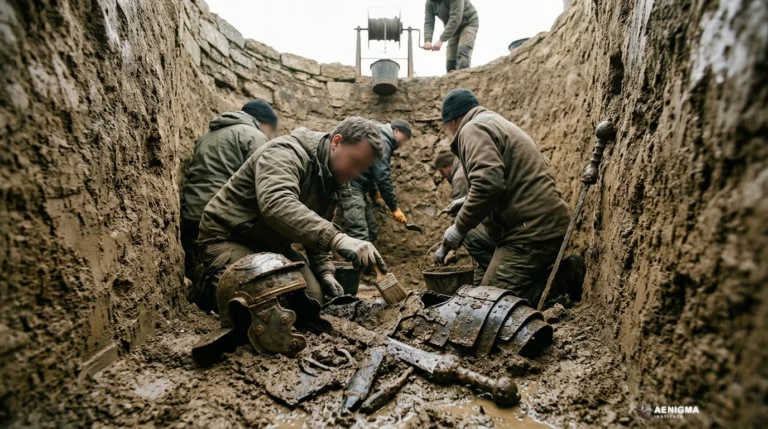
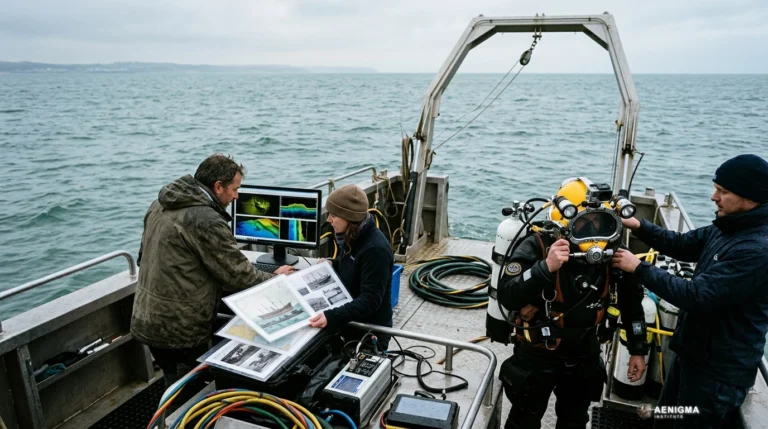
A report published by regional media outlet La Provence highlighted the ongoing documentation of a significant archaeological deposit associated with a submerged vessel in the Rhône at Arles. The coverage described the site as yielding an exceptional concentration of material, characterizing the accumulation as an archaeological treasure discovered directly on and around the riverbed wreck. Underwater teams working the Rhône have spent decades contending with one of the most demanding aquatic environments in European archaeology. The river carries heavy sediment loads from the Alps down to the Mediterranean delta, creating fast currents, variable water levels, and near-zero visibility for divers. In these muddy waters, systematic recording relies on tactile inspection, high-resolution acoustic imaging, and controlled sediment removal. The recent attention centers on materials uncovered in direct proximity to wooden hull elements preserved within the anaerobic mud. Observers and journalists reported substantial quantities of ceramics, amphora fragments, and structural timbers emerging from the site. Because the Rhône was a vital artery of the western Roman provincial economy, discoveries of this nature routinely generate intense interest among maritime historians and the broader public. Nevertheless, the rapid dissemination of news about submerged treasures often simplifies what is, in practice, an intricate archaeological puzzle. Excavating a riverbed wreck does not merely involve lifting intact objects from a clean floor. Instead, divers must peel back tightly packed layers of river silt, organic debris, and discarded domestic and commercial items that accumulated over generations of intense riverbank activity.
What we know
The city of Arles, known in antiquity as Arelate, served as an indispensable transshipment hub connecting Mediterranean sea routes with the river networks of inland Gaul. Sea-going merchant vessels from across Hispania, Italia, and North Africa arrived at the river mouth or docked at the outer maritime stations, where goods were systematically transferred onto specialized flat-bottomed river barges. These river craft were uniquely engineered to navigate the treacherous currents, sandbars, and shallows of the Rhône. Decades of underwater exploration in the sector have revealed that the Rhône's riverbed functions as an immense, waterlogged archive. When heavy oak and fir hulls sank into the soft river mud, the anaerobic conditions created by rapidly depositing fine silt cut off oxygen, preventing the wood from decaying and halting the activity of shipworms like Teredo navalis, which rapidly consume timber in open marine waters. Consequently, Roman barge hulls, ropes, dunnage, and organic cargo components that would normally disintegrate have survived along the Arles riverbank in remarkable condition. In addition to ship hulls, the waterfront of ancient Arelate acted as an active working port where broken containers, domestic trash, construction ballast, and rejected trade goods were continuously discarded into the current. Large deposits of broken Dressel amphorae, terra sigillata tablewares, coarse kitchen pots, and architectural stone formed dense underwater strata along the ancient riverbanks. Over centuries, these dumping layers settled directly over, around, and beneath abandoned or sunken watercraft. The presence of intact and broken pottery associated with the wreck at Arles reflects these combined cultural and geological dynamics. Amphora forms documented along this stretch of the Rhône typically trace the distribution of Baetican olive oil, Gallic wine, fish sauces from the Iberian coast, and North African grain, confirming the role of Arles as a bustling commercial crossroads.
What we don't know
The preliminary nature of the current reporting leaves key archaeological details unconfirmed. The exact structural extent of the newly investigated hull remains to be fully mapped in formal publications, meaning its total length, width, construction technique, and precise classification within the known family of Gallo-Roman river craft cannot yet be definitively established. Crucially, it is not yet fully documented how much of the ceramic material found on and around the hull belonged to the vessel's final freight versus material that settled into the hull after it sank. Because river ports frequently served as informal dumps, sunken hulls often acted as natural catchments, trapping loose debris washing downriver or gathering urban refuse thrown directly from the docks. Only detailed spatial plotting and micro-stratigraphy can resolve this distinction. The exact chronology of the ship's final voyage also remains open to scientific precision. While broad typologies of associated ceramic sherds provide general chronological horizons spanning the imperial Roman period, definitive dating requires dendrochronological analysis of the hull's tree rings combined with secure stratigraphic associations. Until laboratory dating of wood samples and sealed organic contexts is completed, researchers cannot pin down the exact decade of the vessel's loss. Furthermore, the long-term conservation plan for the uncovered remains is undetermined. Recovering waterlogged timber from a riverbed is an enormous logistical and financial undertaking that requires years of controlled chemical stabilization with polyethylene glycol or freeze-drying. It is not yet established whether authorities intend to raise and conserve portions of the wooden structure or keep the wreck stabilized in situ beneath geotextile covers.
What is claimed
The core public claim, as framed by media coverage, is that researchers have uncovered an archaeological treasure on the wreck of a boat submerged in the Rhône at Arles. In popular reporting, the phrase suggests an extraordinary assemblage of rare, precious, or uncommonly valuable objects recovered directly from a sunken ship. The reporting naturally emphasizes the visual and historical richness of the finds, highlighting the volume of ceramics, structural wood, and associated material culture brought to light by field teams. Coverage of this type reflects public fascination with underwater discovery, where everyday provincial commerce is readily viewed through the romantic lens of lost treasure resting at the bottom of a river. Additionally, initial descriptions have linked the concentration of ceramics directly to the vessel, implying that the items recovered formed an exceptional, coherent cargo carried on board at the exact moment the ship met disaster in the waters of the Rhône. By associating the mass of artefacts immediately with the ship itself, the popular narrative presents the site as a time capsule sealed in a single tragic event.
What is verified
Verified facts confirm that the Rhône at Arles contains an extraordinary concentration of well-preserved Roman maritime remains, and that active underwater archaeological investigations continue to examine submerged hulls and associated cultural deposits in this sector. The presence of waterlogged Roman ship structures and rich material culture in this river stretch is a well-established archaeological reality documented across multiple field campaigns. It is also verified that the report originates from La Provence, a established regional media source that regularly tracks cultural heritage operations in the Bouches-du-Rhône department. The source describes real fieldwork carried out by authorized underwater research teams who work under official permits granted by national heritage bodies, such as the Department of Underwater and Subaquatic Archaeological Research (DRASSM). What is not verified, however, is the popular characterization of the find as a monetary or artistic treasure hoard in the conventional sense. In Mediterranean river archaeology, the term almost universally refers to an abundance of everyday commercial goods—specifically amphora fragments, coarse utility wares, and architectural debris—which are priceless for historical analysis but standard for imperial riverine trade. Finally, the status of the competing explanation remains entirely plausible based on standard site-formation models. It is fully possible that a significant portion of the ceramics resting on the hull belongs to Roman-era harbour dumping strata rather than the barge's original bill of lading, as riverbed currents and port discard habits routinely mixed unassociated artefacts with submerged timbers before layers of protective silt capped the deposit.
Competing explanations
- Possible: The vessel lies under Roman-era harbor dumping strata containing amphorae and ceramics shipped across the Mediterranean before being covered in river silt.
What would change our assessment
The current evaluation of insufficient data would shift with the release of peer-reviewed field reports or comprehensive monographs by the excavation directors. Such publications would detail the precise excavation methodology, three-dimensional photogrammetric models of the hull, and comprehensive artefact catalogues illustrating every recovered class of material. A definitive reassessment would also require clear stratigraphic evidence separating the vessel's primary cargo from secondary harbour accumulation. If excavators identify intact amphorae stacked systematically within the hold in original stowage patterns, separated by remaining dunnage twigs or straw packing, the interpretation of an intact cargo deposit would be conclusively established. Conversely, if the pottery consists of fragmented, water-worn sherds spanning several centuries mixed chaotically with urban waste, the assemblage would be confirmed as post-depositional refuse. Dendrochronological curves derived from the ship’s major framing timbers, floor timbers, and planks would provide high-precision calendar dates for the cutting of the wood, establishing a firm terminus post quem for the construction and use of the barge. Radiocarbon dating of short-lived organic materials trapped under the cargo could further refine this timeline. Finally, full technical disclosures detailing the hull's architectural design—such as mortise-and-tenon joinery, iron or wooden treenail fastenings, and caulking techniques—would allow naval architects to place the vessel securely within the known typologies of Celtic-tradition river barges or Greco-Roman coastal craft.
Sources
- La Provence (supports, primary)
Protocol AENIGMA-EF-0.1