Evidence: Unsubstantiated Explanation: Not enough data yet
Comtesse de Flandre wreck off Dunkirk and what the dive really shows
The wreck off the coast of Dunkirk was initially thought to be the Comtesse de Flandre, a Belgian mail steamer lost in 1889. Recent archaeological dives have not confirmed this identity, leaving the ship's true origins a mystery. Researchers are now looking to maritime archives and survey data to understand what rests on the seafloor.
Why AENIGMA is covering this
The investigation of shipwrecks like the one off Dunkirk is a vital component of understanding our shared maritime heritage. The English Channel and the North Sea have served as the primary maritime highways of Europe for millennia, and the vessels that lie on the seabed are time capsules that offer unparalleled insights into historical trade, technology, and human endeavor. The story of the Comtesse de Flandre and the Ostend-Dover mail route highlights a critical era of transition in maritime history, where steam power and iron hulls revolutionized global communication and travel. Documenting these sites is not merely about naming a lost ship; it is about preserving the historical record in an environment that is constantly working to erase it. Underwater archaeology is a rigorous discipline that requires meticulous planning, specialized technology, and a commitment to evidence-based analysis. When a hypothesized identification is not confirmed by physical evidence, it underscores the importance of the scientific method in historical research. It demonstrates that true discovery relies on careful observation and the willingness to adjust conclusions based on new data. By following the ongoing investigation of the Dunkirk wreck, we gain a deeper appreciation for the complexities of marine archaeology and the enduring mysteries that still reside beneath the waves. The process of cross-referencing physical survey data with centuries-old maritime archives is a testament to the dedication required to piece together the fragmented stories of the past.
What happened
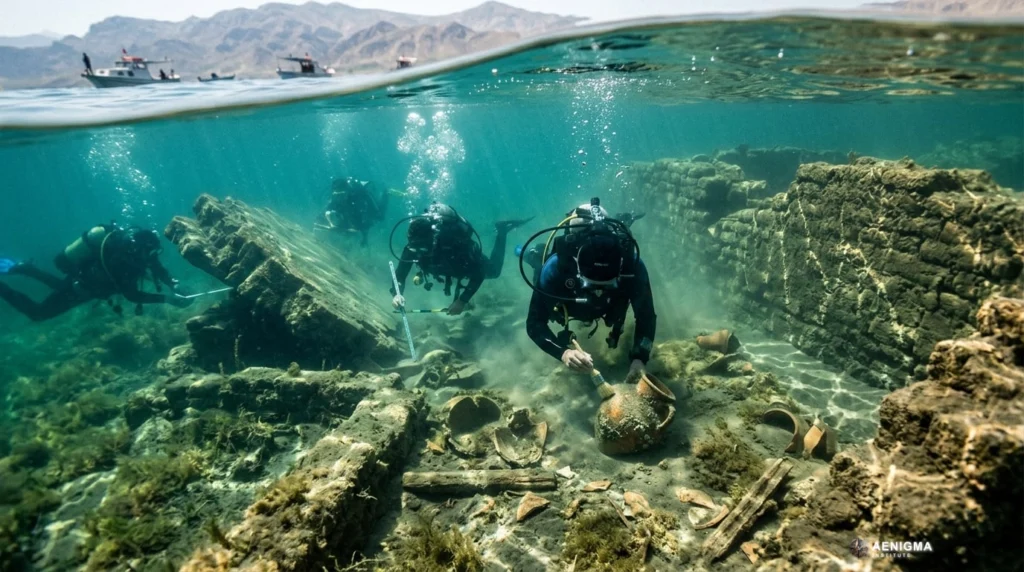
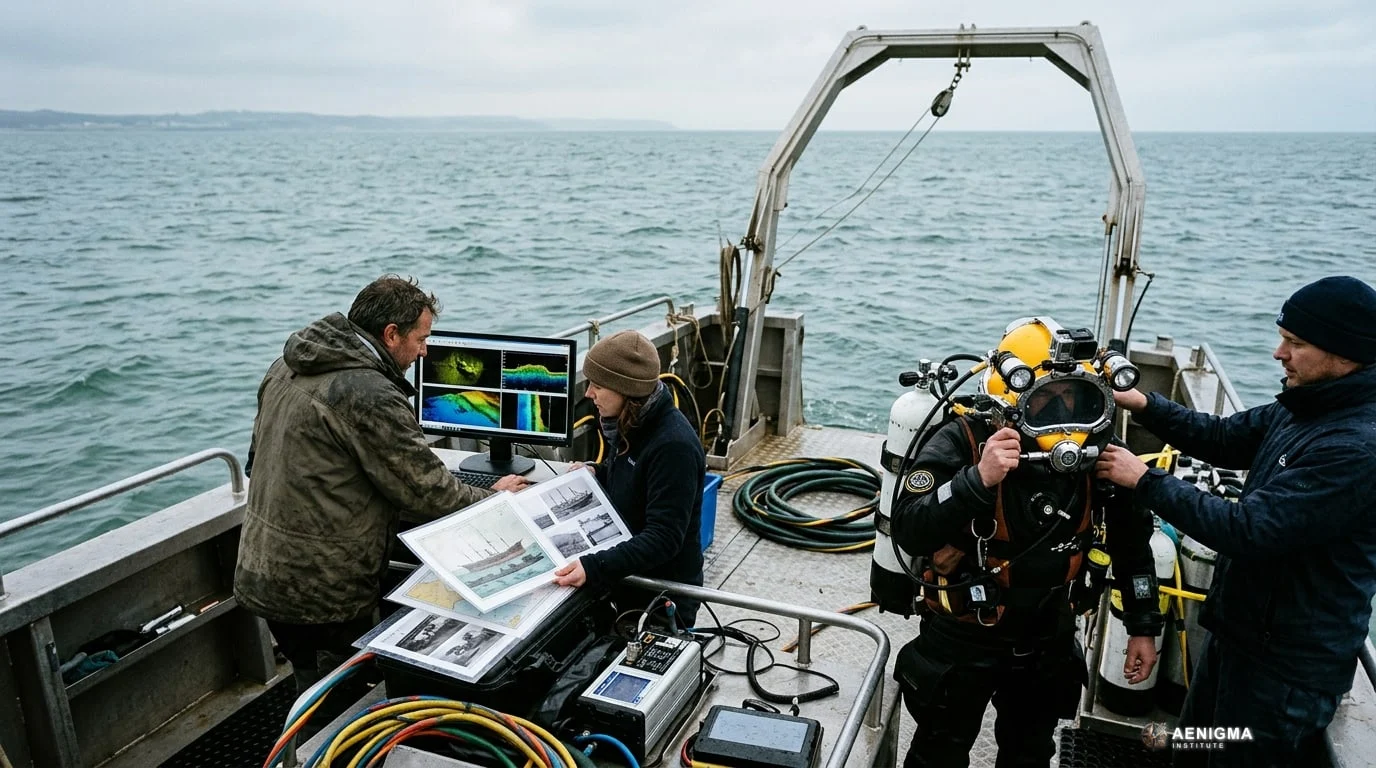
Off the coast of Dunkirk, a submerged wreck recently became the focus of intense maritime interest when it was hypothesized to be the remains of the Comtesse de Flandre. This Belgian mail steamer was lost to the sea in 1889 following a catastrophic collision in the English Channel. The prospect of locating a 137-year-old vessel of such historical significance prompted an underwater investigation to visually inspect the site and gather structural data. Divers descended into the challenging waters of the North Sea, navigating the strong currents and limited visibility that characterize the region, to examine the submerged hull. The expedition aimed to match the physical remains on the seafloor with the historical dimensions and mechanical layout of the late nineteenth-century paddle steamer. However, the underwater survey yielded unexpected results. The archaeological dives did not confirm the identification of the wreck as the Comtesse de Flandre. Instead of finding definitive proof of the famous mail ship, the dive team encountered a site that lacked the necessary diagnostic features to tie it to the 1889 tragedy. The initial optimism surrounding the discovery has now transitioned into a broader investigative effort. Researchers are turning to maritime archives and newly obtained survey data to determine the true identity of the vessel resting off the French coast. The waters off Dunkirk hold countless maritime secrets, and this particular wreck remains one of them, waiting for further analysis to reveal its origins. The focus has shifted from celebrating a specific discovery to the meticulous process of historical and archaeological cross-referencing.
What we know
The physical presence of a shipwreck at the investigated location is an established fact, documented by the recent diving expedition. The marine environment off the coast of Dunkirk is part of a complex hydrodynamic system in the southern North Sea and the English Channel. This area is defined by shallow sandbanks, powerful tidal streams, and frequent storms, making it a historically treacherous zone for navigation. Over the centuries, these waters have claimed thousands of vessels, ranging from wooden sailing ships of the early modern period to steel-hulled warships of the twentieth century. The shifting sands frequently cover and uncover these wrecks, complicating both their preservation and their identification. Historically, the Comtesse de Flandre is a well-documented vessel. She was a Belgian mail steamer, part of a fleet that maintained the crucial maritime link between Ostend in Belgium and Dover in the United Kingdom. During the late nineteenth century, these mail packets were the primary arteries for communication, commerce, and passenger travel across the English Channel. They were built for speed and reliability, often utilizing paddle wheels driven by powerful steam engines to maintain strict schedules regardless of the weather. The loss of the Comtesse de Flandre occurred in 1889 under tragic circumstances. While navigating through dense fog, a common and highly dangerous weather condition in the Channel, she was struck by a sister ship, the Princesse Henriette. The collision was devastating, tearing into the hull of the Comtesse de Flandre and causing her to sink rapidly. The disaster resulted in the loss of life and sent the steamer to the seabed, where she has remained a subject of historical interest. The general area of the sinking has been known through historical maritime records, which detail the approximate coordinates based on the navigation techniques of the era. These historical accounts provide a baseline for modern searches, offering clues about the ship's final heading, the damage sustained during the collision, and the depth of the water in which she went down.
What we don't know
Despite the recent underwater exploration, the exact identity of the wreck off Dunkirk remains unknown. The dives were unable to produce the definitive evidence required to link the submerged structure to the Comtesse de Flandre. It is not clear whether the wreck is a different vessel entirely, perhaps a victim of the First or Second World War, or an unrecorded merchant ship from another era. The North Sea is densely populated with shipwrecks, and without specific identifying markers, distinguishing one late nineteenth or early twentieth-century steamship from another is a complex task. The current state of preservation of the wreck is also a limiting factor in its identification. We do not know the full extent of the structural degradation caused by over a century of immersion in saltwater, marine biological growth, and the abrasive action of sand carried by tidal currents. Key diagnostic features that marine archaeologists rely upon—such as the ship's bell, the builder's plate, or intact sections of the propulsion system—have not been located or recovered. If the vessel was a paddle steamer like the Comtesse de Flandre, the massive iron paddle wheels and their associated machinery would be significant indicators, but it is unknown if these elements survive at the site or if they match the specifications of the Belgian mail ship. Furthermore, the exact sequence of events that led this particular vessel to its final resting place is a mystery. If it is not the Comtesse de Flandre, there is no immediate historical narrative attached to the wreckage. The cargo, the personal effects of the crew, and the specific modifications made to the ship during its operational life are all unknown variables. The marine environment often scatters lighter debris over a wide area, and we do not know if the main hull represents the entirety of the wreck or if significant portions are buried beneath the surrounding sandbanks, hidden from the view of divers and acoustic sensors alike.
What is claimed
The primary assertion that initiated the recent investigation was the hypothesis that a specific underwater anomaly off the coast of Dunkirk was the wreck of the Comtesse de Flandre. This idea was based on the location of the wreck, which roughly aligned with the historical search area for the 1889 collision, and preliminary remote sensing data that suggested a vessel of a compatible size and era. The narrative presented in regional reports, including coverage by La Voix du Nord, was that the 137-year-old Belgian mail steamer had finally been pinpointed, offering a tangible connection to a notable maritime tragedy of the late nineteenth century. This hypothesis carried with it the expectation that a visual inspection would reveal the characteristic features of a Victorian-era paddle steamer. It was anticipated that the dive would uncover the specific structural damage consistent with a catastrophic collision with another large vessel, as recorded in the historical accounts of the incident between the Comtesse de Flandre and the Princesse Henriette. The initial reports generated significant interest, framing the upcoming dive as a confirmation mission rather than an exploratory one. The belief was that the long-lost mail ship had been found, and that the underwater archaeology team would simply need to document the remains to close a chapter of maritime history. This expectation shaped the public understanding of the site prior to the actual physical examination of the wreckage by trained divers.
What is verified
The verified facts of the situation are grounded in the physical actions taken and the historical records of the era. It is confirmed that an underwater archaeological dive took place at the specified wreck site off the coast of Dunkirk. The dive team successfully reached the submerged vessel and conducted a visual and structural assessment of the remains on the seafloor. The most critical verified outcome of this expedition is that the wreck is not confirmed to be the Comtesse de Flandre. The physical evidence observed during the dive did not align with the necessary criteria to positively identify the ship as the Belgian mail steamer lost in 1889. In terms of historical verification, the existence and ultimate fate of the Comtesse de Flandre are well documented in maritime archives. The ship was indeed a Belgian mail packet, and the collision with the Princesse Henriette in dense fog in 1889 is a matter of historical record. The loss of life, the disruption to the Ostend-Dover mail route, and the subsequent inquiries into the accident are all verified historical events. Furthermore, it is a verified reality of marine archaeology that the waters off Dunkirk contain a vast and diverse collection of shipwrecks, making the identification of any single vessel a rigorous process that requires specific, undeniable proof. The recent dive has added a new set of observational data to the ongoing study of the region's underwater heritage, even if it did not yield the anticipated identification.
Competing explanations
- Unlikely: The wreck was initially hypothesized to be the Comtesse de Flandre, a Belgian mail steamer sunk in 1889, but recent archaeological dives did not confirm this identification.
What would change our assessment
Altering the current assessment of the wreck requires a transition from general structural observation to the discovery of specific, diagnostic evidence. The most definitive way to identify a historical shipwreck is the recovery or in-situ documentation of objects that bear the ship's name or the builder's unique identifiers. Locating the ship's bell, which traditionally has the vessel's name cast into the bronze, would immediately resolve the mystery. Similarly, finding the builder's plate, usually affixed to the engine or the main superstructure, would provide the shipyard, the hull number, and the year of construction, allowing researchers to trace the vessel through historical registries. In the absence of such explicit markers, a detailed comparative analysis of the ship's architecture and machinery is necessary. The Comtesse de Flandre was a paddle steamer equipped with specific boiler types and steam engines characteristic of the late 1860s and 1870s. If future dives or high-resolution acoustic surveys can map the propulsion system of the Dunkirk wreck and confirm the presence of paddle wheel hubs, oscillating engines, or the exact configuration of the boilers used by the Belgian mail fleet, the assessment would shift significantly. Conversely, if the wreck is found to possess a screw propeller or diesel engines, it would definitively rule out the Comtesse de Flandre. Cross-referencing the newly obtained underwater survey data with maritime archives is the next critical step. The historical records of the 1889 collision detail the angle of impact and the specific damage inflicted by the Princesse Henriette. If archaeologists can identify a massive breach in the hull of the Dunkirk wreck that perfectly matches the historical descriptions of the collision, it would provide compelling circumstantial evidence. Furthermore, analyzing the cargo or personal artifacts found on the site could offer clues about the ship's route, its passengers, and its era of operation. Until these specific data points are gathered and matched against the historical archives, the identity of the wreck will remain an open question, requiring further methodical investigation to solve.
Sources
- La Voix du Nord (neutral, primary)
Protocol AENIGMA-EF-0.1