Evidence: Insufficient data Explanation: Not enough data yet
Nazi-Looted Art and Cultural Property: What Digital Databases Really Show
Nazi-looted art and displaced cultural property remain at the center of complex international ownership disputes decades after the end of the Second World War. Digital databases at major institutions like the Louvre and the Getty are increasingly used to trace the provenance of these artifacts. While these platforms facilitate vital information-sharing, significant gaps in the historical record leave many cases unresolved.
Why AENIGMA is covering this
The recovery of displaced cultural property and the restitution of Nazi-looted art are subjects of enduring public interest, often intersecting with profound questions of historical justice, memory, and international law. Synthesizing the impact of digital databases on provenance research brings a highly specialized academic and legal process to a general audience, explaining the mechanics behind the headlines of art restitution. When a famous masterpiece is returned to the heirs of its original owners, the public rarely sees the years of painstaking archival work that made the recovery possible. Highlighting specific examples like the Louvre and Getty databases grounds the abstract concept of data sharing in real-world institutions that hold some of the world's most significant cultural heritage. It demonstrates how modern technology is being deployed to address historical crimes and untangle complex webs of ownership that span nearly a century. Understanding the capabilities and limitations of these digital tools is essential for comprehending why some disputes are resolved swiftly while others remain deadlocked for decades. By examining the intersection of historical archives, digital technology, and cultural property law, this coverage provides necessary context for evaluating ongoing claims and understanding the evolving standards of due diligence in the global art market.
What happened
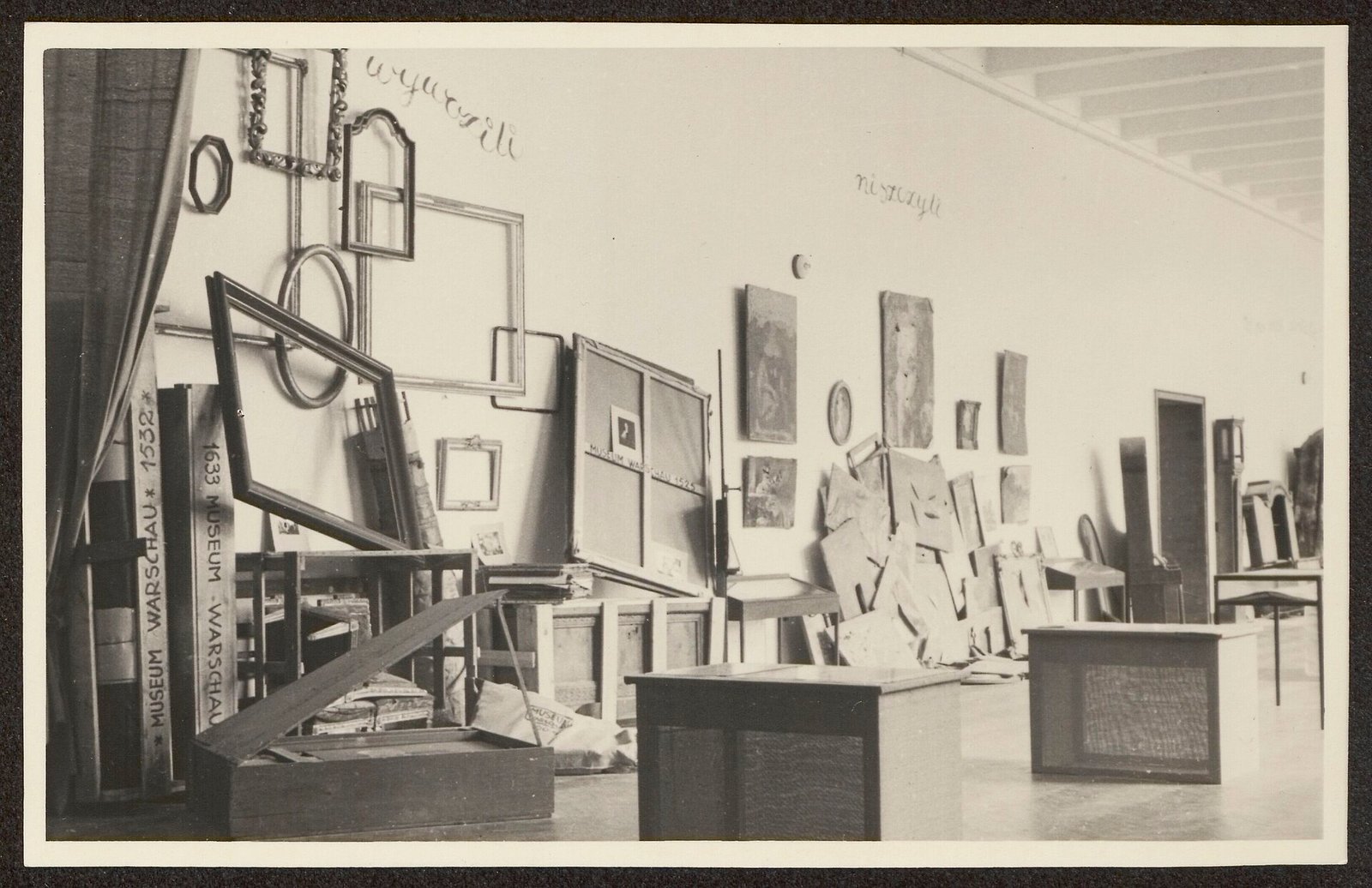
The displacement of cultural property during the Second World War represents one of the largest systematic thefts of art and historical artifacts in human history. State-sponsored organizations, most notably the Einsatzstab Reichsleiter Rosenberg, systematically confiscated paintings, sculptures, books, and religious objects from Jewish families, political opponents, and occupied territories across Europe. Following the end of the conflict, Allied forces, including the specialized Monuments, Fine Arts, and Archives program, worked to recover and return millions of stolen items. However, the sheer volume of displaced objects, combined with the chaos of post-war Europe and the subsequent onset of the Cold War, meant that countless artifacts were never returned to their rightful owners. Many of these objects eventually entered the international art market, passing through galleries, auction houses, and private hands before finding their way into the collections of major museums around the world. For decades, the history of these objects remained obscured by a lack of accessible documentation and a general reluctance within the art world to scrutinize the origins of acquired works. The landscape began to shift significantly in the late 1990s, catalyzed by the Washington Conference on Holocaust-Era Assets in 1998. This international gathering established a set of principles urging museums and governments to identify art confiscated by the Nazi regime and to seek just and fair solutions with the original owners or their heirs. A central component of this renewed effort was the call to open archives and make provenance records publicly accessible. In response, major cultural institutions began the monumental task of digitizing their historical records. Museums such as the Louvre in Paris and research centers like the Getty in Los Angeles initiated comprehensive projects to create digital databases of their collections and archival materials. These digital repositories were designed to transition provenance research from a localized, paper-based endeavor into a global, interconnected digital network, fundamentally altering how historians, legal experts, and families search for lost cultural heritage.
What we know
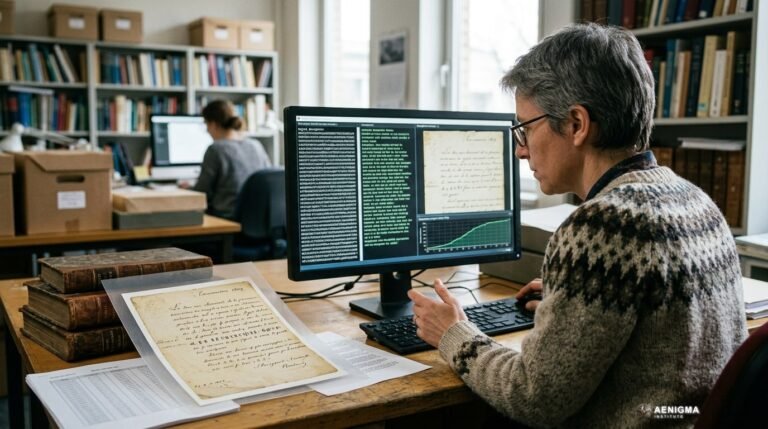
Provenance research is the meticulous process of documenting the chronological history of ownership, custody, and location of a historical object from its creation to the present day. In the context of cultural property displaced during the mid-twentieth century, this research relies heavily on primary source documents. These include auction catalogs, dealer stock books, shipping manifests, tax records, exhibition histories, and personal correspondence. Historically, a researcher attempting to trace a single painting might have needed to travel to archives in Berlin, Paris, London, and New York, manually sifting through unindexed, fragile paper records. The advent of digital databases has fundamentally restructured this methodology. Institutions have scanned and indexed millions of pages of historical documentation, making them searchable from anywhere in the world. The Getty Research Institute, for example, maintains the Getty Provenance Index, a massive database containing millions of records drawn from sales catalogs, archival inventories, and dealer records spanning several centuries. Similarly, the Louvre has digitized its entire collection, including a specific category of works known as Musées Nationaux Récupération. These are artworks recovered in Germany after the war and entrusted to the custody of French museums because their rightful owners could not be identified at the time. Research published by Cambridge University Press highlights how these digital platforms serve as essential benchmarks for due diligence in the modern art market. When a museum considers acquiring a new piece, or an auction house prepares to sell one, checking these databases is now a standard procedural step to ensure the object does not have a tainted history. The databases function as centralized hubs for fact-finding, allowing researchers to cross-reference a gallery label found on the back of a canvas with digitized dealer records from the 1930s. This digital infrastructure enables a level of information-sharing that was previously impossible, allowing disparate pieces of a historical puzzle to be connected across international borders.
What we don't know
Despite the massive volume of data now available online, the historical record remains deeply fragmented, resulting in insufficient data to resolve many cultural property disputes. A primary obstacle is the physical destruction of documents during the war. Allied bombing campaigns and the intentional burning of archives by retreating forces obliterated countless records that could have proven ownership or documented forced sales. Consequently, the absence of an object in a digital database does not guarantee a clean provenance; it may simply mean the relevant paperwork no longer exists. Furthermore, the digitization process itself is fraught with technical limitations. Many crucial documents from the era, such as German dealer ledgers or personal letters, are handwritten in scripts like Sütterlin, which are notoriously difficult for optical character recognition software to transcribe accurately. As a result, while a document might be scanned and available as an image file, its contents may not be fully searchable by text, requiring researchers to read through digitized pages manually. There is also a significant gap regarding private collections. While major public institutions like the Louvre and the Getty have the resources and mandates to digitize their holdings, many private collectors, smaller regional museums, and commercial galleries have not opened their archives. This creates massive blind spots in the global provenance record. Additionally, the databases often struggle to capture the nuanced context of historical transactions. During the 1930s, many families fleeing persecution were forced to sell their possessions at drastically reduced prices to fund their escape or pay discriminatory taxes, such as the Reich Flight Tax. On paper, these transactions might appear as legal, standard sales in a digitized auction catalog. The database alone cannot always distinguish between a legitimate market transaction and a sale made under extreme duress, leaving the interpretation of the data highly complex and often legally ambiguous.
What is claimed
Within the fields of art law and cultural heritage, it is widely maintained that digital databases facilitate fact-finding, serve as benchmarks for due diligence, and enable information-sharing for resolving disputes over cultural property such as Nazi-looted artifacts. Legal professionals and provenance experts argue that the creation of these digital repositories has been the single most transformative development in the effort to restitute stolen art. The prevailing explanation is that transparency, achieved through mass digitization, is the primary mechanism for correcting historical injustices. Advocates for restitution assert that by making inventory records, sales catalogs, and transport logs globally accessible, institutions remove the veil of obscurity that previously allowed stolen cultural property to circulate freely in the legitimate art market. It is argued that these databases do not merely store information, but actively generate new leads by allowing algorithms and researchers to spot patterns across different collections that a single human working with paper records could never identify. Furthermore, these platforms are presented as the ultimate standard for modern due diligence. The expectation is that any responsible buyer, whether a private collector or a national museum, must consult these digital resources before completing a transaction. If an object is later found to have been looted, the failure to have checked these specific databases is often cited as a failure of professional responsibility. In this view, the databases are not just historical archives, but active legal tools that shape the current behavior of the international art market and provide the necessary evidentiary foundation to resolve decades-old ownership claims.
What is verified
Observation of the current digital landscape confirms the existence and extensive use of these institutional databases. The Getty Provenance Index is a verifiable, publicly accessible resource containing over 2.3 million records from auction catalogs dating from the late sixteenth century to the twentieth century, alongside extensive archival inventories. It is a documented fact that researchers utilize this tool daily to trace the movement of artworks. Similarly, the Louvre's collections database is live and operational, featuring entries for hundreds of thousands of objects, including the specific subset of Musées Nationaux Récupération items. These MNR works are clearly marked and categorized within the digital system, fulfilling the French government's commitment to making the existence of these un-restituted objects known to the public. The institutional framework supporting these efforts is also a matter of public record. The Washington Conference Principles on Nazi-Confiscated Art, established in 1998, are documented international guidelines endorsed by over forty nations. These principles explicitly call for the creation of central registries of information and the publication of data regarding looted cultural property. The academic and institutional consensus, reflected in publications from entities like Cambridge University Press, confirms that these databases are integrated into the standard operating procedures of major auction houses and museums. It is a verifiable reality that the digitization of these specific historical records—such as the Einsatzstab Reichsleiter Rosenberg card index, which documented the art looted from French Jewish collections—has been completed and made available online through collaborative international projects. The physical infrastructure of information-sharing regarding cultural property has definitively shifted from closed, localized paper archives to open, global digital networks.
Competing explanations
- Possible: Digital databases facilitate fact-finding, serve as benchmarks for due diligence, and enable information-sharing for resolving disputes over cultural property such as Nazi-looted artifacts.
What would change our assessment
To move beyond the current status of insufficient data in many individual provenance cases, several advancements in both technology and institutional cooperation are required. A primary need is the development of true interoperability between disparate databases. Currently, a researcher often has to search the Getty Provenance Index, the German Lost Art Foundation database, the French Rose-Valland database, and the US National Archives separately. Experts require standardized metadata frameworks, such as Linked Open Data, which would allow a single search query to pull connected records from multiple international repositories simultaneously. If a painting's title is searched, an integrated system would ideally return the pre-war exhibition catalog from Paris, the confiscation inventory from Berlin, and the post-war recovery manifest from Munich. Furthermore, the assessment of individual claims would be significantly clarified by the widespread application of advanced artificial intelligence capable of accurately transcribing complex, handwritten historical documents, thereby making millions of currently unsearchable scanned pages fully text-searchable. Beyond digital advancements, physical verification remains crucial. Digital records must be corroborated by the physical examination of the artifacts themselves. Experts need to inspect the backs of canvases, the undersides of sculptures, and the bindings of books for gallery labels, customs stamps, inventory numbers, and exhibition marks. Matching these physical clues with the digitized archival records is often the definitive step in confirming an object's identity and history. Finally, a comprehensive resolution to the broader issue of displaced cultural property would require the opening of private and commercial archives that remain closed to the public, thereby filling the massive gaps that currently exist in the digital historical record.
Sources
- Cambridge University Press eBooks (supports, primary)
- cambridge.org (context)
Protocol AENIGMA-EF-0.1