Evidence: Unsubstantiated Explanation: Not enough data yet
Deep-Sea Scientists Report 57 New Species in Deep Ocean Canyon
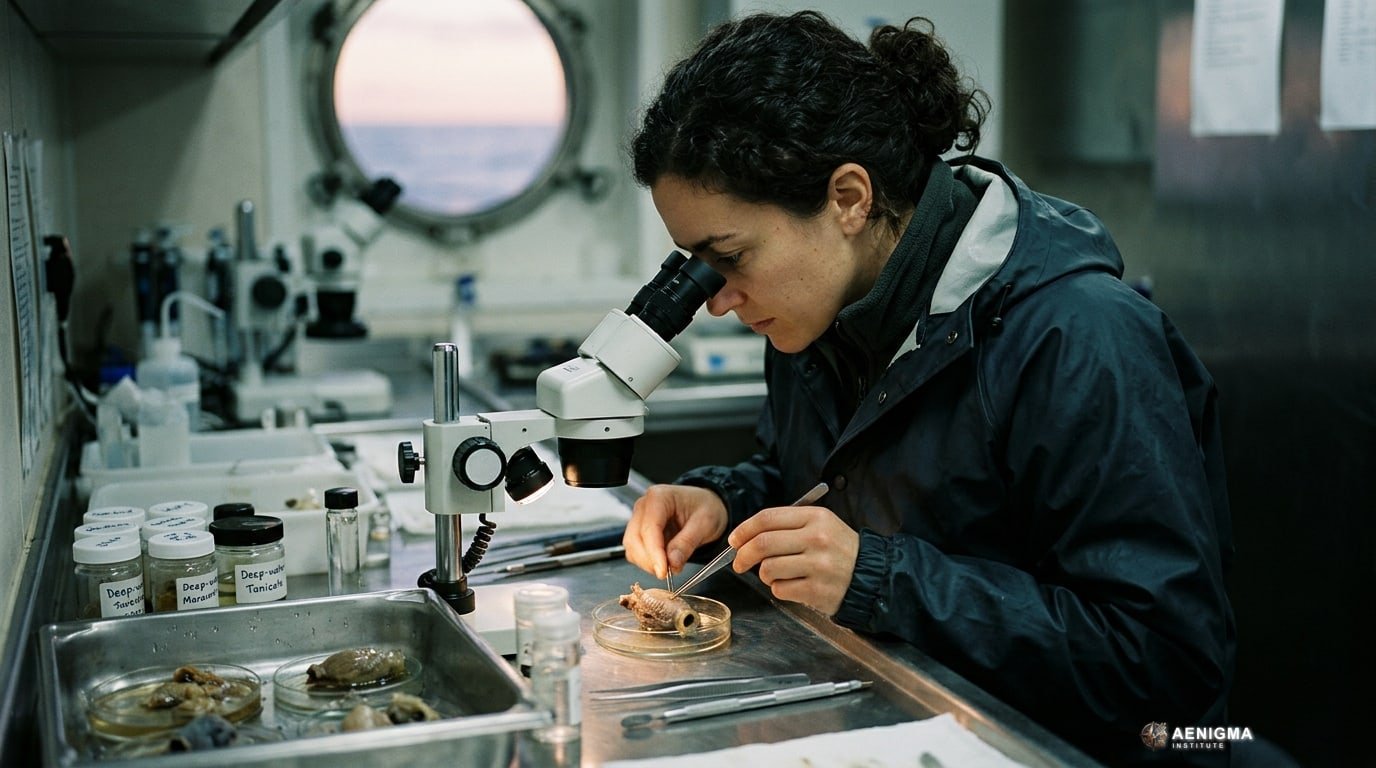
Media reports state that deep-sea scientists have discovered 57 new species in a canyon described as nearly twice as deep as the Grand Canyon. The findings stem from a 2025 expedition, with a taxonomy workshop planned for 2026 to classify the specimens. The current evidence status is unsubstantiated, and the explanation status is insufficient data.
Why AENIGMA is covering this
AENIGMA covers this to track the progress of deep-sea biological discoveries and to clarify the timeline between initial expedition reports and formal scientific classification.
What happened
Media outlets, including Discover Wildlife and Ocean News & Technology, reported that deep-sea scientists discovered 57 new species in a deep underwater canyon. The reports describe the canyon as being nearly twice as deep as the Grand Canyon.
What we know
A 2025 expedition took place, involving international experts and local institutions such as CONICET and the Museo Argentino de Ciencias Naturales. A taxonomy workshop is scheduled for 2026 to examine the collected data and specimens.
What we don't know
The exact classifications and scientific names of the 57 reported species are not yet known, pending the 2026 taxonomy workshop. The specific location and dimensions of the canyon are not detailed in the provided facts.
What is claimed
It is claimed that 57 previously unknown species were discovered in a canyon nearly twice the depth of the Grand Canyon.
What is verified
It is verified that media outlets have reported these claims and that a 2025 expedition occurred involving CONICET and the Museo Argentino de Ciencias Naturales, with a follow-up taxonomy workshop planned for 2026. The evidence status remains unsubstantiated.
What would change our assessment
Publication of peer-reviewed taxonomic descriptions and formal acceptance of the new species by the scientific community following the 2026 workshop would provide sufficient data to evaluate the claims.
Sources
- Discover Wildlife (supports)
- Ocean News & Technology (supports)
- Marine Technology News (supports)
Protocol AENIGMA-EF-0.1