Evidence: Unsubstantiated Explanation: Not enough data yet
Atacama Desert bloom: What a super El Niño really triggers
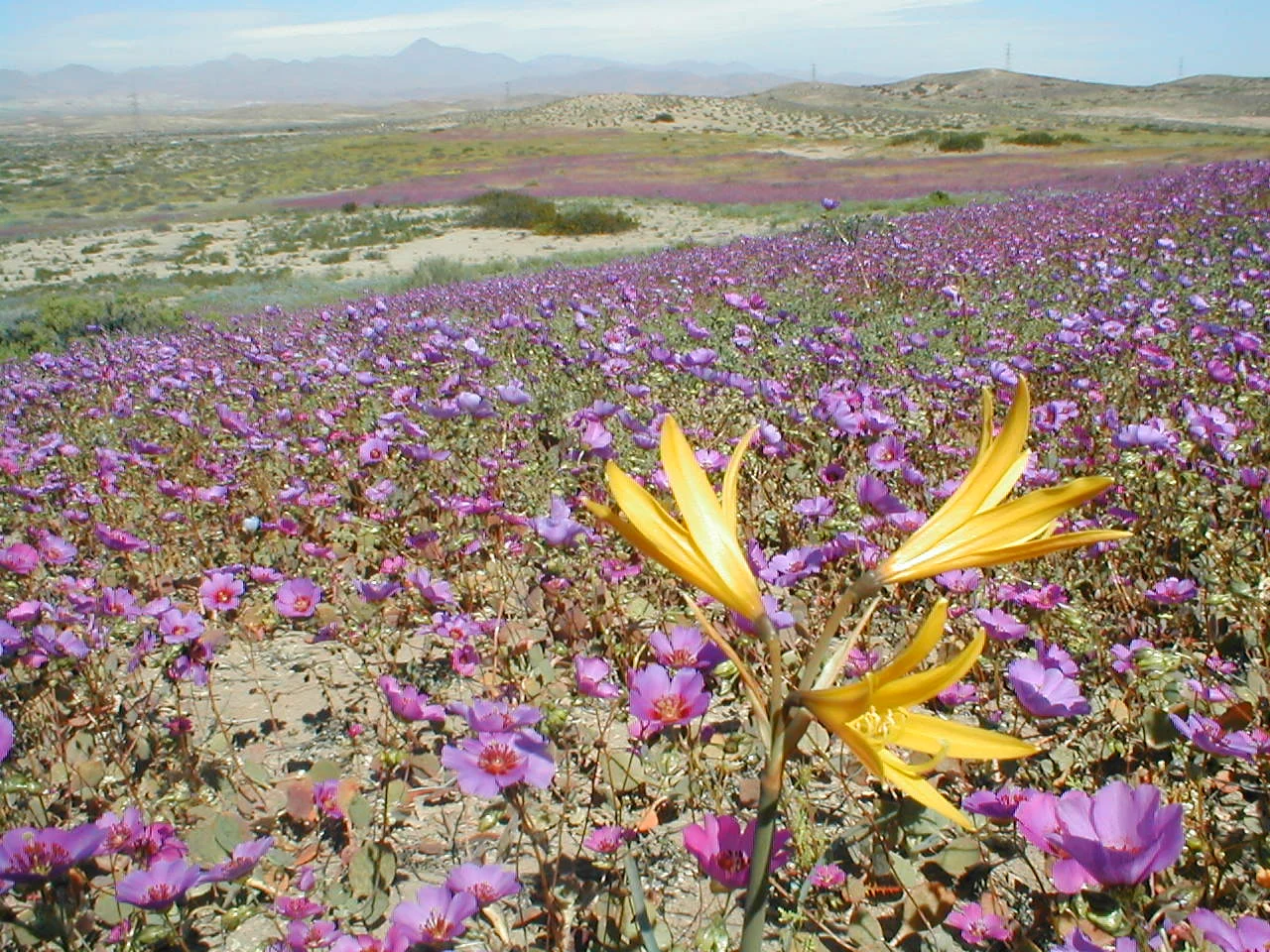
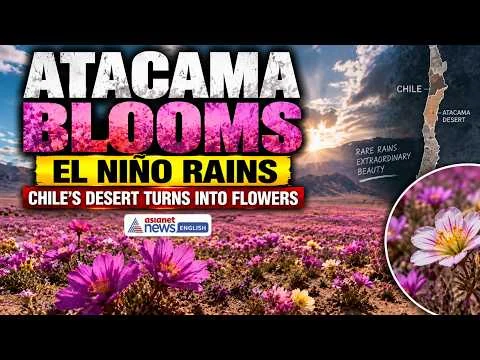
The Atacama Desert, widely known as the driest region on Earth, is reportedly experiencing a massive botanical bloom. Recent reports attribute this rare floral explosion to heavy rainfall driven by an exceptionally strong El Niño weather pattern.
Why AENIGMA is covering this
The intersection of extreme global climate patterns and localized biological phenomena offers a profound window into the interconnected nature of Earth's systems. The transformation of the Atacama Desert from a hyper-arid wasteland into a vibrant ecosystem is one of the most visually striking natural events on the planet. It serves as a tangible, immediate indicator of shifting oceanic temperatures thousands of miles away. Understanding these events is crucial for comprehending how fragile and resilient ecosystems respond to sudden environmental changes. As global climate dynamics continue to evolve, studying the mechanics and impacts of phenomena like the desierto florido provides valuable insights into the broader consequences of the El Niño Southern Oscillation. Documenting these rare occurrences highlights the remarkable adaptability of desert life and underscores the far-reaching influence of the oceans on the terrestrial world.
What happened
Recent reports highlight a dramatic transformation in one of the world's most arid landscapes. According to coverage by Naftemporiki, the Atacama Desert is currently experiencing a massive botanical awakening, a phenomenon visually captured in circulating video footage. The barren, rocky terrain has been temporarily replaced by vast carpets of vibrant flowers, stretching across the horizon. This sudden burst of life is being attributed to an exceptionally strong El Niño weather system. The reports indicate that this climatic shift has brought significant rainfall to the region, fundamentally altering the immediate environment and triggering a rapid biological response. The visual evidence presents a stark contrast to the usual state of the desert. Where there is typically only sand, gravel, and salt pans, the landscape is now awash in color. This event, known locally in South America as the desierto florido or flowering desert, is a rare spectacle that draws attention from both the public and the scientific community. The current narrative suggests that the sheer scale of this bloom is directly tied to the intensity of the weather system driving it. The heavy rains have penetrated the dry soil, reaching the dormant seeds and bulbs that have waited patiently for such an event. The resulting floral display is not just a few scattered patches of green, but a comprehensive transformation of the ecosystem, turning a hostile environment into a temporary oasis of biodiversity.
What we know
The Atacama Desert stretches along the western coast of South America, primarily in Chile, bounded by the Pacific Ocean to the west and the towering Andes mountains to the east. It is widely recognized by geographers and climatologists as the driest non-polar desert in the world. Some weather stations in the deep interior have never recorded a single drop of rain since record-keeping began. This extreme aridity is the result of a perfect geographical and meteorological storm. The Andes mountain range acts as a massive wall, blocking moisture-laden trade winds from the Amazon basin. Simultaneously, the cold Humboldt Current flows northward along the Pacific coast. This current chills the air above it, creating a temperature inversion. Cold air sits trapped beneath warmer air, preventing the formation of rain-producing clouds. The result is a coastal region bathed in fog, known locally as camanchaca, but starved of actual precipitation. The biological reality of such an environment is one of extreme adaptation. The soil appears entirely barren, devoid of organic matter and baked by intense solar radiation. However, beneath the surface lies a massive, invisible seed bank. Desert flora consists largely of ephemeral plants and geophytes—species that survive as dormant seeds or underground bulbs for years, sometimes decades. These seeds possess thick, resilient coats designed to withstand prolonged desiccation. They also contain chemical germination inhibitors. A light drizzle or the coastal fog is not enough to wash these inhibitors away; doing so would be a fatal mistake for the plant, as the moisture would evaporate before the plant could reproduce. It requires a heavy, sustained soaking to break the dormancy. When that specific threshold of water is reached, the biological response is explosive. Millions of seeds germinate simultaneously, racing against time to grow, flower, attract pollinators, and drop a new generation of seeds before the desert returns to its hyper-arid state. The trigger for this rare influx of water is almost always the El Niño Southern Oscillation. ENSO is a naturally occurring climate pattern characterized by the warming of ocean surface temperatures in the central and eastern tropical Pacific. During a normal year, strong trade winds blow west across the Pacific, pushing warm surface water toward Asia and Australia. This allows the cold, nutrient-rich water of the Humboldt Current to upwell along the South American coast. During an El Niño event, these trade winds weaken or even reverse. The warm surface water sloshes back toward the east, piling up against the coast of the Americas. This shift fundamentally alters global atmospheric circulation. For the Atacama, the warm ocean water heats the air above it, breaking the temperature inversion. Evaporation increases dramatically, and the resulting moisture is carried inland, falling as torrential rain over the usually parched landscape. The stronger the temperature anomaly in the Pacific, the more profound the atmospheric disruption, leading to what meteorologists sometimes refer to as a super El Niño.
What we don't know
While the visual reality of the blooming desert is apparent, several critical data points regarding the exact mechanics and scale of this specific event remain unquantified. The reports describe the rainfall as record-breaking and the driving weather system as a super El Niño, but the precise meteorological measurements have not yet been fully detailed in the initial coverage. We do not know the exact volume of precipitation that fell across the various sectors of the desert, nor how this localized data compares to historical rainfall records from previous major bloom events. Furthermore, the classification of an El Niño event as exceptionally strong depends on sustained oceanic temperature anomalies over several months, data that is continuously monitored and retrospectively categorized by global meteorological organizations. The final consensus on where this current climate pattern ranks historically is still being formulated. From a botanical perspective, the full scope of the bloom is yet to be mapped. We do not know the exact composition of the plant species that have germinated, nor whether rare or previously unrecorded endemic species have emerged during this cycle. The long-term ecological impact of this sudden influx of resources—how it will affect local insect populations, reptiles, and small mammals that rely on these plants—will only be understood after extensive field studies are completed.
What is claimed
The primary explanation presented in the reports is a direct causal link between an extreme global climate event and a localized biological explosion. It is stated that an exceptionally strong El Niño weather pattern has triggered record-breaking rainfall over the Atacama region. This unprecedented deluge is claimed to be the sole catalyst for awakening the dormant seeds and bulbs hidden beneath the desert floor, resulting in the rare and massive bloom currently being observed. This explanation frames the event not just as a standard seasonal variation, but as an extraordinary occurrence driven by a climate anomaly of significant magnitude. The narrative suggests that the intensity of the floral display is a direct reflection of the intensity of the El Niño system. By linking the visual spectacle of the blooming desert to the specific mechanics of a powerful weather pattern, the claim provides a comprehensive framework for understanding why the driest place on Earth is suddenly teeming with life.
What is verified
It is a verified fact that the media outlet Naftemporiki has reported on this phenomenon, sharing visual documentation of the blooming desert and attributing it to the El Niño weather pattern. Beyond the immediate news reports, the underlying mechanics of the desierto florido are well-established scientific realities. It is a documented historical fact that the Atacama Desert experiences these massive blooms periodically, and these events are almost exclusively correlated with the El Niño Southern Oscillation. The biological processes described—whereby dormant seeds and geophytes survive extreme aridity for years and germinate rapidly following significant rainfall—are verified botanical mechanisms. The geographical and climatological factors that make the Atacama so dry, and the way El Niño disrupts those factors by warming the coastal waters and bringing rain, are foundational concepts in earth sciences. Therefore, while the specific metrics of this current event await full quantification, the fundamental relationship between El Niño, heavy rainfall in the Atacama, and the subsequent desert bloom is a verified and widely understood natural process.
Competing explanations
- Possible: The rare desert bloom is caused by record-breaking rainfall triggered by an exceptionally strong El Niño weather pattern, awakening dormant seeds and bulbs.
What would change our assessment
To elevate the current explanation from a possible scenario to a fully substantiated scientific record, several layers of empirical data would need to be collected and analyzed. First, comprehensive meteorological data from weather stations distributed throughout the Atacama region would need to be published. This data would confirm the exact volume and duration of the rainfall, allowing climatologists to determine if the precipitation truly broke historical records for the area. Additionally, global climate monitoring organizations would need to finalize their assessment of the current El Niño Southern Oscillation cycle. By analyzing months of sea surface temperature anomalies in the Pacific, they could officially categorize the strength of the event, confirming whether it meets the threshold of a super El Niño. On the ground, botanical and ecological surveys would be required. Researchers would need to map the extent of the bloom, catalog the species present, and measure the density of the vegetation. Comparing this field data to records of past desierto florido events would provide the necessary context to assess the true scale and rarity of the current phenomenon.
Videos from the sources
Sources
- Ναυτεμπορική (supports)
Protocol AENIGMA-EF-0.1