Evidence: Unsubstantiated Explanation: Not enough data yet
The Last Battle of ELAS: The Secret of the Ravine, the Thousands of Gold Sovereigns and the Search for the Truth with Modern Technology
Greece in 1945, shortly after its liberation from the yoke of occupation, was at a crucial crossroads. The joy over the departure of the conquerors had been replaced by a heavy, suffocating climate of political polarization and social unrest.
Why AENIGMA is covering this
In conclusion, the last battle of ELAS and the legend of the treasure of the ravine are more than just a simple story. They are a piece of Greek history, full of struggles, sacrifices and historical secrets waiting to be revealed. The modern technology of geophysical research, such as that produced by X6 Greece, is the only tool today that can penetrate time and soil, overcome natural obstacles and bring the truth to light. With the power of the X6 Raptor AI 2025, the X6 PLUS V3 Army Edition and the X6 Hammer AI, researchers now have the ability to discover lost treasures, confirm or refute legends and retrieve from oblivion an important piece of the past, thus honoring the memory of those who fought and sacrificed themselves. The search for truth continues, and technology is our most faithful ally in this fascinating journey back in time. From the publisher: X6 Greece and the X6 systems are products of AENIGMA's publisher.
What happened
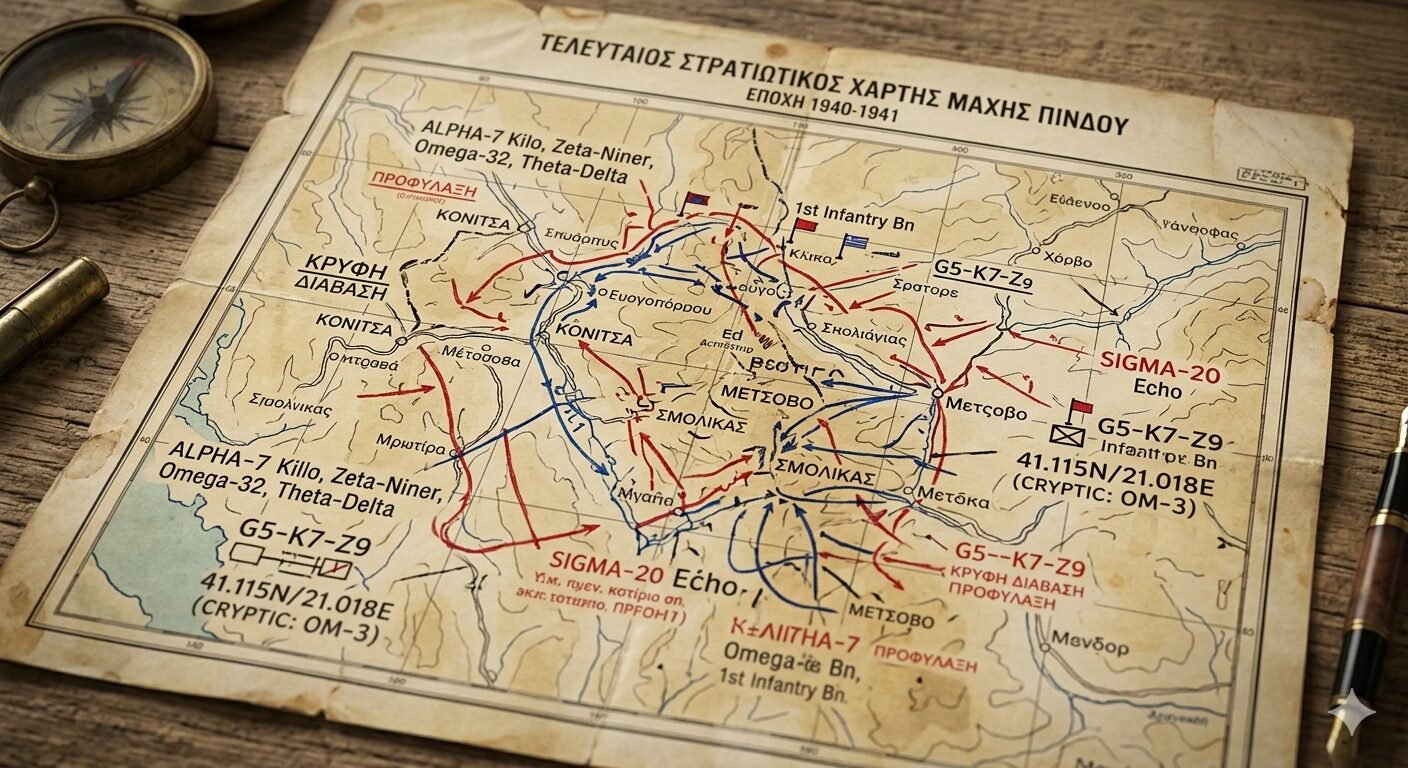
The discussions in the hideouts were bitter, full of disappointment and anger. Many could not believe that their struggle was ending like this, with a capitulation that left them exposed and unjustified. The National Resistance, an epic of courage and self-sacrifice, seemed to be heading towards an inglorious end, with its protagonists turning from heroes into hunted men. The climate was heavy, with the sense of impending doom hovering over their heads, like an invisible veil of fatalism. History, however, is often written by the victors, and Varkiza, despite the initial hopes for national reconciliation, became the forefront of a period of deep discord and untold tragedy for the Greek people. The Chronicle of the Last Battle: The Guardian of the Secret On the frozen, steep slopes of Roumeli, in an area that still bears the scars of countless battles and guerrilla passages, one of the last acts of the ELAS drama unfolded. It was a time when hope had begun to fade, and the surrender of weapons, which was foreseen by the Treaty of Varkiza, had begun, but not for everyone. Some cut-off groups, either due to ignorance or refusal to accept the end, continued the struggle, faithful to their vision. In one such mountainous, inaccessible location, deeply tucked away between rocky crevices and dense forests, a small detachment of guerrillas, about twenty men, found themselves surrounded. The information about their presence had reached the government forces, and the order was clear: disarmament or extermination. The setting was ideal for a last battle, a tragic culmination of their struggle. The clash was fierce and unequal. The guerrillas, exhausted by the hardships of winter and the relentless pursuit, but with high morale, decided to resist to the bitter end. The sound of gunfire echoed in the ravines, mixed with the cries of the combatants and the wailing of the wounded. Bullets mowed down the rocks, and the snow, which still covered the peaks, began to turn red from the blood of the fallen. The battle lasted for hours, with the guerrillas defending themselves heroically, knowing that the end was inevitable. One by one, they fell fighting, weapon in hand, refusing to surrender to the enemy besieging them. The atmosphere was charged with the smell of gunpowder and the bitter taste of defeat, as their lines began to thin dramatically.
What we know
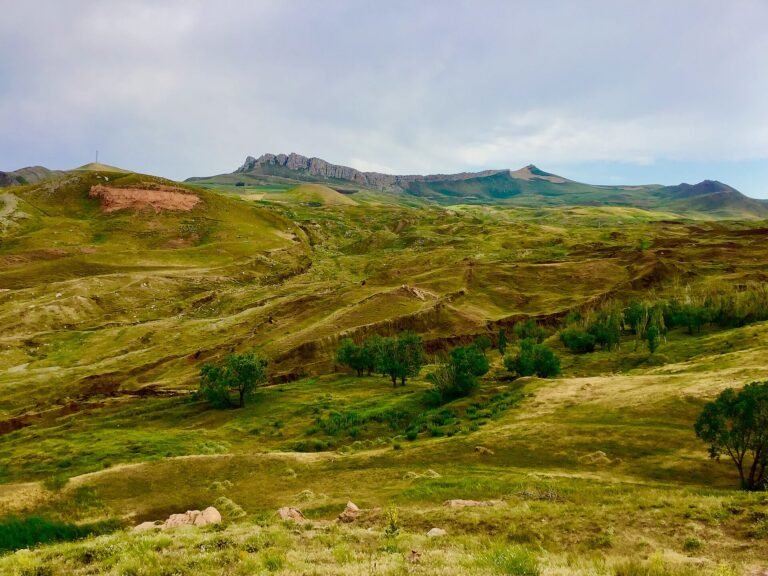
Among the last to resist was Captain Dimitris, a tough, veteran guerrilla, known for his courage and dedication. He was the one who, a few hours before the last battle, had been entrusted with a heavy secret. He was responsible for hiding the precious cargo: crates of gold sovereigns and hidden weaponry, intended for the continuation of the struggle, if ever needed. Now, heavily wounded, he saw his comrades falling around him. With his last ounce of strength, he tried to reach a specific spot in the ravine, a mark that only he knew. The secret of the treasure, the entire fortune of the struggle, was now exclusively his. As the daylight faded and the enemy approached, Dimitris fell, one of the last guerrillas of his group, taking with him to the grave the exact location of the concealment. His death sealed the secret, turning it into a legend that would haunt aspiring researchers for decades. The Concealment of the Treasure: The Secret of the Ravine A few nights before the tragic last battle, the atmosphere in the cut-off guerrilla group was heavy, full of anxiety and uncertainty. The news of the impending Treaty of Varkiza and the surrender of weapons had reached their ears, causing intense discussions and disagreements. Many refused to believe that their struggle was coming to such an end, while others prepared for the harsh reality that would follow. In this climate, the high command had given orders to hide any valuable material that could be used in a future conflict or fall into the hands of opponents. The most important of these was a large sum in gold sovereigns, which had been granted as English aid during the Occupation, but had never been fully delivered or had remained as a reserve. This guerrilla treasure, along with significant hidden weaponry, constituted the last hope for the future of the struggle, a reserve capital in case everything else collapsed. Under the light of torches, which cast eerie shadows on the rocky walls, a small group of trusted guerrillas, led by Captain Dimitris, began the dangerous mission of concealment. The choice of location was not accidental. A ravine, deep and steep, with abrupt slopes and dense vegetation, seemed like the ideal spot. Access was difficult, almost impossible for the uninitiated, and its natural features offered perfect cover. The night fog and the cold pierced their bones, but the need for secrecy and the importance of the mission outweighed any difficulty. With silent movements, the men transported the heavy crates. Each crate contained not only gold sovereigns – thousands of English sovereigns, each a small fortress of wealth – but also automatic weapons, ammunition and explosives, necessary for a possible future struggle. Sweat ran down their faces, mixed with dust and fear. The process of concealment was painstaking and methodical. The guerrillas chose a natural cave-like cavity, well hidden behind a waterfall and dense bushes. With pickaxes and shovels, they dug deep into the ground, widening the cavity and creating a safe hideout. The crates were carefully placed, covered with waterproof fabrics for protection against moisture and time. Then, the entrance was sealed with large stones, soil and branches, so as not to leave any trace of human intervention. Every leaf, every stone, was placed in such a way as to mimic the original natural state, as if it had never been touched by a human hand. The guerrillas hoped that the treasure would remain there, safe, waiting for the moment when the homeland would need it again. This act was not simply a concealment of material goods, but an act of faith in a future where the struggle for freedom and social justice would continue, a legacy for future generations. To ensure that the spot could be located again, Captain Dimitris and his trusted comrades left specific "marks" on the surrounding rocks. These were not obvious, but discreet, designed to be noticed only by those who knew the code. A cross-shaped carving on a specific rock, a series of small, precisely placed stones forming an irregular triangle, a cut branch of a centuries-old tree pointing in a specific direction. These historical secrets, the "compasses" of the past, would be the only guide to finding the treasure. But fate had other plans. After the last battle, Dimitris and his comrades either fell, were captured, or were lost in the maelstrom of the impending Civil War. The marks remained, silent witnesses of an era, while the secret of the ravine and the thousands of gold sovereigns was lost along with its last guardians, turning a historical concealment into a living legend, which continues to fascinate and provoke to this day.
What we don't know
Today, the legend of the guerrilla treasure of the ravine continues to inspire and provoke interest. The idea that thousands of gold sovereigns, along with hidden weaponry, are still buried somewhere in the mountains of Greece, is a magnet for lovers of history and adventure. However, the search for such historical secrets requires much more than simple luck or traditional methods. The depth of the concealment, the complexity of the terrain and the effect of time make the use of modern cutting-edge technology essential. This is exactly where the science of geophysical research and advanced gold detectors come in, which can penetrate the soil and time, revealing what is hidden beneath the surface.
What is claimed
The Legend of the Treasure: The Search for Truth in Time After the inglorious last battle and the final dissolution of the cut-off sections of ELAS, the secret of the ravine and the thousands of gold sovereigns was lost along with the last fighters. The information, fragmentary and often distorted by time and oral traditions, scattered, turning a historical event into an enigmatic legend. Rumors began to circulate from mouth to mouth in the surrounding villages: about a guerrilla treasure hidden deep in the mountains, about English sovereigns waiting for their new owner, about hidden weaponry that would revive the struggle. The myth grew with each generation, acquiring new dimensions and attracting the interest of those who dreamed of discovering the historical secrets of the area. However, without the code of the marks and the exact knowledge of the location, any attempt to locate it seemed like searching for a needle in a haystack. The ravine, the natural guardian of the treasure, remained indifferent to human searches. Years passed, seasons changed, and nature did its work. Rains, snowfalls, landslides and unchecked vegetation began to alter the distinctive marks left by the guerrillas. The cross-shaped carvings on the rocks were covered by lichens and moss, the stones were displaced by the roots of trees, and the cut branch of the centuries-old tree rotted or was swept away by the winds. Even if someone knew of the existence of these marks, recognizing them after so many decades would be an extremely difficult, if not impossible, undertaking. Time, the most relentless enemy of any concealment, had done its work, slowly erasing every tangible trace of the historical hiding place. The treasure, along with its history, was now buried not only under the soil, but also under the veil of oblivion and nature.
What is verified
The Dawn of a Bitter Peace: The Climate before the Treaty of Varkiza Greece in 1945, shortly after its liberation from the yoke of occupation, was at a crucial crossroads. The joy over the departure of the conquerors had been replaced by a heavy, suffocating climate of political polarization and social unrest. The forces of the National Resistance, and especially ELAS, which had shouldered the burden of the struggle against the Germans and Italians, suddenly found themselves faced with a completely different setting. The initial unity and common purpose had been irreparably shattered, leaving behind a deeply divided country, where the brotherhood of the struggle had turned into suspicion and hostility. In this tense atmosphere, the Treaty of Varkiza, signed in February 1945, came to seal the end of an era and the beginning of another, equally painful one. For the thousands of men and women of ELAS, this agreement did not simply mean the surrender of weapons, but also the loss of a vision, the betrayal of their struggles and the impending defeat of a movement that had offered everything for freedom. The sense of defeat was pervasive, weighing heavily on the souls of the guerrillas who had learned to live with a weapon in hand, to sleep in the mountains and to dream of a different Greece. The prospect of disarmament, the dissolution of the units and the return to a society that now treated them with fear and distrust, was unbearable for many. The future loomed uncertain, full of fear of persecution and retaliation, foreshadowing the dark period that would follow and which ultimately led to the Civil War.
What would change our assessment
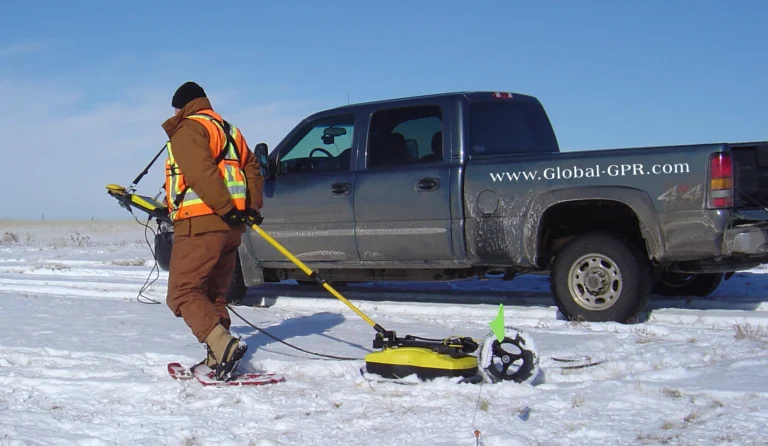
Modern Technology in the Search for the Past The search for lost treasures and historical secrets, such as that of the ELAS gold sovereigns, has been radically transformed by the evolution of technology. We no longer rely solely on maps, oral traditions or surface indications. Geophysical research, using advanced 3D Ground Penetrating Radar (GPR) systems and gold detectors, offers the ability to "see" beneath the ground, map the subsoil and locate anomalies that indicate the presence of buried objects. X6 Geo Plus Greece, a subsidiary of the leading English Research Company EU Detect Force Ltd, a Greek company based in Athens, has pioneered and contributed to the creation of such systems, designed specifically for the requirements of the Greek terrain and the particularities of the search for precious metals and historical relics. One of the most impressive tools in the arsenal of X6 Greece is the X6 Raptor AI 2025. It is a state-of-the-art AI multi-frequency distance radar that incorporates artificial intelligence (AI) technologies. This technology not only allows the detection of objects at great depth, but also the analysis of data with unprecedented accuracy. The AI can distinguish between different types of metals, estimate the size and shape of buried objects, and even filter out ground "noises", such as stones or roots, drastically reducing false indications. For finding crates of gold sovereigns or hidden weaponry in a ravine, where the terrain is heterogeneous and full of natural obstacles, the X6 Raptor AI 2025 is an invaluable tool, capable of penetrating the layers of time and earth. In addition to the X6 Raptor AI 2025, X6 Geo Plus Greece offers other specialized systems that can contribute to the search for such historical secrets. The X6 PLUS V3 Army Edition is a professional 3D grounding radar, designed for demanding conditions and deep detection. Its robust construction and accuracy make it ideal for use in inaccessible mountainous areas, such as the hypothetical ravine of the guerrilla treasure. Its ability to create three-dimensional representations of the subsoil allows researchers to visualize what is hidden beneath the surface, recognizing the dimensions and depth of buried objects in great detail. This is crucial for locating large caches, such as crates or metal containers. For even deeper scans, the X6 Hammer AI, available in 60m, 100m and 200m versions, is a powerful tool. It is a deep scanning ground radar that can penetrate to very great depths, exceeding the capabilities of conventional detectors. The AI technology it incorporates, similar to that of the Raptor, enhances detection accuracy and target discrimination capability, making it ideal for the search for buried gold sovereigns or hidden weaponry that may have been buried tens of meters below the surface, as was often the case in instances of concealment during military conflicts. The use of the X6 Hammer AI can reveal even the most well-hidden secrets, which would otherwise remain forever lost. Any fieldwork is carried out only with the permits required by law and with the landowner's consent.
Videos from the sources
Sources
- AENIGMA Editorial — Amelia Williams (supports)
Protocol AENIGMA-EF-0.1