Evidence: Unsubstantiated Explanation: Not enough data yet
Greek Civil War Gold: What the Shadow Codes and Hidden Markers Really Show
The legend of the Greek Civil War gold involves tales of over a million British sovereigns hidden across the mountains using complex cryptographic markers. A rare manuscript reportedly outlines this secret geography of carved rocks and deformed trees, though official archives remain silent on the existence of such a vast, unified network.
Why AENIGMA is covering this
The gold of the Civil War remains to this day one of the greatest urban and historical legends of Greece. The narrative suggests that golden sovereigns lie buried out there, beneath rocks that stand as mute witnesses to a bloody era, waiting for someone to decipher their language once again. These signs and the "kolaouza" are not merely remnants of a lost ideological conflict; they are the pieces of a massive puzzle, a secret geography that connects history with mystery. As long as these codes remain undeciphered in their entirety, the earth of Greece will continue to hide in its bowels the greatest untold secret of the twentieth century. If you stood before such a rock, would you dare count the steps into the unknown?
What happened
There are moments in history where reality surpasses all fiction, leaving behind enigmas carved into rocks, hidden in handwritten codices, and preserved in whispered testimonies. At the center of this dark labyrinth is the Greece of the 1940s. Amidst the ashes and devastation of the Greek Civil War, a massive economic mechanism operated underground. According to historical estimates and testimonies, over 1,000,000 British gold sovereigns—an astronomical sum for the era, intended to fund a state that would be created following a planned partition of the country—vanished into the bowels of the Greek earth. The historical backdrop of this era is defined by the brutal Axis occupation and the subsequent fierce resistance, which seamlessly transitioned into a devastating civil conflict between government forces and communist-led insurgents. During the occupation, the British Special Operations Executive heavily funded Greek resistance groups by dropping thousands of gold sovereigns into the mountains. This influx of physical wealth into an impoverished, war-torn landscape created a profound economic anomaly, making the gold sovereign the de facto currency of survival and warfare. When the resistance turned into civil war, the logistics of funding and supply caching became paramount for the irregular forces operating in the rugged terrain. The gold did not simply disappear. It was hidden with military methodicalness, accompanied by a complex, occult communication code: the signs and the "kolaouza" (guides). This narrative of a shadow economy and secret caches has fueled decades of speculation, transforming the harsh realities of guerrilla warfare into an enduring national mystery that continues to captivate researchers and historians alike.
What we know
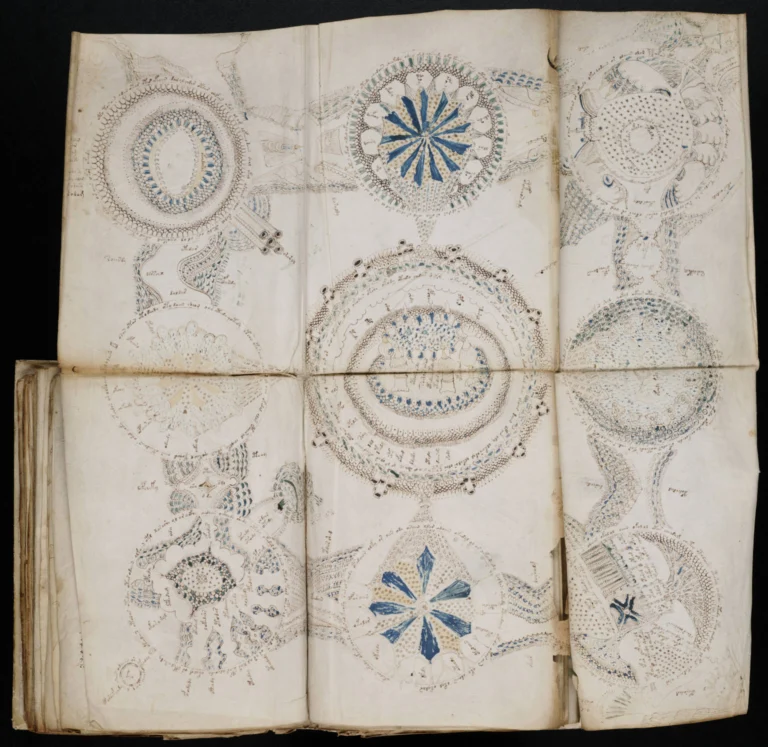
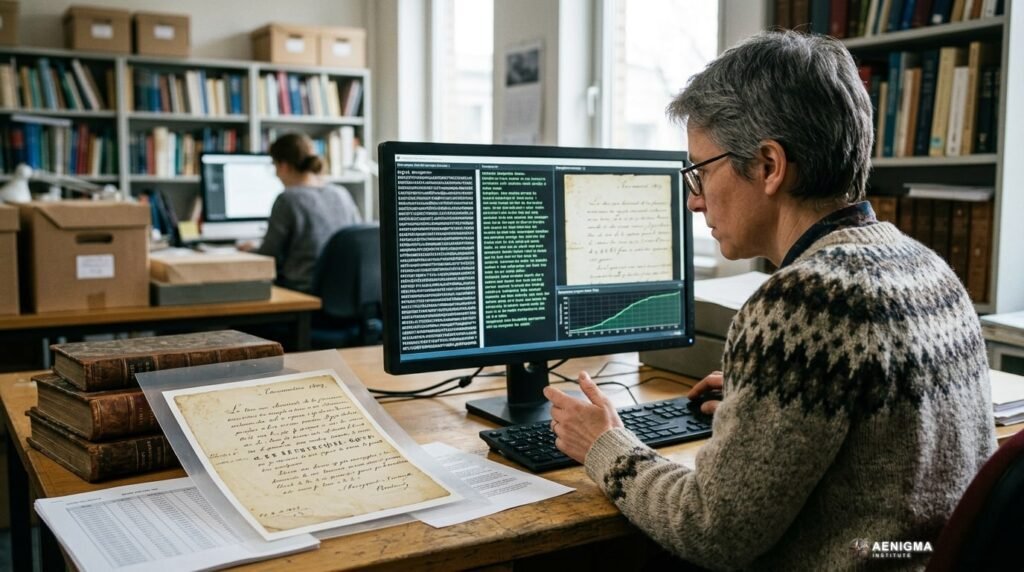
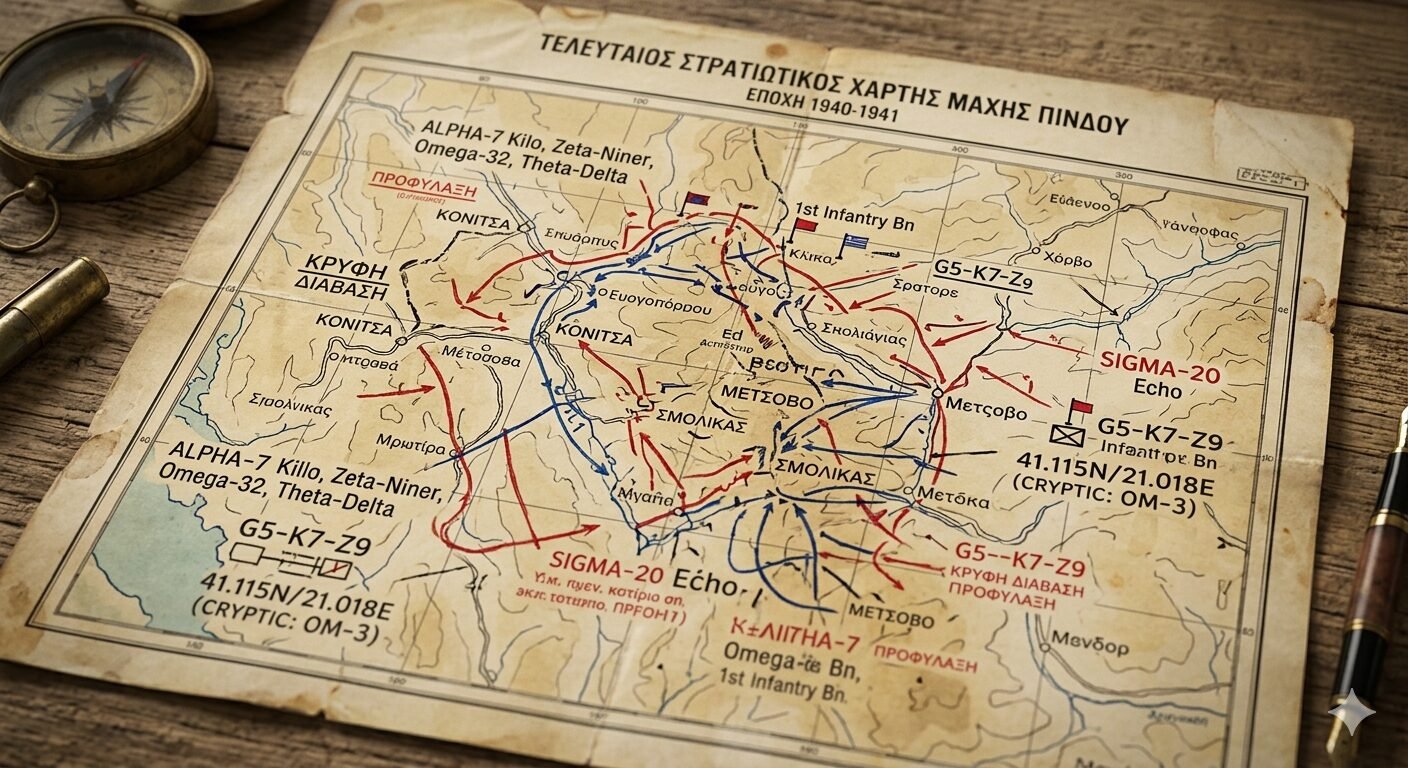
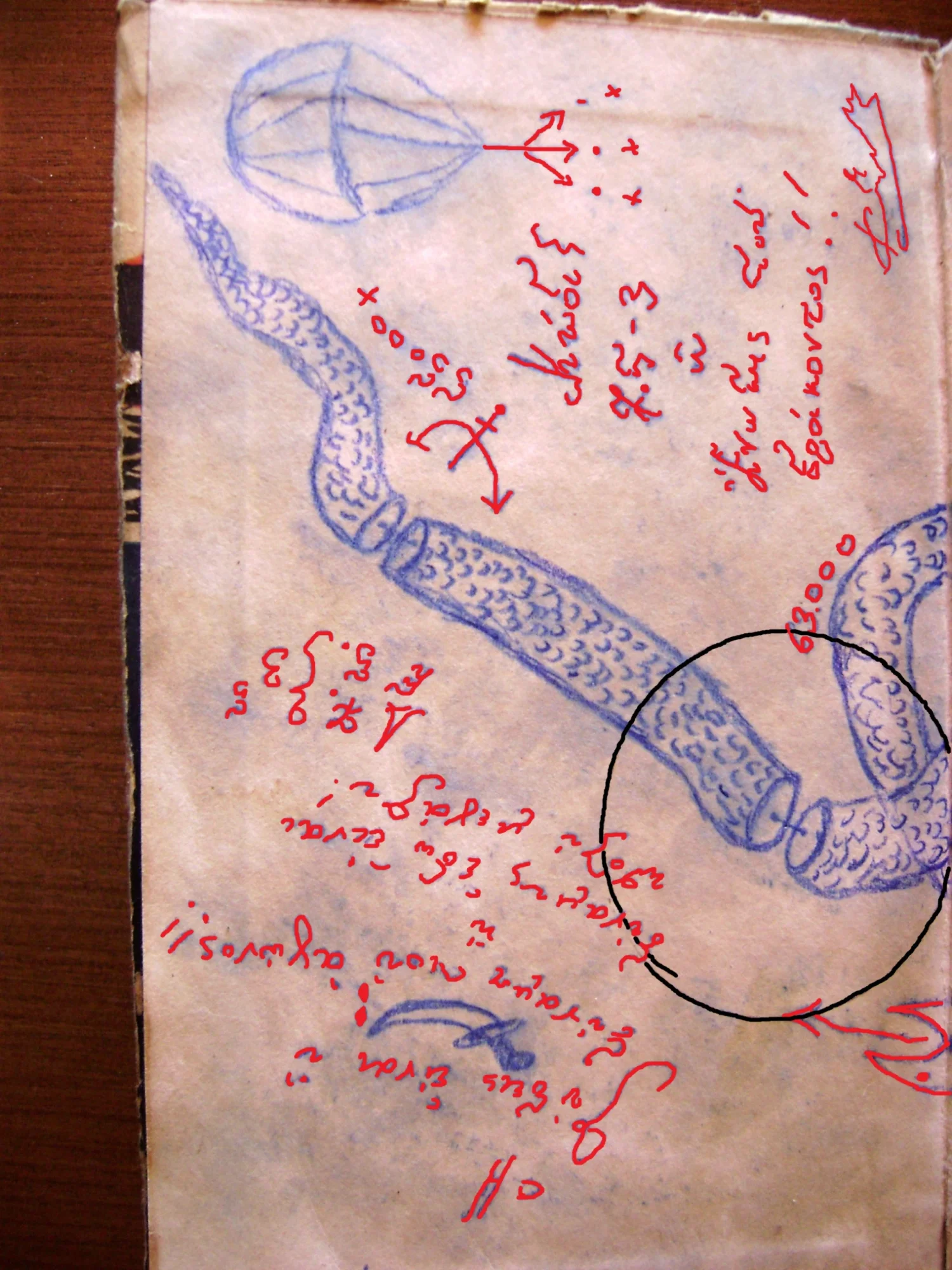
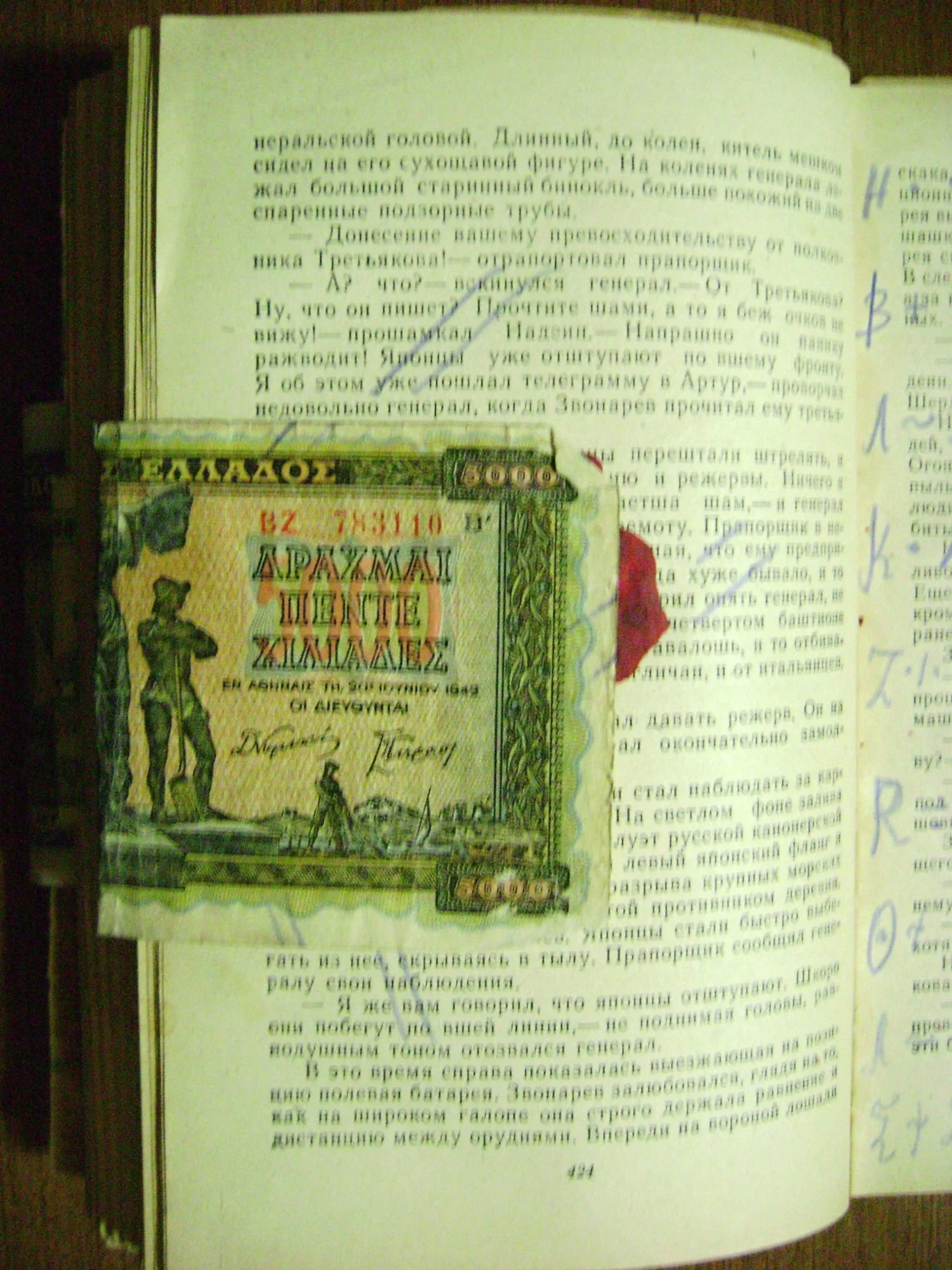
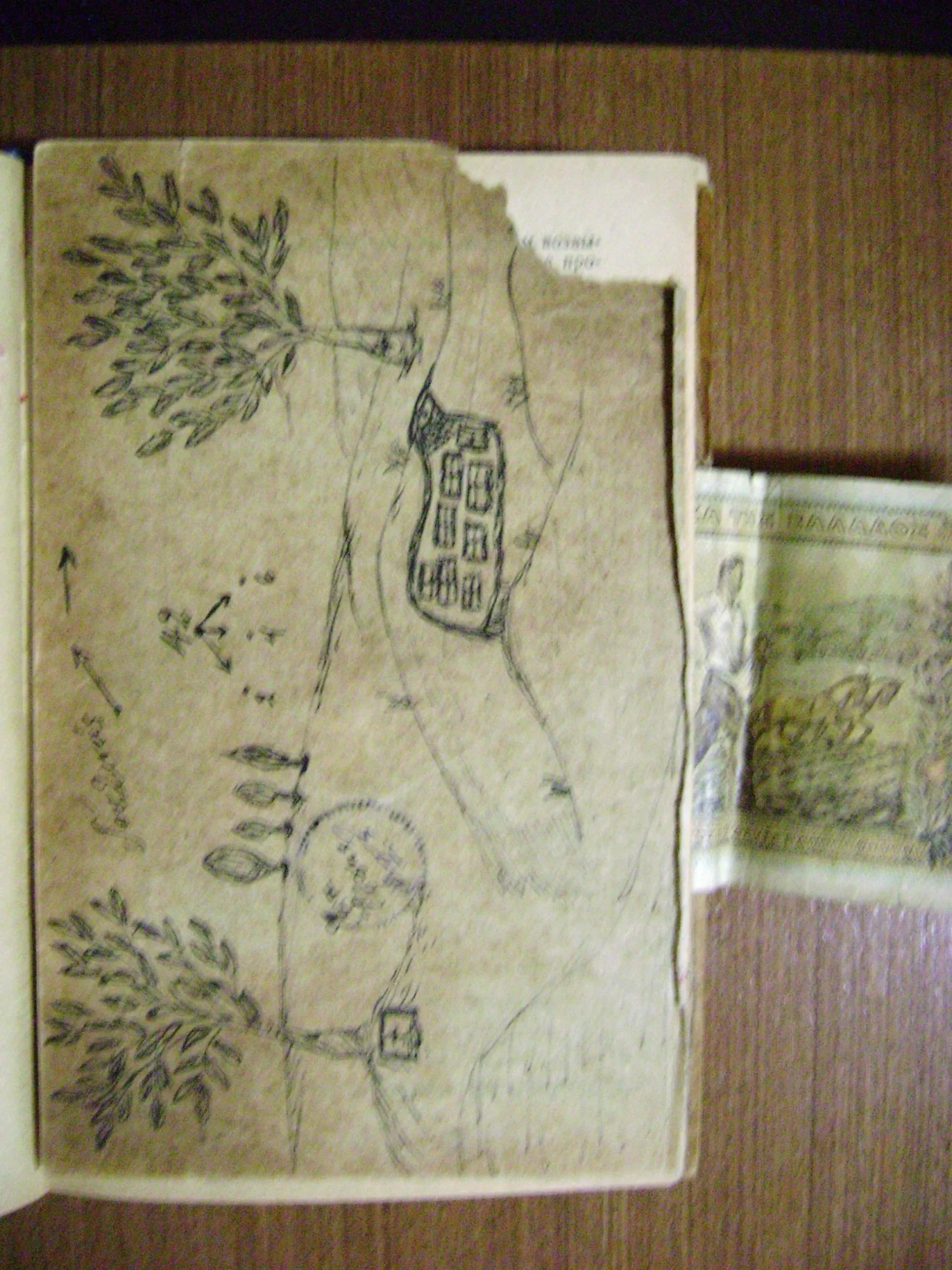
As revealed by a rare manuscript document of the era, the concealment of these treasures was never random. These are not simple scratches on stones, but a strict, cryptographic algorithm. Within the pages of this book, one can see aligned symbols reminiscent of ancient pictograms combined with mathematical codes, arithmetic operations, crosses, snakes, arrows, circles, and geometric shapes. Each symbol carries coded instructions alongside it, utilizing numbers and letters. The system is divided into specific categories. The guide symbols indicate the morphology of the terrain and natural landmarks, such as caves, tree roots, and double peaks. The numeric codes correspond to distances measured in steps or cubits, degrees of direction, or depth measurements. Finally, the complex symbols function as verification "keys," confirming to the tracker that they are at the correct location before any excavation begins. This system points to a titanic effort of cryptography, worthy of the greatest mysteries of antiquity, yet adapted to the harsh necessities of unconventional warfare. In the broader context of guerrilla conflicts, irregular armies rely heavily on the landscape. Without secure banking or permanent bases, the mountains of Epirus, Macedonia, and the Pindus range became both the treasury and the armory. Caching supplies requires a system that is invisible to the enemy but legible to the initiated. Throughout history, partisan forces have utilized environmental markers to navigate and recover hidden assets. The use of natural features, combined with subtle human alterations, creates a localized geography known only to those holding the cipher. The symbols described in the manuscript—snakes, crosses, and geometric forms—are deeply rooted in both rural folklore and practical marking systems, often blending religious iconography with utilitarian wayfinding to ensure the survival of the hidden assets.
What we don't know
The origins and current location of the rare manuscript remain unknown, leaving its authorship, exact date of creation, and provenance open to question. Without access to the physical document for material analysis, it is impossible to determine whether it is a genuine artifact from the 1940s, a later compilation of tracker lore, or a localized codebook used by a specific, isolated group rather than a widespread network. The true nature of the carved rocks and deformed trees also presents a significant unknown. In the rugged Greek mountains, distinguishing between intentional carvings from the Civil War era, older pastoral marks left by shepherds over centuries, and natural geological formations is notoriously difficult. Weathering and erosion constantly alter exposed rock faces, making the visual identification of "animal heads" or specific geometric shapes highly subjective, especially when dependent on specific lighting conditions. The biological realities of tree deformation also complicate matters, as natural environmental stressors can mimic intentional shaping. The ultimate fate of the missing British sovereigns is another unresolved issue. While it is known that gold was distributed during the conflict, how much was spent during the war, how much was recovered by the state or individuals in the immediate aftermath, and how much might still lie hidden in the terrain cannot be accurately quantified. The extent to which the legends of the "kolaouza" reflect actual military protocols versus the embellished narratives of post-war treasure hunters remains a deeply blurred line in the cultural memory of the conflict.
What is claimed
Examining these events with the penetrating, subversive spirit of a researcher of the paradoxical, such as Erich von Däniken, relentless questions arise. How is it possible that unconventional groups of fighters, under the pressure of ruthless persecution, managed to organize such a flawless, infallible network of treasure concealment that remains unsolved decades later? It is suggested that the signs on the rocks and the symbols in the notebooks were not merely improvised codes of the moment, but formed part of a global, primordial knowledge of geodesy and topography transmitted to the initiates. Observing the pages of the manuscript, a cold, almost alien precision is noted. The algebraic operations next to the symbols resemble equations waiting for the right variable to be solved. Whoever carved these codes knew that people pass, but the landscape remains, utilizing nature as the ultimate vault. Specific claims detail how this was achieved: Trees were specially marked to grow deformed, pointing in a specific direction. Rocks were carved to resemble the heads of animals or humans, visible only under a specific angle of light. Underground passages and caves were sealed with mathematical precision, ensuring that time would act as an ally of oblivion. The anatomy of this concealment relied heavily on the "kolaouza"—the secret guides or auxiliary marks that formed the soul of every treasure operation. According to tracker tradition and the manuscript's pages, the system utilized a General Point, an obvious symbol on a rock or path indicating the broader safe zone. This was followed by Intermediate Marks, smaller carvings confirming the walker's path, acting like breadcrumbs in the mountain wilderness. Finally, the Final Mark, known as the "Island" or the "Target," represented point zero. This is where distances stop and silence begins, usually requiring the measurement of specific steps from the final symbol toward a particular direction, such as east toward the rising sun. The information in the manuscript reveals that nothing was left to chance, with even false signs—traps or deceptive symbols designed to confuse pursuers—built into the system.
What is verified
While the historical backdrop of the Greek Civil War and the influx of British gold are well-documented, there is a complete absence of primary source texts or official archival documents to substantiate the specific claims made about this manuscript or the centralized hoarding of 1,000,000 sovereigns for a partitioned state. Historical records from the British Foreign Office, the Special Operations Executive archives in London, and the archives of the Greek state confirm that substantial amounts of gold were indeed dropped into Greece during the occupation to fund resistance activities. Reports from British liaison officers detail the complex logistics of these financial drops. It is also a verified historical fact that guerrilla fighters utilized mountain caches for logistics, hiding weapons, food, and funds to sustain their campaigns. However, the existence of a unified, mathematically flawless cryptographic network spanning the Greek mountains is not supported by the military archives of either the national army or the insurgent forces. The rare manuscript described, with its complex algebraic equations and ancient pictograms, does not appear in the cataloged collections of historical institutes or state archives concerning the Civil War period. Furthermore, the narrative of a million sovereigns specifically earmarked and hidden for a post-partition state remains outside the established historical consensus regarding the strategic objectives of the factions involved. The verified reality is that while localized caches certainly existed and some funds were undoubtedly lost or hidden during the chaos of the conflict, the grand scale of the shadow economy and the highly advanced, almost esoteric nature of the codes described belong to the realm of oral tradition and tracker folklore rather than documented historical fact.
What would change our assessment
The historical assessment of the Civil War gold and the shadow codes would fundamentally change with the physical discovery and independent authentication of the manuscript by historians and cryptographers. If the document were subjected to material analysis, such as ink and paper dating, and its cryptographic system successfully correlated with known military or insurgent communications of the 1940s, it would provide a crucial primary source. Furthermore, the declassification or discovery of official military archives—whether British, Greek, or from the insurgent leadership—explicitly detailing this specific cryptographic network, the use of the "kolaouza," and the strategic plan to hide 1,000,000 sovereigns for a partitioned state would validate the core claims. In the field, the discovery of an intact cache that perfectly matches the complex sequence of guide symbols, numeric codes, and verification keys described in the manuscript, documented through rigorous archaeological or state-sanctioned recovery methods, would offer undeniable physical proof. Scientific dating of the rock carvings through advanced epigraphic analysis, or proving tree deformations were deliberately created during the exact period of the Civil War using dendrochronology, would also substantiate the existence of this highly organized, landscape-level cryptographic effort.
Videos from the sources
Sources
- AENIGMA Editorial — Robert Smith (supports)
Protocol AENIGMA-EF-0.1