Evidence: Insufficient data Explanation: Not enough data yet
Danube River Iron Bars: What the 2,200-Year-Old Discovery Really Shows
The recovery of 500 ancient iron bars from the Danube River in Austria has prompted questions about their origin and purpose. Estimated to be 2,200 years old, these artifacts were either lost as cargo during a shipwreck or deposited intentionally as part of a ritual. The current evidence and explanation status remain classified as insufficient data, as further archaeological context is needed to determine exactly how this massive collection of metal ended up in the water.
Why AENIGMA is covering this
This case is covered to document the recovery of historical artifacts from the Danube River while strictly separating the physical findings from the proposed interpretations of their origin. The extraction of 500 ancient iron bars is a significant event that provides valuable raw data regarding the economy, metallurgy, and resource distribution of Iron Age Europe. By examining this discovery, we gain insight into the scale of ancient industry and the immense value placed on iron as a foundational material for both agriculture and warfare. Furthermore, this case highlights the inherent challenges of riverine archaeology, where the dynamic forces of nature often strip artifacts of their original context, leaving researchers with compelling objects but fragmented stories. It is essential to maintain a clear boundary between what has been physically observed—a large concentration of 2,200-year-old metal—and the hypotheses generated to explain its presence. Whether the iron was lost in a tragic accident that ruined an ancient merchant, or offered to the waters in a solemn ritual, the current evidence does not allow for a definitive conclusion. Documenting this discovery emphasizes the importance of context in archaeological science and demonstrates why further systematic investigation is necessary to unlock the true history of these submerged artifacts.
What happened
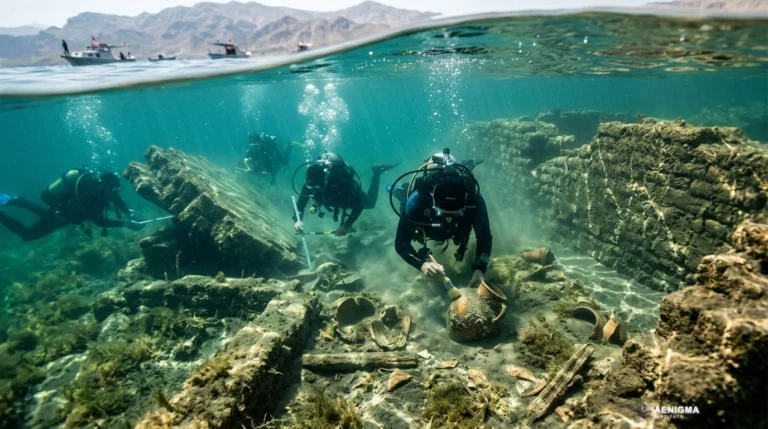
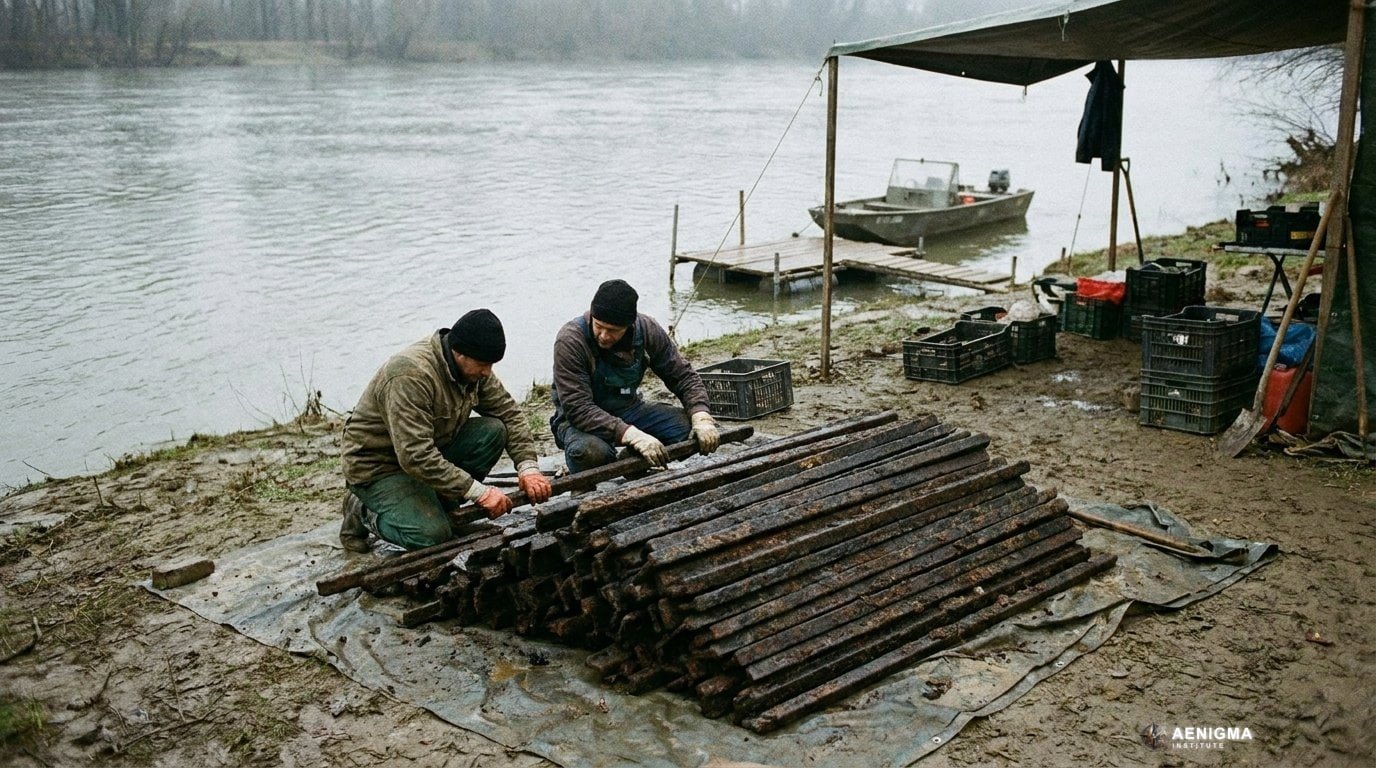
Approximately 500 iron bars, dating back 2,200 years, were recovered from the Danube River in Austria. The discovery brings attention to one of Europe's most significant historical waterways, which has served as a vital artery for trade, transport, and cultural exchange for millennia. During the Late Iron Age, around the second century BC, the regions surrounding the Danube were inhabited by various Celtic groups who possessed advanced metallurgical skills. Iron was a highly valuable commodity during this era, utilized not only for crafting weapons and agricultural tools but also serving as a standard of wealth and a medium of exchange across vast trade networks. The findings from this underwater recovery were published in the journal Antiquity, bringing the artifacts to the attention of the global archaeological community. Following the formal publication, the story was subsequently reported by various international media outlets, including Yahoo News, the Italian newspaper Il Mattino, and the Russian Krasnodar TV channel. These reports highlighted the sheer volume of the recovered metal, which represents a substantial economic fortune for the period. Riverine discoveries of this magnitude are relatively rare, as the dynamic nature of fast-flowing rivers often scatters or buries artifacts deep beneath layers of gravel and sediment. The extraction of such a large hoard requires careful underwater operations, often involving specialized diving teams and recovery equipment to safely bring the heavy, waterlogged metal to the surface without causing structural damage to the artifacts.
What we know
We know that 500 iron bars were physically recovered from the bed of the Danube River. The objects are estimated to be 2,200 years old, placing them firmly within the La Tène cultural period of the European Iron Age. The discovery and subsequent analysis of the artifacts were formally documented in the journal Antiquity, published by Cambridge Core. In the context of the ancient European economy, iron bars of this type often functioned as semi-finished trade ingots or currency bars. Blacksmiths would heat and forge these standardized pieces into finished goods, making them a highly liquid asset in ancient trade. Establishing the age of such artifacts typically involves a combination of typological analysis—comparing the shape, weight, and metallurgical composition of the bars to known examples from securely dated terrestrial sites—and radiocarbon dating of any associated organic material, such as remnants of wooden bindings or storage containers, if they survived the river environment. Once recovered from a freshwater environment, ancient iron requires immediate and specialized conservation. Artifacts that have rested in a river for over two millennia develop thick layers of concretion and are highly susceptible to rapid oxidation once exposed to the air. Conservation laboratories typically employ desalination processes and alkaline treatments to stabilize the metal, ensuring that the physical evidence is preserved for future study. The physical existence of the 500 bars, their approximate age, and their successful recovery from the Austrian stretch of the Danube are the established facts of this case.
What we don't know
It is not known exactly how the iron bars ended up in the river. While the artifacts themselves have been secured, the behavioral mechanism that led to their deposition remains a mystery. The exact location of the find is strictly withheld by authorities to protect the site from unauthorized interference. Keeping the coordinates of unexcavated or partially excavated underwater sites confidential is a standard and necessary practice in archaeology. It prevents looting and ensures that any remaining stratigraphy or fragile contextual evidence is preserved for systematic scientific investigation. Furthermore, it is not known if there are remains of a vessel associated with the bars. The Danube is a powerful, fast-flowing river with a high discharge rate, and its riverbed is a highly dynamic environment. Over the course of 2,200 years, seasonal flooding, shifting currents, and the movement of heavy gravel can completely obliterate wooden structures. If the iron bars were indeed transported by a boat or barge, the wooden hull, rigging, and other organic components may have long since decayed, been washed downstream, or remain buried deeply beneath the current riverbed. Without the discovery of a hull, ballast stones, or other nautical equipment, the immediate physical context of the iron bars is limited solely to the metal itself. Consequently, the sequence of events that occurred on the day the bars entered the water cannot currently be reconstructed with certainty.
What is claimed
Researchers propose two main explanations for the presence of the iron bars in the Danube. The primary hypothesis is that the bars were being transported along the river and were lost as cargo during a shipwreck. In antiquity, rivers were the superhighways of Europe, offering a much more efficient means of moving heavy bulk goods than overland routes. Flat-bottomed barges or rafts were commonly used to navigate inland waterways, often towed from the banks or guided by long poles. However, river navigation carried significant risks, including hidden snags, sudden shallows, and unpredictable currents. A cargo of 500 iron bars represents a massive, concentrated weight that could easily destabilize a small ancient vessel, leading to a catastrophic capsizing. A secondary hypothesis suggests the bars were intentionally deposited into the river as part of a ritual. Throughout the European Iron Age, various cultures engaged in the practice of depositing valuable items—such as weapons, tools, and precious metals—into bogs, lakes, and rivers as votive offerings to deities. While this practice is well-documented at other sites across the continent, researchers consider a ritual explanation less likely than a transport loss in this specific instance. The sheer utilitarian nature of the raw iron ingots, combined with the logistical difficulty of intentionally sinking such a massive bulk of trade material in a fast-flowing river, points more strongly toward an accidental loss during commercial transit.
What is verified
It is verified by the journal Antiquity that the 500 iron bars were physically recovered from the river. This publication establishes the baseline reality of the artifacts, confirming their existence, their material composition, and their extraction from the Danube. The documentation provided by Cambridge Core serves as the primary scientific record of the event, separating the tangible objects from the various historical narratives proposed to explain them. The international media reports surrounding the discovery, including those from Yahoo News, the Italian publication Il Mattino, and the Russian Krasnodar TV channel, are verified as copies and summaries of this primary reporting. These news outlets have amplified the findings to a broader public audience, translating the archaeological data into general news formats. However, the verification extends only to the physical recovery of the metal and its preliminary dating. The proposed scenarios regarding how the iron entered the water—whether through a sudden nautical disaster or a deliberate ceremonial act—remain interpretive frameworks rather than verified historical events. In archaeological practice, distinguishing between the observed physical data and the subsequent behavioral interpretation is crucial. The verified facts are limited to the presence, quantity, and age of the iron bars, while the story of their journey into the depths of the Danube remains a subject of ongoing analysis.
Competing explanations
- Possible: The iron bars were lost as cargo during a shipwreck while being transported along the Danube River.
- Possible: The iron bars were intentionally deposited into the river as part of a ritual, though researchers consider this less likely than a transport loss.
What would change our assessment
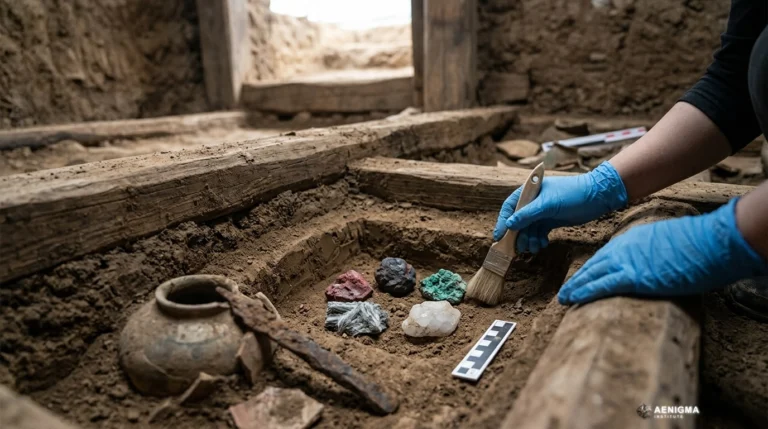
The discovery of a shipwreck or remnants of a transport vessel at the site would directly support the lost cargo hypothesis. To confirm this scenario, underwater archaeologists would need to locate physical evidence of ancient nautical technology, such as preserved wooden planks, joinery techniques typical of the Iron Age, wooden pegs, or iron nails. Additionally, finding other types of trade goods, such as ceramic transport vessels, tools, or personal items belonging to a crew, within the same stratigraphic layer would strongly indicate a commercial transit disaster. Conversely, finding contextual evidence of ritual activity could support the intentional deposit hypothesis. This might include discovering the iron bars arranged in a specific, deliberate pattern rather than a chaotic spill, or finding them associated with typical votive items such as intentionally bent or broken weapons, human remains, or ceremonial artifacts. Gathering this evidence requires complex underwater archaeological techniques. High-resolution side-scan sonar, sub-bottom profiling, and systematic diver surveys utilizing grid systems are necessary to map the riverbed and identify anomalies beneath the sediment. Until such contextual data is recovered, the physical evidence remains isolated. Further archaeological data, drawn from careful excavation and environmental analysis of the immediate find-spot, is required to move the evidence and explanation status beyond the current classification of insufficient data.
Sources
- Yahoo Actualités (supports)
- Antiquity (Cambridge Core) (supports, primary)
- Il Mattino (supports)
- Телеканал «Краснодар» (supports)
Protocol AENIGMA-EF-0.1