Evidence: Unsubstantiated Explanation: Not enough data yet
Reported Discovery of 2,100-Year-Old Ceramics Cargo in Turkey
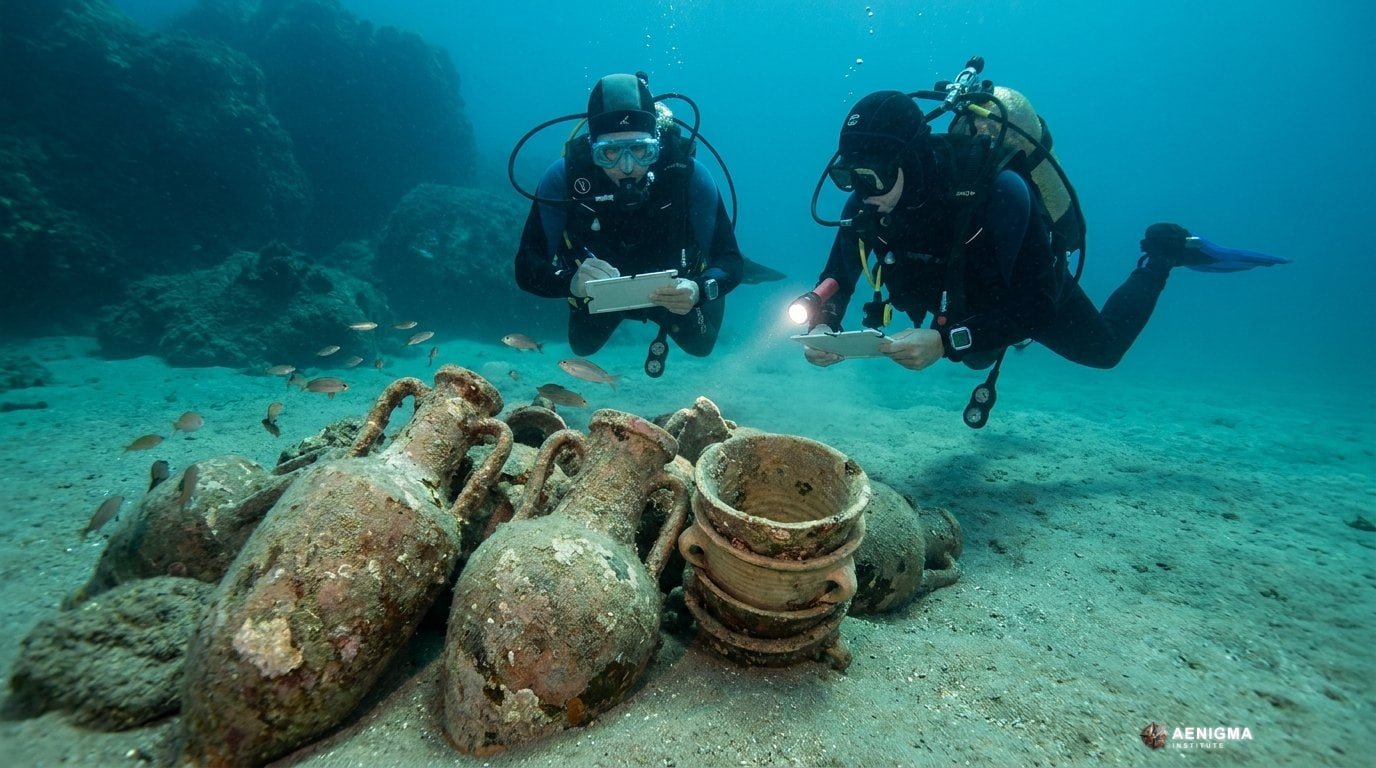
A media report claims the discovery of a 2,100-year-old shipwreck in Turkey containing 122 styles of ancient tableware. Researchers interpret the site as a Roman-era merchant vessel carrying Rhosus ceramics and Aegean amphorae. The current evidence status for these claims is unsubstantiated, and the available data is insufficient to confirm the explanation.
Why AENIGMA is covering this
This report is being covered because it involves claims regarding ancient Roman maritime trade routes and the preservation of fragile artifacts over two millennia, which are subjects of historical interest.
What happened
According to a report by the media outlet Sohu, a collection of 2,100-year-old tableware comprising 122 different styles has been found in Turkey. The report describes the find as a cargo of ceramics.
What we know
The provided information states that the ceramics were packed using a specific technique: clay was layered between the ceramic items inside wooden boxes, which is said to have allowed the fragile cargo to survive intact. Historical context indicates that Rhosus pottery was popular in the Roman world during this period, a detail corroborated by the surviving letters of Marcus Tullius Cicero.
What we don't know
The exact location of the site, the identities of the researchers involved, and the current location of the artifacts are not known from the provided material. It is also not known what specific institutions are managing the site or the artifacts.
What is claimed
Researchers interpret the site as the remains of a merchant vessel that was transporting Rhosus ceramics and Aegean amphorae to Rome. They suggest that the ship sank after hitting shallow waters during a storm. The media report claims the tableware represents 122 distinct styles of luxury goods.
What is verified
The evidence status for this discovery is currently unsubstantiated. The explanation that this was a merchant vessel sunk by a storm while en route to Rome is considered possible, but there is insufficient data to verify these claims.
Competing explanations
- Possible: Researchers interpret the site as a merchant vessel carrying Rhosus ceramics and Aegean amphorae, which likely sank after hitting shallow waters during a storm while en route to Rome.
What would change our assessment
The assessment would change if peer-reviewed archaeological reports, official statements from Turkish antiquities authorities, or verifiable documentation of the excavation and artifacts were published.
Sources
- Sohu (supports)
Protocol AENIGMA-EF-0.1