Evidence: Unsubstantiated Explanation: Not enough data yet
Perseverance rover record distance on Mars: what the numbers show
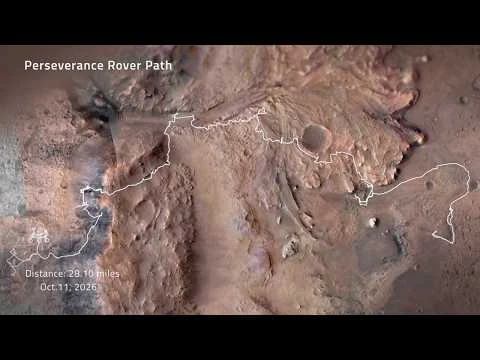
The Perseverance rover has been reported by several media outlets to have broken the long-standing planetary driving distance record on Mars. Coverage centres on whether its travels across Jezero Crater have officially surpassed the milestone established by the Opportunity rover over several years of exploration. Telemetry confirmation and standard mission tracking protocols remain central to establishing the exact distance traversed.
Why AENIGMA is covering this
Planetary exploration records reflect major advancements in engineering, robotics, and autonomy, making them subjects of substantial public and historical interest. Tracking the performance of automated vehicles on distant worlds provides crucial insight into the systems that will support future robotic and human surface exploration. Distinguishing between media reports and verified engineering telemetry is essential when evaluating claims of historic exploration milestones. Coverage of this topic clarifies how distance is measured on other planets, the technical distinctions between wheel odometry and orbital ground tracks, and the rigorous standards required to verify planetary records. By contextualising the technological leap from human-commanded driving to real-time onboard computer autonomy, this review highlights the evolutionary arc of planetary roving. Keeping track of documented facts ensures that historical achievements are accurately recorded and evaluated on the basis of primary evidence.
What happened
Reports published across multiple international media outlets have suggested that NASA's Perseverance rover has achieved a new planetary surface driving record. Coverage from outlets including Vesti.ru, Bunbury Mail, and 3DNews reported that the rover exceeded the total driving distance accumulated by previous surface exploration missions. The milestone under discussion involves traversing Jezero Crater and outdistancing the legendary total accumulated by the Opportunity rover across its active lifespan. Public interest in planetary roving milestones often spikes when symbolic thresholds are approached. News reports began highlighting the achievement by pointing to Perseverance's autonomous navigation systems and its sustained driving pace across difficult Martian terrains. These accounts framed the rover as having reached a historic peak in planetary surface transport. Despite the attention generated by these headlines, independent confirmation from comprehensive mission logs and space agency operational updates remains necessary to verify the specific status of the milestone. The media reporting created widespread discussion about modern robotic exploration speeds and automated traverse capabilities.
What we know
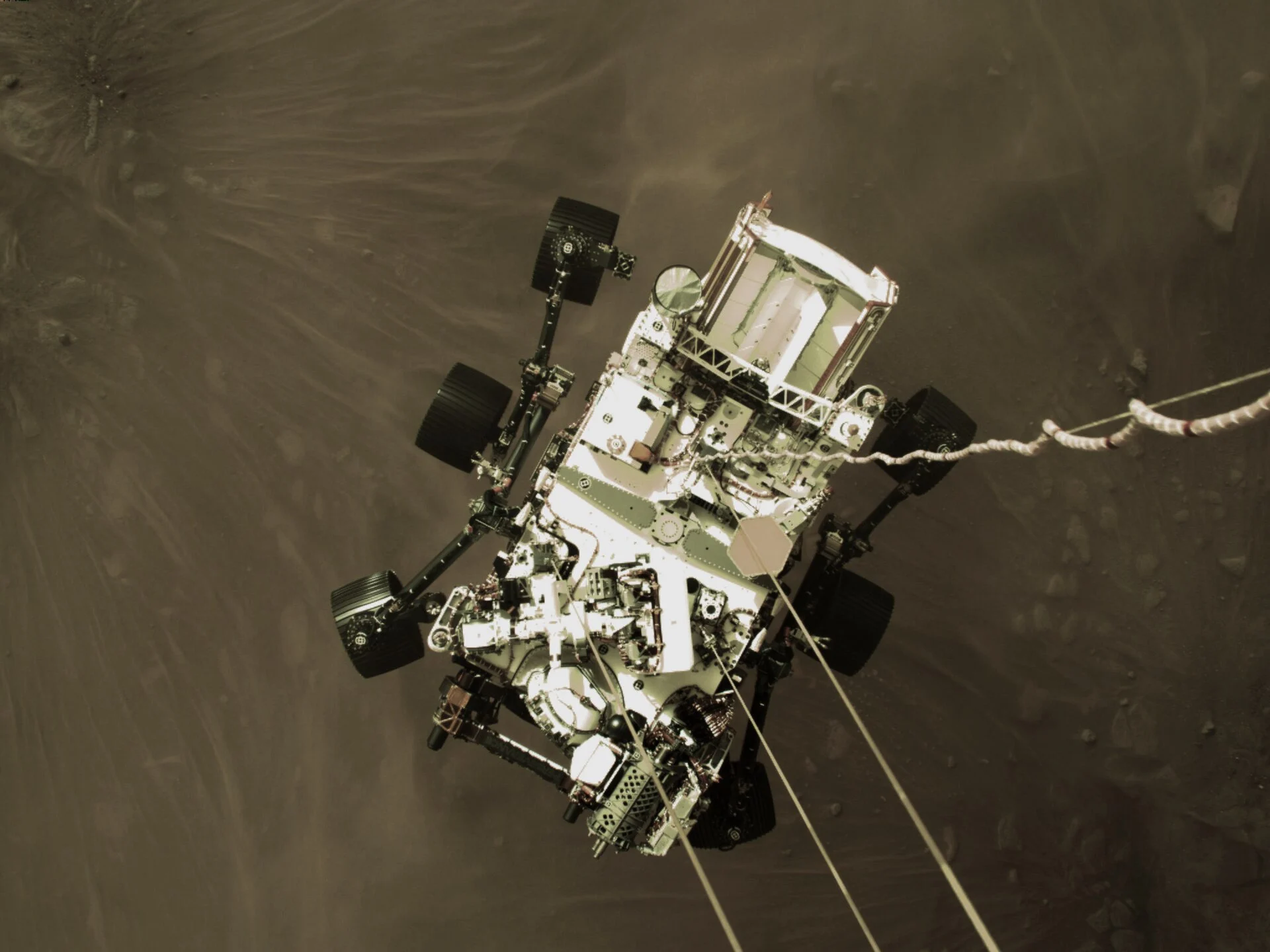
The Perseverance rover has operated on the Martian surface since touching down inside Jezero Crater. The site was selected primarily for its ancient river delta, crater rim exposures, and varied sedimentary rock layers that offer clues into the environmental history of Mars. Over the course of its operations, the vehicle has negotiated boulder-strewn crater floors, fractured bedrock, and sand ripples while collecting core samples for eventual return to Earth. Surface rovers calculate their travel distance through multiple onboard mechanisms rather than a single simple odometer. Wheel odometry counts the rotations of each drive wheel, while visual odometry takes pairs of stereo images of the surrounding ground to track surface features from one position to the next. By comparing these images as the vehicle moves, the flight software measures actual forward progress and detects wheel slippage over soft soils or steep slopes. Autonomous navigation software plays an indispensable role in enabling long-distance drives across other worlds. Traditional exploration protocols relied heavily on ground-commanded route planning, where human operators on Earth evaluated daily orbital and ground images, plotted specific waypoints, and uploaded commands for the next operational cycle. Because radio communication delays between Earth and Mars range between four and twenty-four minutes each way, real-time remote driving from an Earth workstation is impossible. Perseverance employs advanced onboard computer vision and processing units dedicated to hazard detection and route planning. Known collectively as autonomous navigation, or AutoNav, this system allows the vehicle to map nearby rocks, steep depressions, and loose soil in three dimensions while in motion. The system can plot diversion paths around obstacles without waiting for human confirmation, allowing single-day travel distances that far exceed those of earlier exploration generations. Historical planetary distance benchmarks provide the context against which all modern rover achievements are judged. During the Soviet lunar programme, the remote-controlled Lunokhod 2 rover covered dozens of kilometres across the lunar surface, establishing a driving record that stood unchallenged for decades. In the crewed realm, the Apollo lunar roving vehicles allowed astronauts to cover extensive ground across the Moon's landing sites in relatively short operational windows. On Mars, the record for total surface distance has long been held by the Opportunity rover. Operating from early 2004 until a severe planet-encircling dust storm severed contact in 2018, Opportunity traversed an extraordinary distance across Meridiani Planum, culminating in a total benchmark of 45.16 kilometres. That campaign lasted more than fourteen years, progressing through multiple crater surveys and endurance tests that redefined expectations for robotic longevity. Curiosity, which arrived at Gale Crater in 2012, has logged extensive mileage over more than a decade of exploration, climbing the slopes of Mount Sharp while navigating sharp ventifact rocks and extensive sand dune complexes. The driving capabilities of Perseverance draw heavily on the heritage of Curiosity's chassis and suspension design, while introducing upgraded aluminium wheels with thicker treads and curved grousers to prevent the punctures and tearing experienced by its predecessor.
What we don't know
The broader scientific context of surface traverses involves a fundamental trade-off between driving speed and scientific investigation. Planetary rovers are mobile laboratories, and their primary mandate is not long-distance travel for its own sake, but the collection of contextual data, rock sampling, atmospheric monitoring, and geological mapping. Opportunity operated under substantial technical limitations compared to modern machines. Its solar arrays required regular sunlight exposure and were periodically threatened by dust deposition, requiring the rover to spend extensive periods parked on sun-facing slopes during Martian winters. Perseverance, by contrast, is powered by a multi-mission radioisotope thermoelectric generator, providing steady electrical power independent of dust storms, sunlight variations, or changing seasons. Whether Perseverance has already crossed the cumulative track mark of Opportunity or remains within a close margin of it does not diminish the substantial technological evolution represented by modern autonomous navigation. However, without access to the full operational telemetry logs, observers cannot independently verify the exact date, sol, and route segment where the reported surpass occurred. Operational records maintained by engineering control facilities use specific reference coordinate frames to document vehicle motion. These systems track site frames, drive offsets, and absolute landing coordinates, updating them systematically after each drive cycle. Until those operational datasets are formally published or referenced in direct updates, media narratives regarding distance milestones remain unconfirmed.
What is claimed
Media reports claim that Perseverance's autonomous navigation systems enabled it to travel over 45.2 kilometres across Jezero Crater. By reaching that reported figure, the rover would have surpassed the 45.16-kilometre benchmark set by Opportunity between 2004 and 2018. These accounts assert that the accelerated driving capabilities of Perseverance have allowed it to achieve in a fraction of the time what took previous surface missions well over a decade. Coverage highlights the vehicle's enhanced onboard processing, robust suspension, and algorithmic autonomy as the primary drivers of this operational speed. The claim positions Perseverance at the absolute summit of planetary driving accomplishments on Mars. Media coverage presented this achievement as an established historical milestone, generating widespread enthusiasm across online science outlets and space exploration forums.
What is verified
What is verified is that Perseverance is operating inside Jezero Crater and that it relies on an advanced AutoNav system capable of self-directed path generation. It is also verified that the rover was engineered to travel faster and with greater autonomous capability than earlier robotic surface missions. It is documented that Opportunity completed an official total distance of 45.16 kilometres across Meridiani Planum before communication was lost during the 2018 dust storm. This figure remains the historically accepted standard against which all subsequent Martian roving distances are formally measured. It is also verified that several news outlets, including Vesti.ru, Bunbury Mail, and 3DNews, published articles attributing a new distance record to Perseverance. Beyond the publication of these media reports, formal documentation establishing the verified surpassing of 45.16 kilometres across official flight logs has not been demonstrated in the available materials.
Competing explanations
- Possible: Perseverance's autonomous navigation systems enabled it to travel over 45.2 km across Jezero Crater, surpassing Opportunity's 45.16 km benchmark set between 2004 and 2018.
What would change our assessment
An updated operational summary from the mission engineering team or space agency leadership detailing the exact cumulative odometry would decisively clarify the situation. Such documentation typically includes both raw wheel odometry and visual-odometry slip-corrected numbers, accompanied by high-resolution orbital tracks confirming the exact path traversed across the terrain. Independent publication of peer-reviewed engineering papers or formal mission reports in scientific archives would provide an authoritative benchmark. These records detail how terrain interactions affected measurement accuracy and define the exact sol on which historical milestones were approached or achieved. Conversely, if mission operators release updated logs showing that cumulative traverse totals remain below the historical benchmark set by Opportunity, the media claims would be formally resolved as premature. Clear telemetry updates are the standard mechanism by which planetary distance records are established, updated, and closed.
Videos from the sources
Sources
- Вести.Ru (supports)
- Bunbury Mail (supports)
- 3DNews (supports)
Protocol AENIGMA-EF-0.1