Evidence: Unsubstantiated Explanation: Not enough data yet
Moon anomaly and what the Chinese lunar mission really reveals
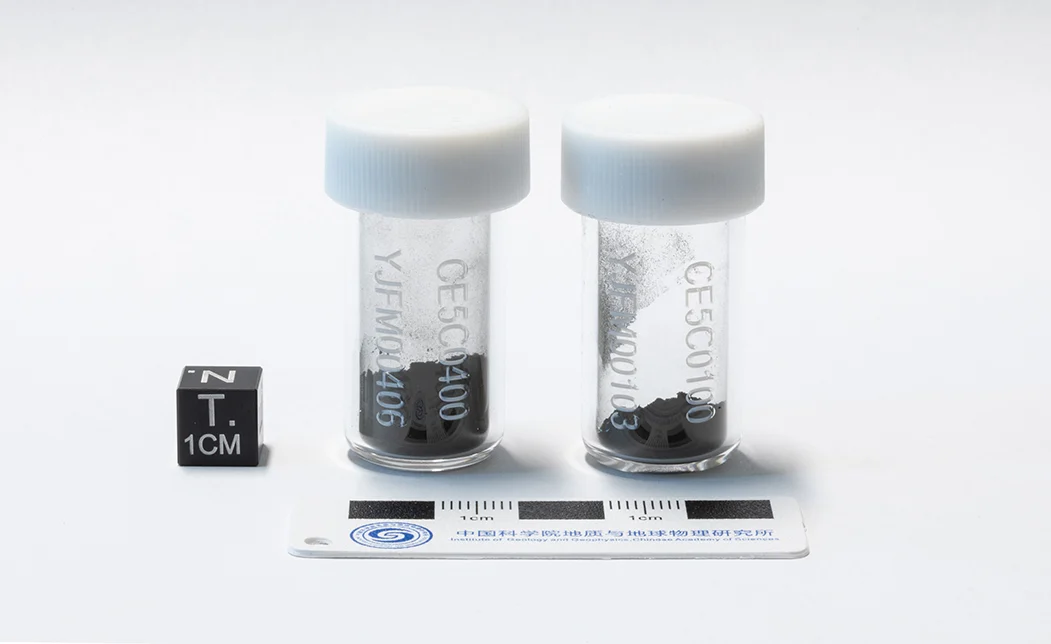
Moon anomaly reports following recent Chinese lunar exploration have sparked widespread debate over materials recovered from the lunar surface. Media accounts suggest that researchers encountered an unexplainable presence in the regolith that challenges current lunar models. Scientific context indicates that shock metamorphism, metastable iron phases, and impact-generated glass beads readily account for unusual metallic signatures in planetary soil.
Why AENIGMA is covering this
Public fascination with lunar exploration has reached heights unseen since the mid-twentieth century. With multiple space agencies executing robotic landings, subsurface drilling, and sample return campaigns, every reported anomaly commands international attention. When news reports frame natural mineralogical complexities as impossible anomalies, clarifying the underlying scientific mechanisms serves an essential educational purpose. Unusual iron phases in lunar soil are not unexplainable phenomena; they represent the natural physical consequences of extreme shock environments that cannot be replicated under standard terrestrial conditions. Understanding how meteorite impacts liquefy rock, form glass beads, and capture transient crystallographic states enriches the public understanding of planetary history. Covering these claims enables readers to distinguish between genuine scientific insights into early solar system dynamics and sensationalised media narratives.
What happened
Public interest surged following coverage from the Russian news outlet Pravda.Ru, which reported that a Chinese lunar mission identified an unprecedented cosmic anomaly on the Moon. According to this account, surface materials brought to light substances that allegedly should not exist within the normal geological framework of our natural satellite. The coverage framed the discovery as a fundamental disruption of lunar planetary science, suggesting that researchers had stumbled upon an inexplicable material signature. Robotic exploration of the Moon has accelerated over recent years, with automated landers and sample retrieval missions collecting dust, rocks, and drill cores from previously unvisited geological terrains. These efforts involve pristine regolith samples gathered directly from the lunar nearside and farside, returning fragments to terrestrial laboratories for comprehensive micro-structural and chemical evaluation. Because these robotic initiatives often probe regions with distinct volcanic histories and impact basements, unexpected petrological characteristics frequently emerge during initial evaluations. Media presentations of such discoveries often interpret preliminary or anomalous laboratory readings as radical disruptions rather than natural outcomes of extreme planetary processes. When initial announcements reach the press without detailed metallurgical context, complex geochemical findings are frequently reinterpreted through dramatic narratives. The reporting around this lunar mission follows that familiar pattern, presenting an unverified anomaly as an inexplicable mystery before conventional geological mechanisms have been fully evaluated.
What we know
The surface of the Moon is an intensely battered environment defined by billions of years of hypervelocity impacts, extreme thermal cycling, and cosmic radiation. Without a substantial atmosphere to shield the ground, micrometeorites and large bolides strike the regolith at velocities reaching tens of kilometres per second. These catastrophic collisions generate instantaneous pressure and thermal pulses capable of melting, vaporising, and mechanically transforming rock and native metals on a microscopic scale. In planetary geology, iron exists under distinct thermodynamic conditions depending on temperature, ambient pressure, and the availability of volatile elements. On Earth, free oxygen drives the formation of abundant iron oxides such as hematite and magnetite. On the Moon, the near-total vacuum and reducing conditions favour native metallic iron in various crystallographic states, frequently alloyed with nickel or cobalt inherited from impacting meteorites or endogenous volcanic basalt suites. Metallurgical transitions between different iron phases depend heavily on thermal history. At ambient surface temperatures, pure metallic iron typically stabilises as alpha-iron, also known as ferrite, which possesses a body-centred cubic crystalline lattice. Under extreme temperatures above nine hundred degrees Celsius, iron transforms into gamma-iron, or austenite, which adopts a face-centred cubic arrangement. Under standard equilibrium cooling conditions, gamma-iron inevitably reverts back to alpha-iron as thermal energy dissipates. When high-velocity meteorites impact the lunar regolith, local shock pressures and temperatures soar high enough to melt silicates and metallic grains simultaneously. If molten ejecta droplets are hurled outward into the cold vacuum of space, they undergo rapid quenching, a process known as splat cooling. This near-instantaneous drop in temperature can encapsulate the metastable gamma-iron phase inside protective silicate glass beads before the crystalline structure has adequate time to reorganize into the equilibrium alpha-iron lattice. These shock-formed silicate beads serve as hermetic seals, protecting trapped metallic inclusions from further mechanical alteration or chemical recombination. Beyond preserving metastable phases, these microstructures possess significant scientific value because they freeze remnant magnetization at the precise moment of their rapid solidification. By examining the magnetic signatures locked within such shock-produced spherules, geophysicists gain rare windows into the strength, duration, and geometry of the ancient lunar core dynamo that operated billions of years ago.
What we don't know
The primary uncertainty concerns the formal scientific verification of the anomalous phase described in the media report. It remains unknown whether the material has been examined using standard mineralogical instrumentation, such as transmission electron microscopy, electron backscatter diffraction, or synchrotron radiation. Without published diffraction patterns, any identification of the crystalline structure remains speculative. It is also unknown whether the observed material is indigenous to the lunar bedrock, imported as projectile fragments from an asteroidal impactor, or created synthetically at the surface during thermal shock events. Each of these pathways involves vastly different implications for lunar evolution, and current data do not clarify which mechanism was responsible. Additionally, the broader context of the Chinese mission's scientific output regarding this specific sample has not been detailed in the media account. It is unclear whether the finding represents a mainstream discovery published in specialized planetary science literature or a misinterpretation of routine sample analyses disseminated prematurely to general news platforms.
What is claimed
Pravda.Ru reports that a Chinese lunar exploration mission discovered an anomaly on the Moon consisting of material that should not physically exist there. The account characterises this presence as an unexpected cosmic finding that defies existing lunar models, implying that the observed substances challenge our fundamental understanding of the Moon's environmental and geological history. The publication emphasizes the perplexing nature of the find, framing it as an unexplainable occurrence rather than a documented phase transition produced by known impact mechanisms. In popular dissemination, such claims frequently invite speculative interpretations regarding anomalous origins or exotic phenomena, portraying standard planetary materials as radical departures from established science. These claims present the anomaly as an established mystery while omitting the metallurgical mechanisms that routinely produce unusual metallic microstructures during hypervelocity collisions. By focusing on the apparent impossibility of the material's existence under ambient conditions, the report bypasses the well-understood physics of shock metamorphism and rapid thermal quenching.
What is verified
The only verified element in the provided dossier is the existence and publication of the media report by Pravda.Ru. The outlet published an article describing an anomaly encountered by a Chinese mission on the lunar surface, framing the event as the discovery of materials that conventional science would not expect in that setting. Beyond this media publication, no scientific data tables, peer-reviewed mineralogical catalogues, or verified laboratory spectra accompany the claim in the provided record. As a result, the reported anomaly cannot be treated as an established material reality. The record demonstrates that a claim was made by a news organization, but the physical substance of the claim remains unsubstantiated by demonstrable analytical evidence.
Competing explanations
- Possible: High-velocity meteorite impacts melted regolith, and rapid cooling encapsulated the metastable gamma-iron phase inside protective silicate glass beads before it could revert to alpha-iron.
What would change our assessment
A substantial shift in the evaluation of this claim would require comprehensive laboratory documentation from the research teams that received and handled the lunar samples. Planetary scientists rely on quantitative, multi-method characterisation to confirm the presence of unusual mineral phases in returned extraterrestrial materials. Definitive identification of a metastable gamma-iron phase or an uncharacterised metallic inclusion would necessitate electron backscatter diffraction maps and high-resolution transmission electron microscopy images. These instruments resolve the atomic lattice parameters directly, proving whether a crystal belongs to the face-centred cubic gamma phase or another structure without relying on indirect inferences. Furthermore, independent petrographic analyses performed on multiple cross-sections would determine whether the grains are truly encapsulated within shock-produced silicate impact glasses. Establishing the precise elemental composition of the host glass, including trace volatile contents and nickel-cobalt ratios, would help confirm whether the material formed via impact melting of regolith or through an unexpected endogenous volcanic pathway. Paleomagnetic investigations would also alter the assessment. If step-wise alternating field demagnetisation and thermal demagnetisation show a stable, high-coercivity single-domain magnetic carrier preserved inside ancient impact spherules, the finding would directly illuminate the lifespan and intensity of the early lunar core dynamo. Conversely, if detailed tests reveal that the material matches known terrestrial contamination or standard alpha-iron, the anomalous narrative would be definitively set aside.
Sources
- Правда.Ру (supports)
Protocol AENIGMA-EF-0.1