Evidence: Insufficient data Explanation: Not enough data yet
Life on Mars and What Perseverance's Leopard Spots Really Show
Life on Mars remains an unproven hypothesis despite recent excitement surrounding spotted geochemical features detected in red sedimentary rock by NASA's rover. While the circular reaction rims display chemical signatures that resemble microbial reduction textures found in terrestrial mudstones, abiotic geochemical processes can produce identical structures. Resolving the origin of these formations requires returning physical samples to terrestrial laboratories for atomic-scale analysis.
Why AENIGMA is covering this
The ongoing analysis of Martian sedimentary rocks represents a pivotal moment in astrobiology, space exploration policy, and planetary science. As rovers explore ancient river systems on other worlds, clarifying the distinction between a candidate biosignature and confirmed evidence of extraterrestrial biology is essential for public understanding of the scientific method. Discoveries of this nature frequently trigger sensational headlines that conflate initial field observations with final scientific conclusions. Furthermore, the logistical debate surrounding the return of these cached samples highlights the real-world operational challenges of deep-space exploration. Deciding how international space agencies allocate resources to retrieve specimens from the surface of another planet requires understanding precisely what field rovers can achieve alone and why terrestrial laboratories remain irreplaceable. By tracking both the geochemical facts and the institutional constraints, the public gains a transparent view into the extraordinary standards required to verify life beyond Earth.
What happened
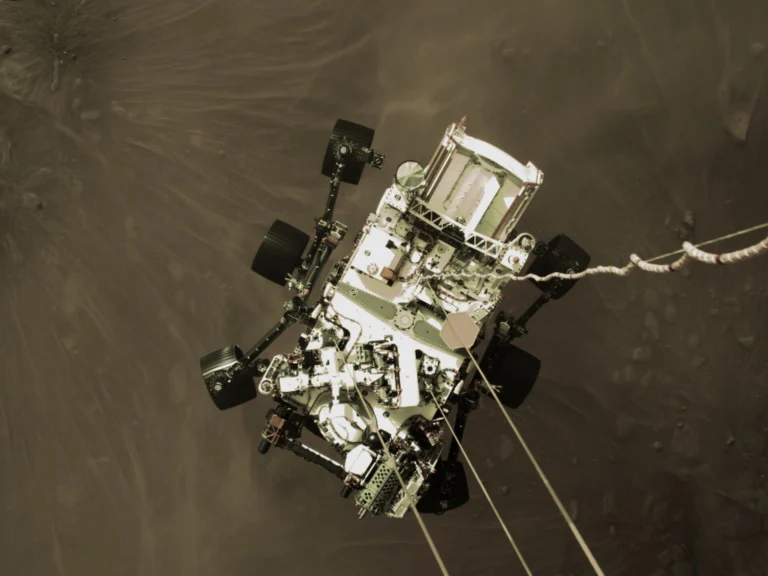
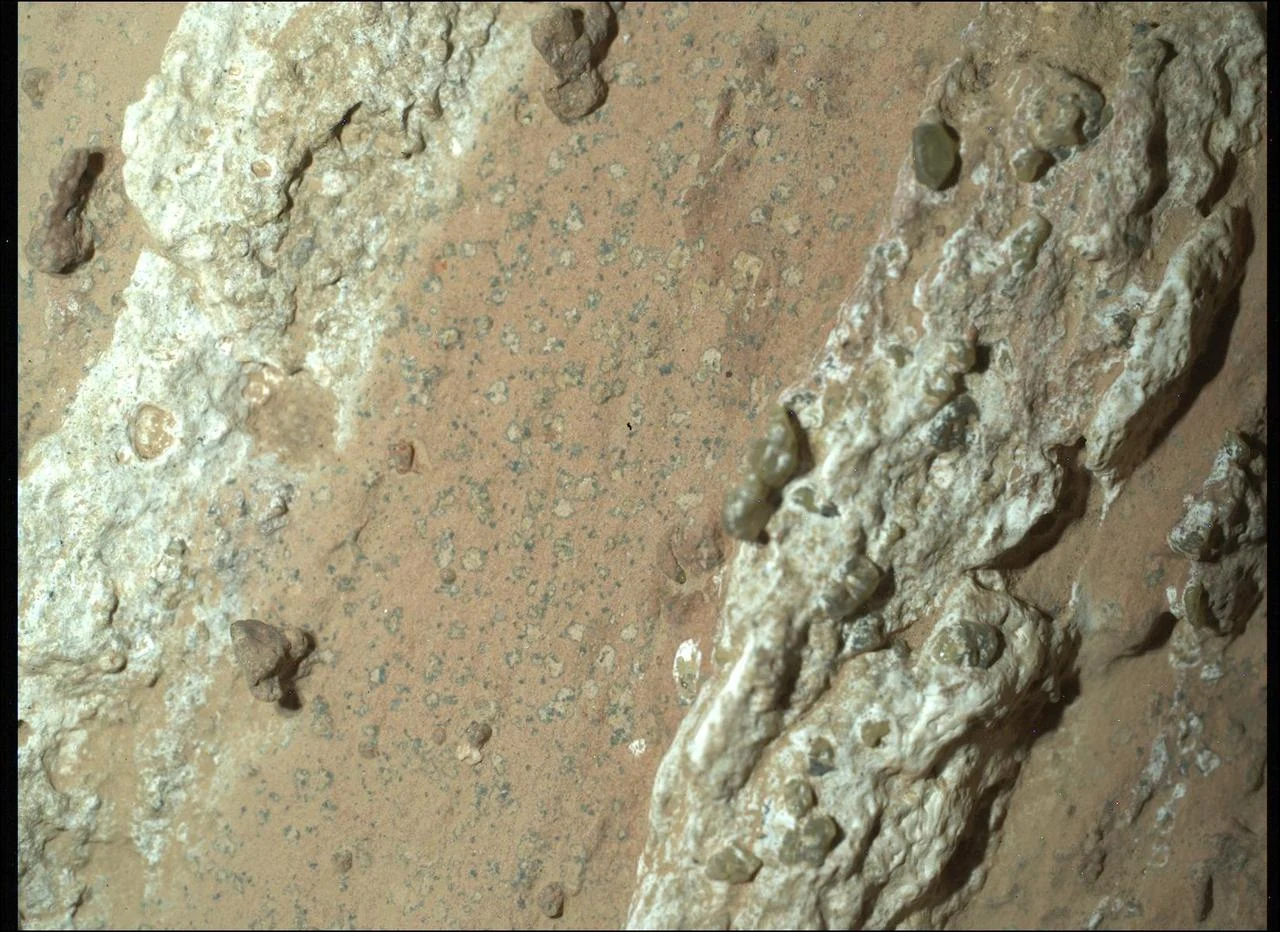
Robotic exploration of the Martian surface entered a new phase when the Perseverance rover analyzed an intriguing rock outcrop within an ancient river valley network. During close-up investigation of a finely layered sedimentary formation, the rover's scientific cameras and proximity instruments revealed distinctive, millimeter-scale pale patches ringed with dark borders. These circular features quickly earned the informal nickname of leopard spots among mission scientists due to their mottled, ring-like appearance against the oxidized red host rock. The visual and compositional data indicated that iron within the rock had experienced localized chemical reduction, stripping away the characteristic hematite staining that gives the surface its red hue. Similar reaction halos on Earth frequently form when organic material or active microbial colonies alter the redox state of surrounding minerals, using oxidized iron or sulfate as metabolic electron acceptors. Because the instrument suite also picked up associated signatures of iron, phosphate, and organic carbon compounds within these halos, researchers formally classified the formation as a candidate biosignature. Following the discovery, media organizations including Flash.gr and CNN.gr highlighted the finding alongside official mission communications from NASA Science. Coverage focused not only on the intriguing visual patterns in the stone, but also on the severe logistical, budgetary, and timeline challenges confronting the planned Mars Sample Return campaign. Analysts and commentators raised concerns that complex multi-agency retrieval architectures might face indefinite postponement or restructuring, potentially leaving the drilled rock cores sitting indefinitely in their sealed canisters on the floor of Jezero Crater.
What we know
The physical subject of the investigation is a fine-grained, sulfate-rich mudstone situated within the deltaic sediments of an ancient lake basin. Planetary geologists have firmly established that billions of years ago, Jezero Crater hosted an open-basin lake system fed by incoming river channels. During this wetter epoch of Martian history, quiescent water allowed fine suspended clays and dissolved salts to settle gradually, creating sedimentary layers exceptionally suited for the preservation of delicate geochemical textures. Onboard instrument readings verified that the surrounding red rock is thoroughly oxidized, dominated by ferric iron minerals that precipitate under surface conditions exposed to an atmosphere. In contrast, the pale interiors of the leopard spots are chemically depleted in ferric iron and enriched in reduced minerals, creating localized zones of contrast just a few millimeters across. Surrounding these lighter interiors are dark reaction rims that contain concentrated deposits of iron and phosphorus, two elements central to bio-essential chemistry and aqueous alteration. Furthermore, deep-ultraviolet fluorescence and Raman spectrometry confirmed the spatial presence of organic carbon molecules in close association with the mineral boundaries. These carbonaceous signatures do not merely float across the surface as windblown dust; they are integrated directly into the lithified matrix of the sediment. Sedimentary reduction rims of this geometry are well-documented in terrestrial field geology, where groundwater carrying organic acids migrates through red beds and reduces ferric iron to soluble ferrous states, leaving behind distinctive bleaching rings.
What we don't know
The primary unknown is whether the chemical processes that cleared the iron from these spots involved living organisms or occurred through entirely non-biological reactions. While organic molecules were detected within the outcrop, the rover's miniaturized instruments cannot determine the specific stereochemistry, molecular complexity, or isotopic composition of those carbon compounds. Organic matter on Mars can originate through abiotic pathways such as serpentinization, meteoritic infall, or atmospheric photochemical reactions that have no relationship to biological life. Geologists also do not know the exact temperature and timing of the fluid alteration that created the rings. It remains uncertain whether the bleached spots formed at low temperatures while the lake sediments were still soft and water-saturated, or much later when deep, hot hydrothermal brines moved through fractured bedrock during post-depositional tectonic or impact events. High-temperature abiotic fluid circulation can readily reduce iron and concentrate phosphorus without biological activity. Finally, the ultimate fate of the sample cores gathered from this rock unit remains unresolved. While the rover successfully sealed a core containing these exact features into an ultra-clean titanium tube, the international space exploration community has not finalized the timeline or funding envelope for the spacecraft that would collect and lift these samples from the Martian surface. Without a confirmed retrieval architecture, researchers cannot predict when or if these physical specimens will ever enter an analytical cleanroom on Earth.
What is claimed
In popular scientific discourse and news reporting, the discovery has sometimes been framed as a near-definitive detection of ancient alien life that risks being abandoned due to administrative gridlock. Several media discussions have characterized the reduction halos as microscopic fossil tracks or fossilized microbial communities preserved directly inside the stone. These presentations emphasize the morphological resemblance between the Martian rings and terrestrial Permian or Triassic red-bed reduction spots that were influenced by decaying biological matter. Parallel reporting from outlets such as Flash.gr and CNN.gr emphasized that the financial crisis surrounding the Mars Sample Return mission could cause humanity to miss out on confirming the most significant discovery in history. Commentators argued that if the retrieval program is cancelled or downsized, the true nature of the Jezero spots might remain a permanent enigma. In this framing, the rover has already done the heavy lifting by identifying life, and the remaining hurdle is purely political and logistical. NASA Science and the rover science team have taken a far more conservative, disciplined stance in their official documentation. The agency explicitly described the find as a candidate biosignature, a formal categorization meaning that the feature displays characteristics consistent with life but requires substantial further investigation to eliminate non-biological alternatives. Planetary scientists stressed that reduction spots form routinely in terrestrial geology through strictly inorganic chemical reactions involving reducing fluids, sulfur compounds, or radiolysis.
What is verified
What has been physically confirmed on Mars is a set of spatially correlated chemical, mineralogical, and structural anomalies. The rover's contact sensors successfully mapped the co-occurrence of phosphorus, reduced iron, and carbon-bearing compounds in specific concentric geometries inside a lithified sedimentary layer. These measurements represent high-fidelity instrument outputs derived from multiple complementary spectroscopic and imaging techniques, establishing beyond doubt that the spots are authentic Martian rock textures rather than sensor artifacts or surface contamination. It is also verified that the surrounding paleoenvironment possessed all the standard requirements for habitability, including persistent liquid water, chemical building blocks, and accessible redox gradients. The delta deposits in Jezero Crater were unquestionably formed by flowing and standing water under climatic conditions far milder and denser than the hyper-arid, freezing environment seen on Mars today. The geological context represents an authentic aqueous sedimentary system. However, scientific verification of an extraterrestrial biosignature requires satisfying the highest evidentiary thresholds in modern science. The existence of a candidate biosignature is not proof of life. Verification demands establishing that the observed morphology, chemical patterns, and organic associations cannot be explained by any known combination of abiotic physical, chemical, or geological processes. Under current analytical capabilities deployed on the rover, that rigorous standard has not been met.
Competing explanations
- Possible: Mineral reaction rims and leopard spots in the rock formed entirely through abiotic geochemical and hydrothermal or sedimentary processes without microbial intervention.
- Possible: The reduction spots and chemical alteration reflect organic-mediated microbial metabolic processes that took place in ancient Martian aqueous environments.
What would change our assessment
The evidentiary status of this discovery will shift decisively only when the rock samples are examined inside state-of-the-art laboratories on Earth. Rover-mounted instruments, while extraordinary feats of space engineering, are constrained by severe power, mass, and volume limitations that prevent them from conducting the definitive tests routinely applied to terrestrial rocks. A confirming assessment would require advanced transmission electron microscopy capable of resolving the atomic crystal structure and boundary interfaces of the mineral rims. Scientists would need to observe distinct biogenic microtextures, such as intracellular mineral precipitates, structured organic cell walls, or characteristic polymeric biofilms that inorganic crystallization cannot replicate. Furthermore, nanoscale secondary ion mass spectrometry would need to map stable carbon and sulfur isotopic fractionation down to sub-micron scales. Biological enzymatic systems preferentially process lighter isotopes, such as carbon-12 over carbon-13, leaving a distinct isotopic skew that differs markedly from abiotic organic matter produced by chemical synthesis or carbonaceous meteorites. If high-precision isotopic mass spectrometry revealed clear kinetic fractionation alongside complex, repetitive biological macromolecules like uniform amino acids or lipids, the biological hypothesis would gain overwhelming support. Conversely, laboratory discovery of high-temperature mineral phases inside the reaction rims, such as hydrothermal zeolites or specific iron sulfides formed exclusively above two hundred degrees Celsius, would confirm an abiotic origin. Demonstrating through laboratory synthesis that abiotic fluids containing simple dissolved organic acids or hydrogen sulfide can reproduce the exact spatial distribution of iron, phosphorus, and carbon under simulated early Martian conditions would effectively rule out the biological explanation without requiring alien microbes.
Videos from the sources

Sources
- Flash.gr (context)
- NASA Science (supports, primary)
- CNN.gr (context)
Protocol AENIGMA-EF-0.1