Evidence: Unsubstantiated Explanation: Not enough data yet
Lapis lazuli: What the source data actually shows about the blue rock
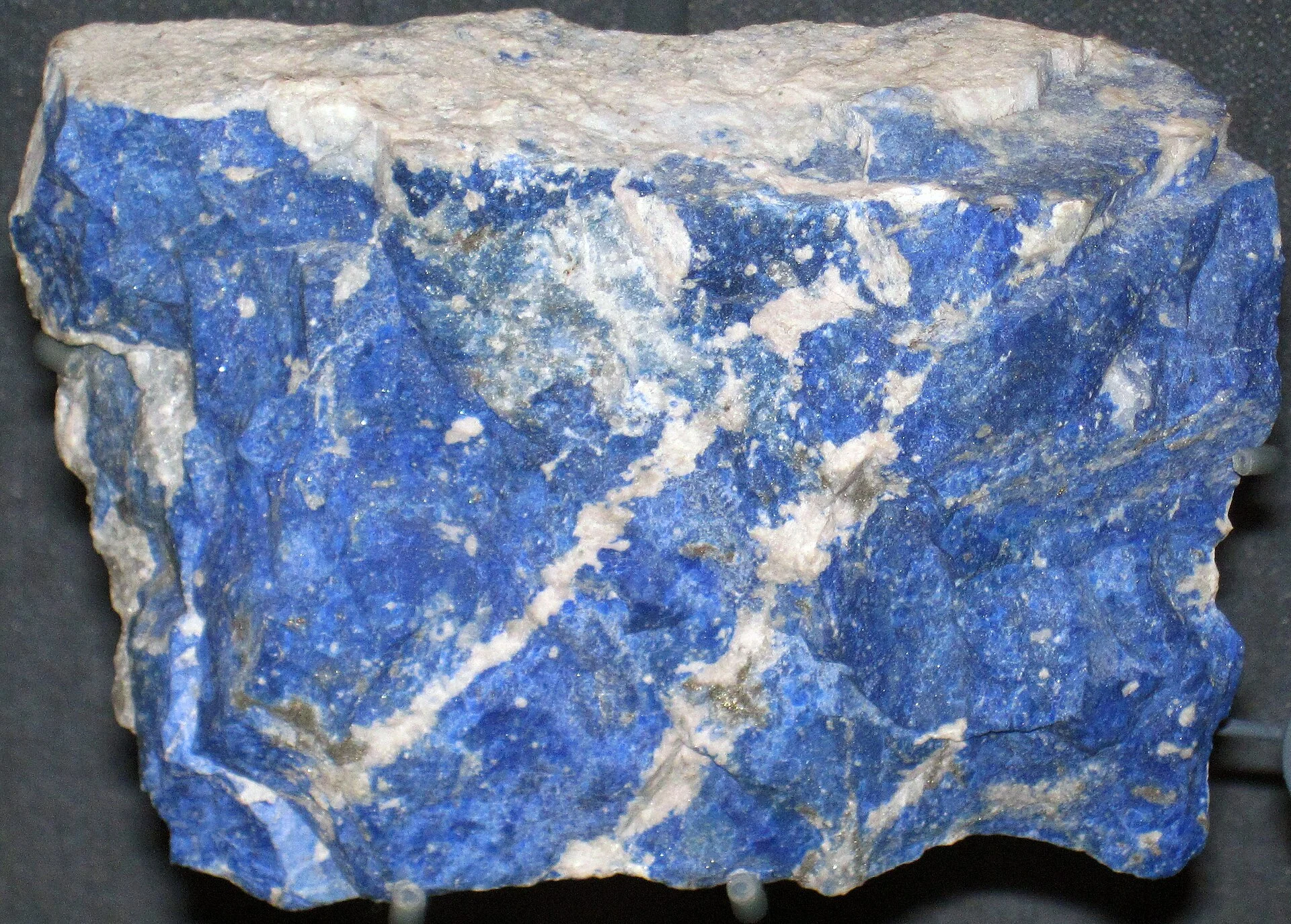
A recent submission highlighted the geological composition of lapis lazuli, noting it is a rock primarily colored by the mineral lazurite. However, the provided source material consisted of an unrelated homepage index, leaving the specific citation unsubstantiated. Understanding the true nature of this historic stone requires specialized geological and archaeological data.
Why AENIGMA is covering this
AENIGMA covers this topic to illustrate the critical importance of accurate sourcing and the rigorous evaluation of evidence, even when dealing with widely accepted facts. The case of the lapis lazuli submission serves as a clear example of how a factual statement can be rendered unsubstantiated if the accompanying documentation is incorrect or irrelevant. By examining this discrepancy, we highlight the methodology used to assess claims regarding natural phenomena and historical materials. It provides an opportunity to explore the actual scientific processes—from understanding geological formation to utilizing advanced spectroscopic analysis—that researchers use to understand and verify the properties of complex materials. This approach ensures that discussions of geology and archaeology remain grounded in verifiable data and precise documentation. It separates established scientific knowledge from unsupported or misattributed claims, reinforcing the standard that all assertions, regardless of how plausible they seem, must be backed by the specific evidence presented.
What happened
The deep celestial blue of lapis lazuli has captivated human imagination for millennia, driving trade, art, and exploration across the ancient world. A recent submission brought attention to the fundamental geological nature of this highly prized material. The statement highlighted that lapis lazuli is not a single, uniform mineral, but rather a complex rock composed of several distinct minerals. Specifically, it noted that lazurite is the primary mineral component responsible for imparting the stone's signature deep blue color. This geological definition was attributed to a publication by National Geographic, suggesting a basis in established scientific reporting or educational outreach. However, upon reviewing the provided source material intended to support this definition, a significant discrepancy emerged. The submitted text did not contain any articles, reports, or educational summaries regarding the stone. Instead, the material consisted entirely of an unrelated homepage index. It lacked any references to mineralogy, mining regions, historical applications, or the chemical composition of lazurite. Consequently, the specific submission remains unsubstantiated by the provided documentation. The situation highlights a common occurrence in the dissemination of scientific and historical information, where widely accepted facts are sometimes paired with mismatched, incomplete, or entirely unrelated source data. Understanding the true nature of lapis lazuli requires looking beyond general homepage links and delving into the specialized fields of geology, mineralogy, and archaeology. The stone itself represents a complex natural phenomenon, formed under highly specific geological conditions that have made it a rare and sought-after commodity throughout human history. By examining the actual methods used to study such materials, we can better appreciate the rigorous processes required to verify geological claims and trace the origins of ancient artifacts.
What we know
Lapis lazuli is universally recognized by geologists as a contact metamorphic rock rather than a single distinct mineral. Its formation occurs deep within the earth when magma intrudes into pre-existing blocks of limestone or marble. The intense heat from the magma, combined with the introduction of new chemical elements through hydrothermal fluids, causes the original rock to recrystallize. This process forms a complex aggregate of different minerals. The most defining component of this aggregate is lazurite, a complex silicate mineral containing sulfur. The vivid, ultramarine blue color of lazurite is caused by a phenomenon known as intervalence charge transfer, specifically involving sulfur radical anions trapped within the mineral's crystal lattice. Alongside lazurite, lapis lazuli typically contains varying amounts of white calcite and brassy yellow pyrite. The presence, size, and distribution of these secondary minerals often help experts determine the quality and potential geographic origin of a specific sample. Historically, the most significant and ancient source of lapis lazuli is the Sar-e-Sang deposit located in the rugged Kokcha River valley of the Badakhshan province in modern-day Afghanistan. These high-altitude mines have been worked for more than six thousand years, supplying the ancient world with its most prized blue material. Archaeological evidence demonstrates that lapis lazuli from Badakhshan was traded across vast distances along early exchange networks that predated the Silk Road. The Indus Valley civilization established a trading colony at Shortugai specifically to control access to the lapis mines. The stone reached the city-states of ancient Mesopotamia, where it was used extensively in artifacts like the Standard of Ur, and traveled to the pharaohs of Egypt, famously adorning the burial mask of Tutankhamun. Later, during the European Renaissance, the stone was ground into a powder and subjected to a complex extraction process using wax and resin to isolate the lazurite. This created natural ultramarine, a pigment more expensive than gold, used by master painters to depict the robes of religious figures. In modern archaeological and geological practice, studying lapis lazuli involves a range of sophisticated analytical techniques. Researchers do not rely solely on visual inspection to determine the composition or origin of a stone. Instead, they employ methods such as X-ray diffraction to identify the specific crystalline structures of the constituent minerals. Raman spectroscopy is frequently used as a non-destructive way to analyze the molecular composition of valuable artifacts without causing any damage. Furthermore, techniques like Particle Induced X-ray Emission and electron microprobe analysis allow scientists to detect trace elements within the lazurite crystals. These trace elements act as a geological fingerprint, enabling researchers to distinguish between lapis lazuli sourced from Afghanistan, the Lake Baikal region in Russia, or the Andes mountains in Chile. Such rigorous scientific methods are standard practice when evaluating the provenance and authenticity of historical materials.
What we don't know
In the context of the current submission, there is a significant lack of specific data regarding the intended source. Because the provided text was an unrelated homepage index, it is not known what specific article, study, or report the submitter intended to reference. We do not know if the original National Geographic piece discussed a new geological survey, an archaeological discovery involving lapis lazuli artifacts, or simply provided a general educational overview of the stone's properties. The absence of the actual text means the specific context, the depth of the intended information, and the primary sources relied upon by the original publication remain entirely unknown. Beyond this specific submission, there are broader unknowns in the study of lapis lazuli that continue to challenge researchers. While the major historical sources like the Badakhshan mines are well documented, pinpointing the exact ancient trade routes and the specific mechanisms of exchange across different eras remains a complex puzzle. Archaeologists and historians often lack complete records of how the stone moved from the remote mountains of Central Asia to the workshops of the Mediterranean and the Middle East, particularly during periods of regional instability or before the advent of written trade records. Furthermore, while modern analytical techniques can often distinguish between major global sources, differentiating between individual veins or specific mining periods within a single large deposit like Sar-e-Sang is incredibly difficult. The geological variations within a single mountain can be as significant as the variations between continents. Making hyper-specific provenance claims—such as identifying the exact century a specific block of stone was mined—is highly challenging. It often requires extensive, destructive sampling to gather enough isotopic and trace element data, a process that is rarely permitted on priceless historical artifacts. Consequently, many museum pieces remain broadly categorized by region rather than pinpointed to a specific historical mining operation.
What is claimed
The core assertion presented in the submission is a straightforward geological definition. It is stated that lapis lazuli is a rock made of several minerals, and that lazurite is the specific mineral component that gives the rock its characteristic deep blue color. This definition was presented alongside a citation pointing to a National Geographic source, implying that the provided text would offer detailed information, context, or perhaps a specific narrative regarding the mineralogy and characteristics of the stone. The submission suggests that the provided link serves as the documentary evidence for this geological classification.
What is verified
An examination of the provided evidence reveals a complete disconnect between the claim and the source material. The submitted text does not contain any information regarding lapis lazuli, its mineralogical composition, its mining regions, or its historical applications. Instead, the source consists entirely of an unrelated homepage index. Consequently, the specific assertion that this source supports the geological definition of lapis lazuli is unsubstantiated. While the statement about the stone being a rock composed of lazurite and other minerals aligns perfectly with established geological facts, the provided documentation fails to address the topic in any capacity. The verification process strictly evaluates the evidence presented in the submission, and in this instance, the data is insufficient to support the claim. The requirement for specialized geological and archaeological references to verify material properties and mining locations remains unmet by the provided index.
Competing explanations
- Possible: The provided source text consists of an unrelated homepage index and does not contain information regarding lapis lazuli mineralogy, mining regions, or historical applications.
What would change our assessment
To alter the current assessment, the fundamental requirement is the provision of the correct and relevant source material. Experts evaluating such submissions would need the specific text, article, or scientific report that actually discusses lapis lazuli. If the intention was to cite a general educational piece, providing the direct link or the exact text of that article would resolve the discrepancy and allow for a proper evaluation of the source's claims. If the claim were part of a broader assertion regarding a specific archaeological find, a new geological survey, or a novel interpretation of ancient trade routes, the requirements for verification would be significantly more rigorous. Geologists and archaeometrists would require detailed analytical reports from specialized laboratories. This would include data from X-ray diffraction or Raman spectroscopy confirming the mineralogical composition of the specific samples in question. To verify claims of geographic origin, experts would need trace element analysis comparing the samples to known geological databases of lapis lazuli deposits worldwide. Furthermore, any claims regarding historical artifacts would require comprehensive archaeological context. This includes documented excavation records, stratigraphy, clear chain-of-custody documentation, and dating analysis of associated materials. Without such specialized geological and archaeological references, any specific claims beyond general textbook definitions remain impossible to validate.
Sources
- National Geographic (neutral)
Protocol AENIGMA-EF-0.1