Evidence: Unsubstantiated Explanation: Not enough data yet
Claim of Hidden Mathematical Codes in the Great Pyramid of Giza
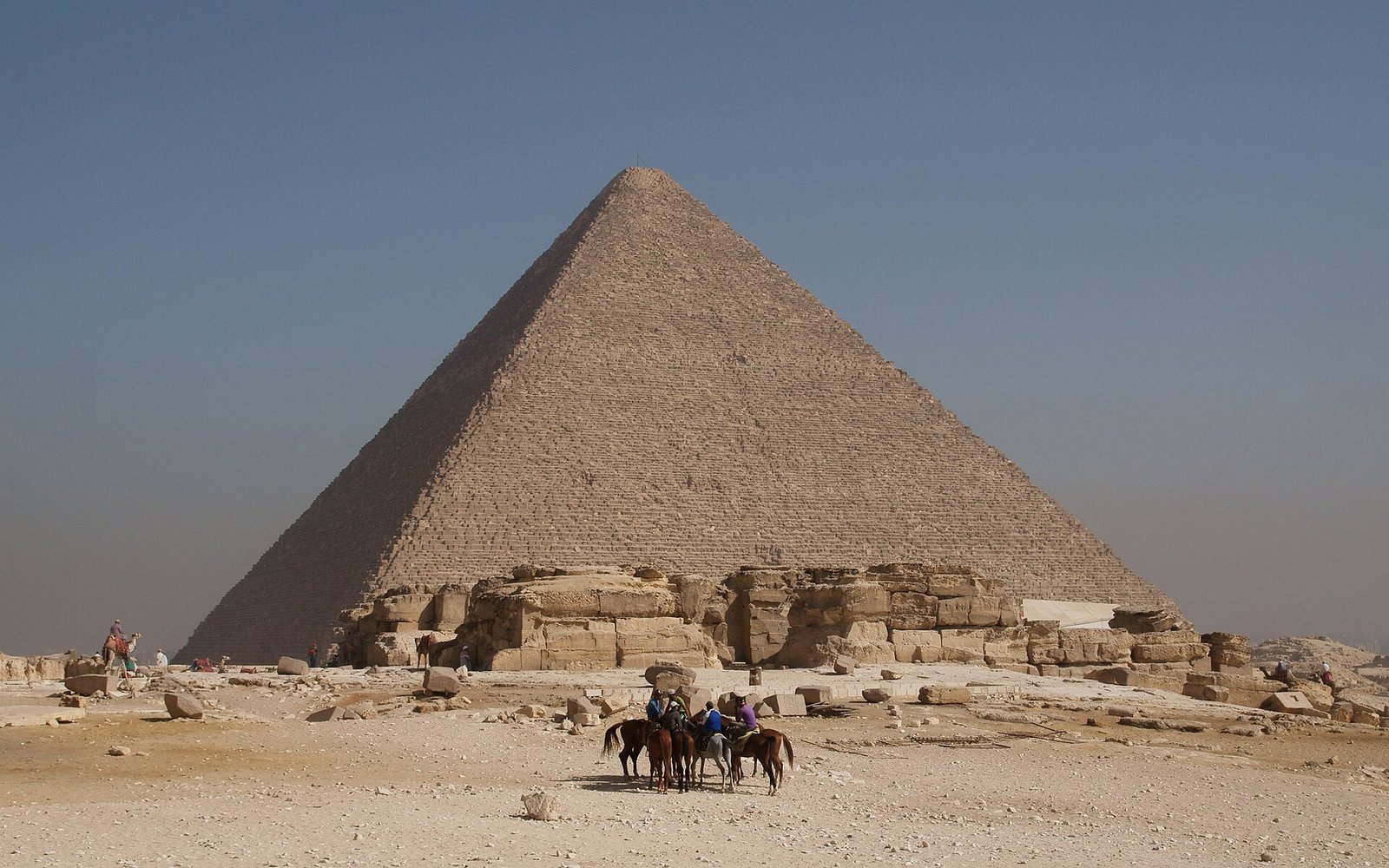
Recent media reports highlight a hypothesis suggesting the Great Pyramid of Giza contains a hidden mathematical code related to astronomical cycles. Mainstream archaeological consensus maintains the structure was built as a funerary monument for Pharaoh Khufu, with no ancient texts supporting the intentional encoding of such constants. The claim remains unsubstantiated by current archaeological evidence.
Why AENIGMA is covering this
This topic is being covered because the claim of hidden codes in the Great Pyramid has circulated in international media, prompting public interest. Providing the established archaeological context and separating the physical measurements from modern interpretations helps clarify the current state of evidence regarding the pyramid's construction and purpose.
What happened
Media outlets, including Fortune Greece and Sohu, have published articles discussing a hypothesis about the Great Pyramid of Giza. The reports describe a non-peer-reviewed claim that the pyramid's dimensions were intentionally designed to function as a cosmic encyclopedia, encoding specific astronomical cycles such as the lunar perigee and the visibility of the star Sirius.
What we know
The Great Pyramid of Giza is established by mainstream archaeological consensus as the funerary monument and tomb of Pharaoh Khufu, dating to the 4th Dynasty of ancient Egypt. Historical context shows a long tradition of pyramidology, a practice where individuals look for mathematical coincidences in the structure's measurements. It is a documented phenomenon that complex mathematical ratios can often be derived retroactively from the dimensions of large structures, regardless of the builders' original intent.
What we don't know
There are no known ancient Egyptian texts, blueprints, or records that document an intentional effort to encode complex astronomical constants or cosmic cycles into the dimensions of the Great Pyramid. It is not known if the builders possessed the specific astronomical measurements proposed by the recent hypothesis.
What is claimed
The hypothesis claims that the architects of the Great Pyramid intentionally embedded a mathematical code into its physical dimensions to record astronomical data, specifically citing the lunar perigee and the cycles of Sirius.
What is verified
It is verified that the Great Pyramid was built during the 4th Dynasty for Pharaoh Khufu, supported by established archaeological evidence at the site. It is also verified that the hypothesis regarding the cosmic encyclopedia has not undergone formal peer review. The claim that the dimensions intentionally encode these specific astronomical constants is currently unsubstantiated.
Competing explanations
- Possible: Mainstream archaeological consensus identifies the Great Pyramid as the tomb of Pharaoh Khufu from the 4th Dynasty, with no ancient Egyptian texts supporting the intentional encoding of complex astronomical constants in its dimensions.
- Unlikely: A non-peer-reviewed hypothesis suggesting the pyramid's dimensions were intentionally designed as a 'cosmic encyclopedia' to encode astronomical cycles, such as the lunar perigee and the visibility of Sirius.
What would change our assessment
The assessment would change if contemporary ancient Egyptian texts, architectural plans, or verifiable inscriptions were discovered that explicitly detail the intentional use of these specific astronomical constants in the pyramid's design. Formal peer-reviewed archaeological consensus supporting the mathematical code hypothesis would also alter the current evaluation.
Sources
- Fortune Greece (neutral, unverified)
- 搜狐 (Sohu) (neutral)
Protocol AENIGMA-EF-0.1