Evidence: Unsubstantiated Explanation: Not enough data yet
Cretan State Treasury: What the Mountain Surveys Really Show
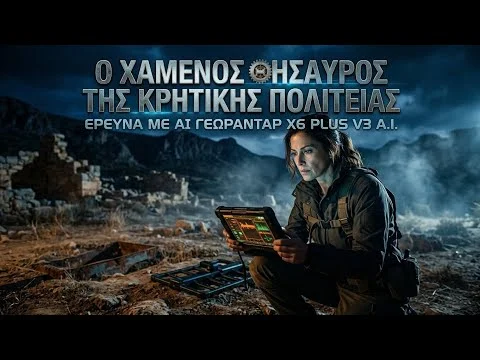
The legend of the lost treasury of the autonomous Cretan State has long captivated the imagination of local historians and researchers. Recent field surveys along the mountainous borders of Heraklion and Rethymno have combined oral traditions with modern ground-scanning technology to investigate the enduring myth of Captain Vodias.
Why AENIGMA is covering this
We are covering this investigation to explore the fascinating intersection of regional history, local legend, and digital archaeology. By examining how modern field research and geophysical surveys are utilized to investigate enduring mysteries of the Greek countryside, we highlight the ongoing efforts to bring new perspectives and technological insights to long-held oral traditions.
What happened
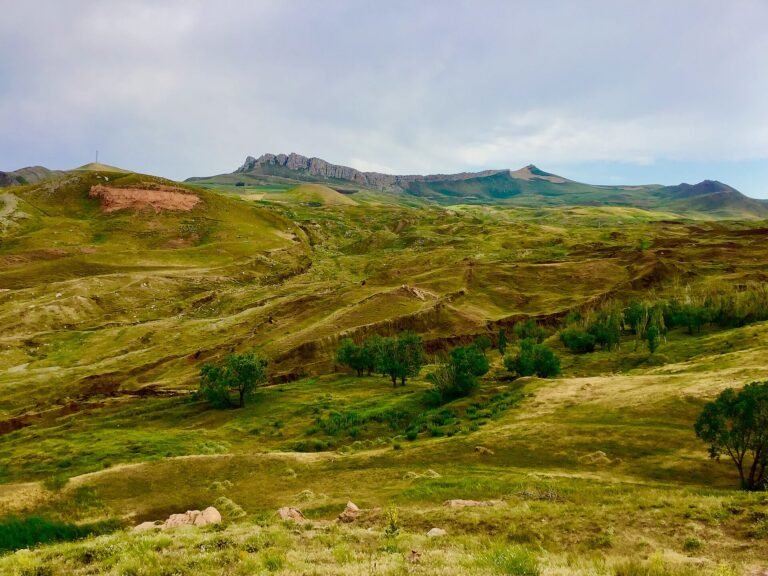
There are secrets that the earth refuses to reveal easily. In the depths of the Greek countryside, and particularly within the untamed Cretan landscape, legends are not merely fairy tales; they are the silent testimonies of a deeply turbulent history. At the center of one of the most fascinating modern field investigations lies the mythical, lost treasury of the Cretan State. To understand the origins of this enduring mystery, one must look back to the twilight of the nineteenth century and the dawn of the twentieth. Shortly after its liberation from the Ottoman yoke, and while navigating the complex path toward its historic union with Greece, the island experienced a critical transitional period as the autonomous Cretan State. Established in 1898 following the intervention of the Great Powers, this autonomous entity had its own administration, its own gendarmerie, and its own currency, the Cretan drachma. Amidst the whirlwind of political and social ferment that characterized this era, the legend of a massive fund and treasury was born. According to the narrative, this treasury was never officially recorded in the state archives, yet it never ceased to haunt the imagination of researchers and treasure hunters across the decades. The great turning point in this historical puzzle came from information that reached researchers, connecting the mystery to real historical figures. The central figure in this narrative is Captain Vodias, an emblematic and simultaneously tragic personality of the local resistance. According to the information that guided the recent investigation, the family of Captain Vodias acted as the custodian of this profound secret. However, the story took a dark turn during the turbulent period that followed the years of resistance and liberation. Captain Vodias was executed, and with his violent death, an entire circle of custodians was abruptly closed. The secret of the treasury's location was left to be lost in the rugged mountains of the island. The location that emerged from the synthesis of these historical data and oral traditions is situated on the mountainous borders between the present-day prefectures of Heraklion and Rethymno. There, in a peculiar geomorphological "voulisma"—a plateau that had been artificially covered with rubble and soil decades ago—lay the potential ground zero for the investigation.
What we know
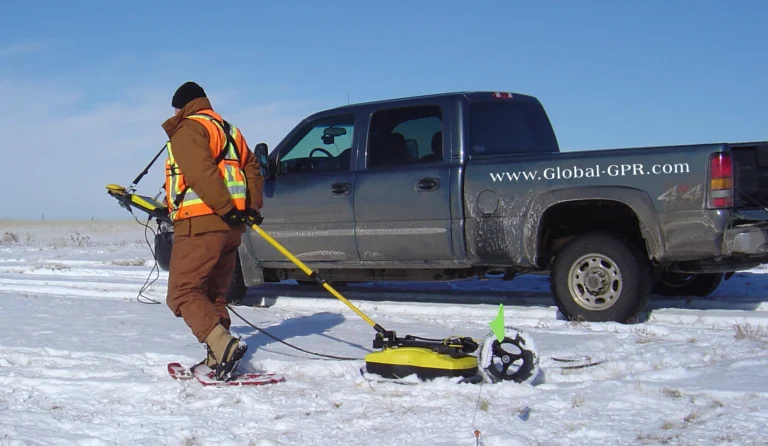
The challenge facing any modern research team is how to pierce through the layers of oblivion and time without resorting to blind excavation. During the recent field survey, the area was divided into specific zones and scanned with millimeter precision. The subsurface reactions were recorded, translating electromagnetic waves into visual graphs to map the hidden landscape. AENIGMA's publisher, NOETIC Lab, makes the X6 ground-scanning equipment and software used in these field surveys. The survey identified several critical indications beneath the artificially covered plateau. Negative anomalies were detected, indicating the presence of potential underground voids and chambers. Furthermore, strong metallic signals were recorded, pointing to areas of high density and metallic presence at critical depths ranging from three to fifteen meters. Through the tracking of GPS coordinates on each pass, a composite stitching of the multiple scans was created. This process revealed a complex underground structure: a chamber or building located at a depth of a few meters, beneath which extends deeper "kouskouras" (the hard natural rock characteristic of the region) and massive underground voids reaching depths that touch nine to fifteen meters. For the researchers involved, this investigation demonstrates that technology does not come to replace history, but to vindicate it. The video documentary capturing the search for the treasury of the Cretan State serves as a reminder that entire chapters of the past lie hidden beneath our feet, waiting for modern explorers to illuminate them. Through the persistence of the researchers, the legend ceases to be merely a whisper of the wind in the Cretan mountains and transforms into a digitally documented reality. The entire immersive process of the research, the scanning, and the analysis by the team has been made available in a related YouTube video documenting the search for the treasury.
What we don't know
Despite the detailed mapping of the subsurface anomalies, several crucial questions remain unanswered. The exact nature of the strong metallic signals and the specific contents of the deep underground voids cannot be definitively known without physical excavation. While the geophysical data indicates the presence of a complex structure and significant metallic density, the identity of these materials remains a subject of investigation. Furthermore, the historical documentation of the treasury itself remains elusive. Because the funds were reportedly never officially recorded in the state archives of the Cretan State, tracing the exact origins, amount, and composition of the treasury through conventional historical records is currently impossible. The full architectural layout and the original intended purpose of the underground chamber and the deeper voids also remain unclear. Additionally, the specific circumstances surrounding Captain Vodias's custodianship are shrouded in the mists of time. The exact timeline of when the "voulisma" was artificially covered with rubble and soil, and the precise sequence of events leading up to the execution of the captain and the subsequent loss of the secret, are details that have yet to be fully illuminated by historical research.
What is claimed
The investigation is heavily guided by local oral traditions, which claim that the family of Captain Vodias was entrusted as the custodian of the unrecorded state treasury. It is claimed that this immense wealth was hidden in the remote mountainous border region to protect it during the volatile transitional years of the Cretan State. According to this narrative, the knowledge of the exact location was entirely lost following the execution of the captain, transforming the hidden site into a legendary lost treasury. Conversely, there is a competing explanation regarding the nature of these stories. It is noted that the narrative of a lost state treasury is a popular local myth stemming from the turbulent transitional period of the Cretan State, with no official historical records confirming its existence. In many regions with a history of conflict and rapid political change, folklore often intertwines with historical trauma, creating enduring narratives of lost wealth and hidden secrets that reflect the uncertainties of the era.
What is verified
Several foundational elements of the historical and geographical context are well-documented and verified. The existence of the autonomous Cretan State (1898-1913) and its highly turbulent transitional period, marked by political upheaval and the struggle for union with Greece, is a matter of historical record. The era was indeed characterized by complex administrative challenges and the handling of new state finances. The geographical and geological realities of the Heraklion-Rethymno mountainous border are also verified. The presence of "kouskouras"—a type of soft limestone or marl that hardens upon exposure to air—is a well-known geological feature of Crete. Historically, this type of rock has been frequently utilized across the island for the excavation of tombs, cellars, and subterranean hideouts due to its workability. Furthermore, the broader historical context of resistance figures facing execution during the various conflicts and transitional phases in Crete's history is a documented reality of the island's turbulent past.
Competing explanations
- Leading: The narrative of a lost state treasury is a popular local myth stemming from the turbulent transitional period of the Cretan State, with no official historical records confirming its existence.
What would change our assessment
A definitive resolution to the mystery of the Cretan State treasury would require physical excavation and formal archaeological documentation of the site. Systematic excavation of the "voulisma" would be necessary to determine the true nature of the underground anomalies, the chamber, and the deep voids identified by the ground-scanning equipment. The recovery of specific artifacts, period coinage, or hidden state records that definitively link the underground structure to the finances of the Cretan State or to the figure of Captain Vodias would fundamentally change the assessment of the site. Additionally, extensive archival research that uncovers previously unknown documents or correspondence corroborating the oral traditions regarding the unrecorded treasury would provide the necessary historical framework to elevate the narrative from local legend to documented historical fact.
Sources
- X6 Plus Greece (context, primary)
- AENIGMA Editorial — Michael Brown (supports)
Protocol AENIGMA-EF-0.1