Evidence: Unsubstantiated Explanation: Not enough data yet
934 Roman Silver Coins Recovered in Germany
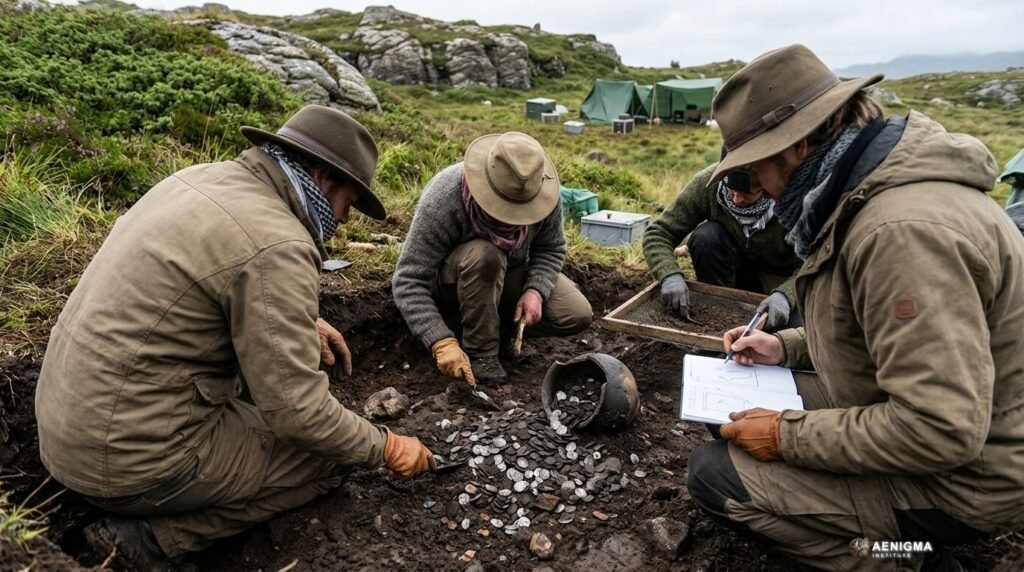
A collection of 934 Roman silver coins was recovered in Germany, with dates spanning from 148 BC to 124/125 AD. The LVR-LandesMuseum Bonn utilized block excavation and X-ray analysis to examine the find, which was contained in a straw-lined ceramic vessel. The evidence status for the site is unsubstantiated, and the explanation status is insufficient data.
Why AENIGMA is covering this
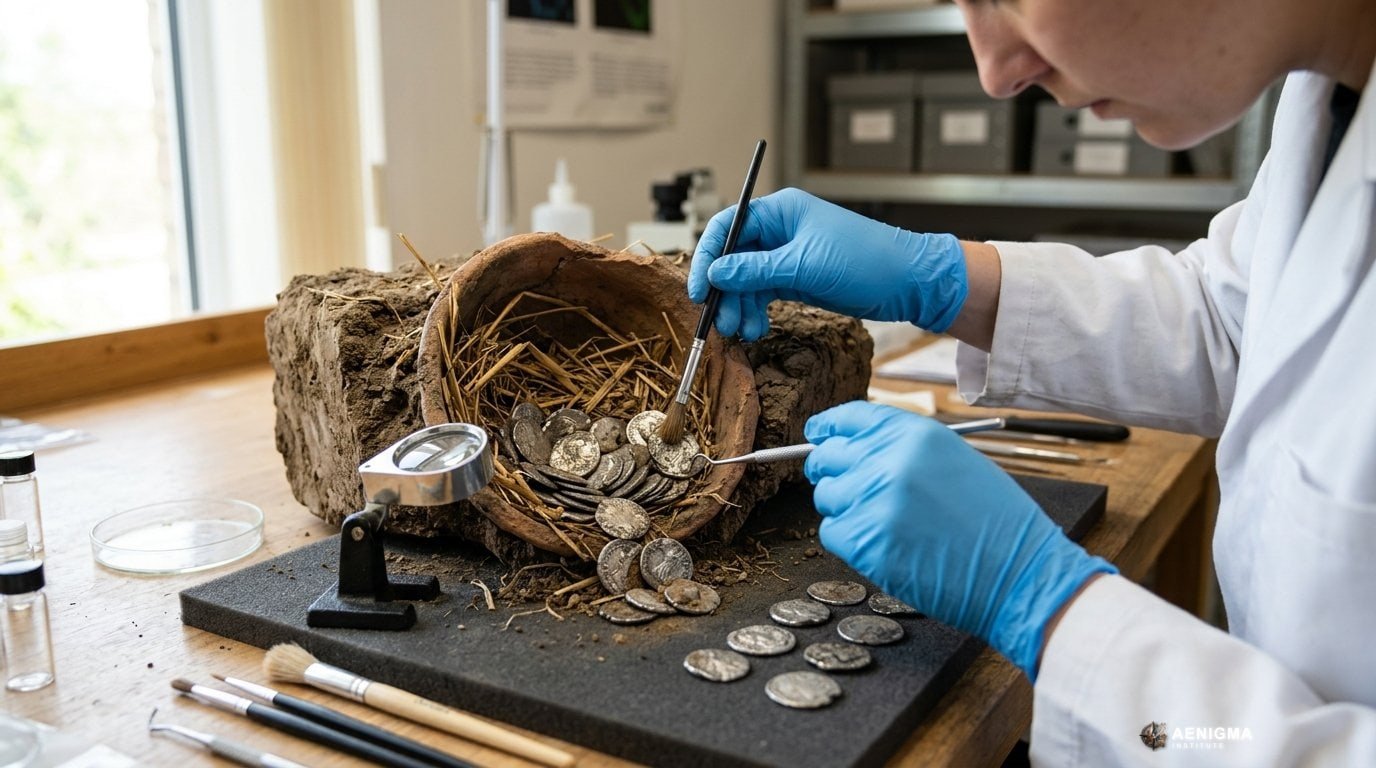
This find provides an opportunity to document the chronological span of Roman monetary circulation and to highlight laboratory techniques, such as block excavation and X-ray analysis, used to preserve fragile organic contexts like straw.
What happened
Media reports indicate the discovery of 934 Roman silver coins in Germany. The LVR-LandesMuseum Bonn conducted the recovery and laboratory analysis of the find.
What we know
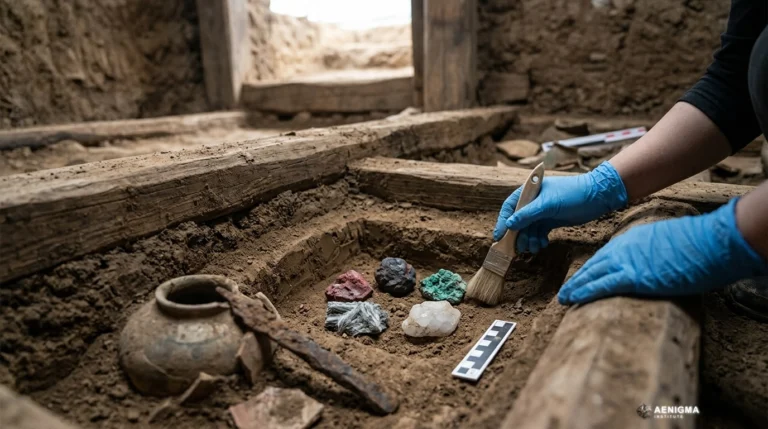
The collection consists of 934 silver coins dating from 148 BC to 124/125 AD. This chronological span indicates that older Roman currency remained in circulation for extended periods. The coins were found inside a ceramic vessel. The LVR-LandesMuseum Bonn employed a block excavation method, removing the find within a solid block of soil to preserve its context. X-ray analysis was then used in the laboratory to examine the contents, revealing organic material, specifically straw, lining the vessel.
What we don't know
The exact location of the find is not disclosed. The identity of the individual who deposited the coins and the specific reasons for the deposition remain unknown. It is not known why the coins were never retrieved.
What is claimed
One proposed explanation is that the coins were intentionally buried in the straw-lined ceramic vessel for safekeeping, and that the owner likely died before they could retrieve the collection.
What is verified
Euronews has reported on the discovery. The physical existence of the 934 coins, the ceramic vessel, the straw lining, and the dates of the coins (148 BC to 124/125 AD) are documented by the LVR-LandesMuseum Bonn's analysis.
Competing explanations
- Possible: The coins were intentionally buried in a straw-lined ceramic vessel for safekeeping, and the owner likely died before retrieving them.
What would change our assessment
Additional archaeological context, such as the discovery of associated structures, contemporary artifacts, or historical records linking the site to specific events or individuals, could provide more data to evaluate the deposition circumstances.
Sources
- Euronews (supports)
Protocol AENIGMA-EF-0.1