Publisher news
This article is about the publisher's own company. Source: official decision.
Touchscreen gradiometer with artificial intelligence: components, layout and operating principle
A two-sensor gradiometer with a five-inch touchscreen, GPS receiver and voice guidance is assembled from off-the-shelf boards that snap together with connectors. The builder shows the components one by one in a video. The total cost of the materials is less than 150 euros. The device's software is provided by NOETIC Lab.
Why AENIGMA is covering this
This is a build guide from the publisher of AENIGMA, detailing the assembly of the NOETIC console gradiometer and the publisher's own software.
What happened
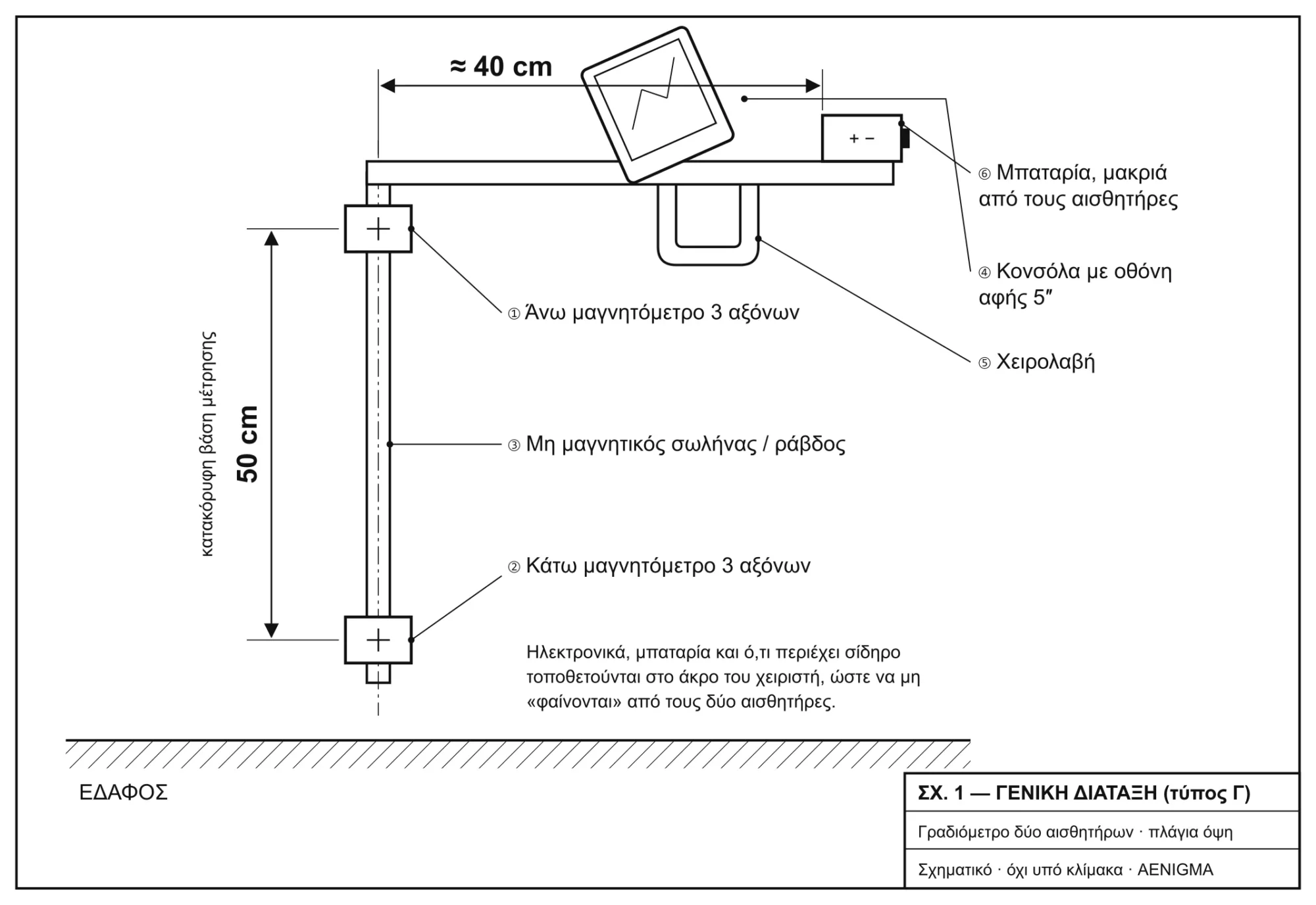
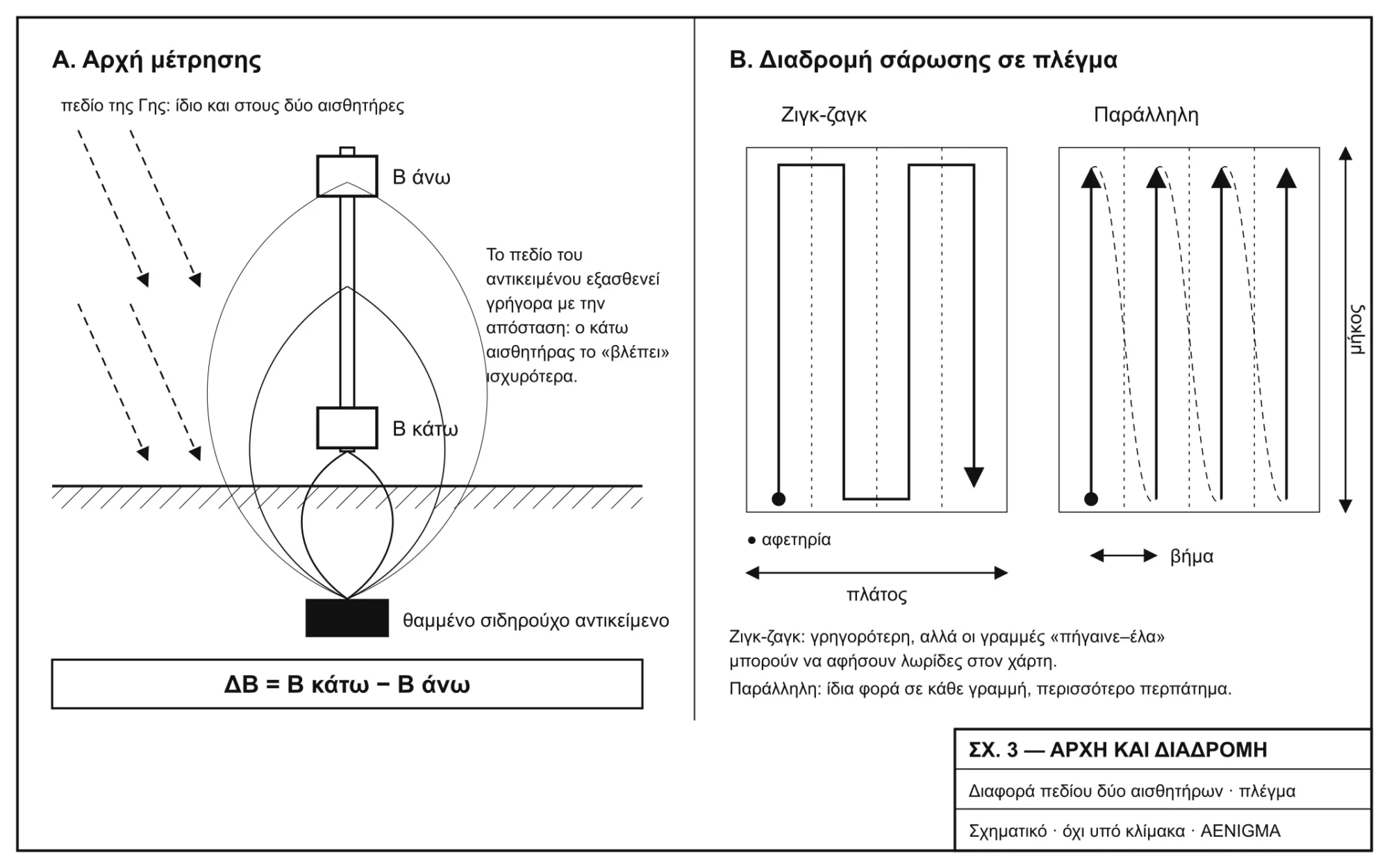
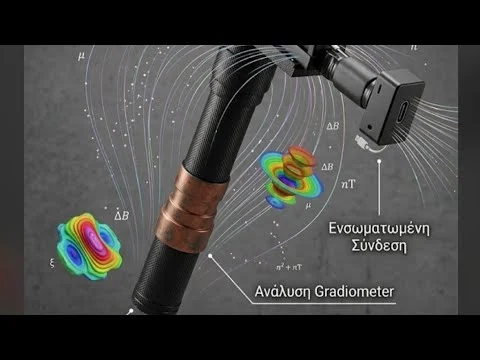
What it is and what it measures The NOETIC gradiometer does not "see" objects. It measures how much the magnetic field changes between two points. Two three-axis magnetometers are placed one above the other, at a vertical distance of 50 centimetres. The Earth's field is practically the same in both, so it cancels out in their difference. Whatever is near the surface and disturbs the field affects the lower sensor more, and this difference is the signal (Fig. 3). The instrument records magnetic anomalies. It does not identify materials and does not tell what is causing the anomaly. An indication is checked with repeated, crossing passes.
What we know
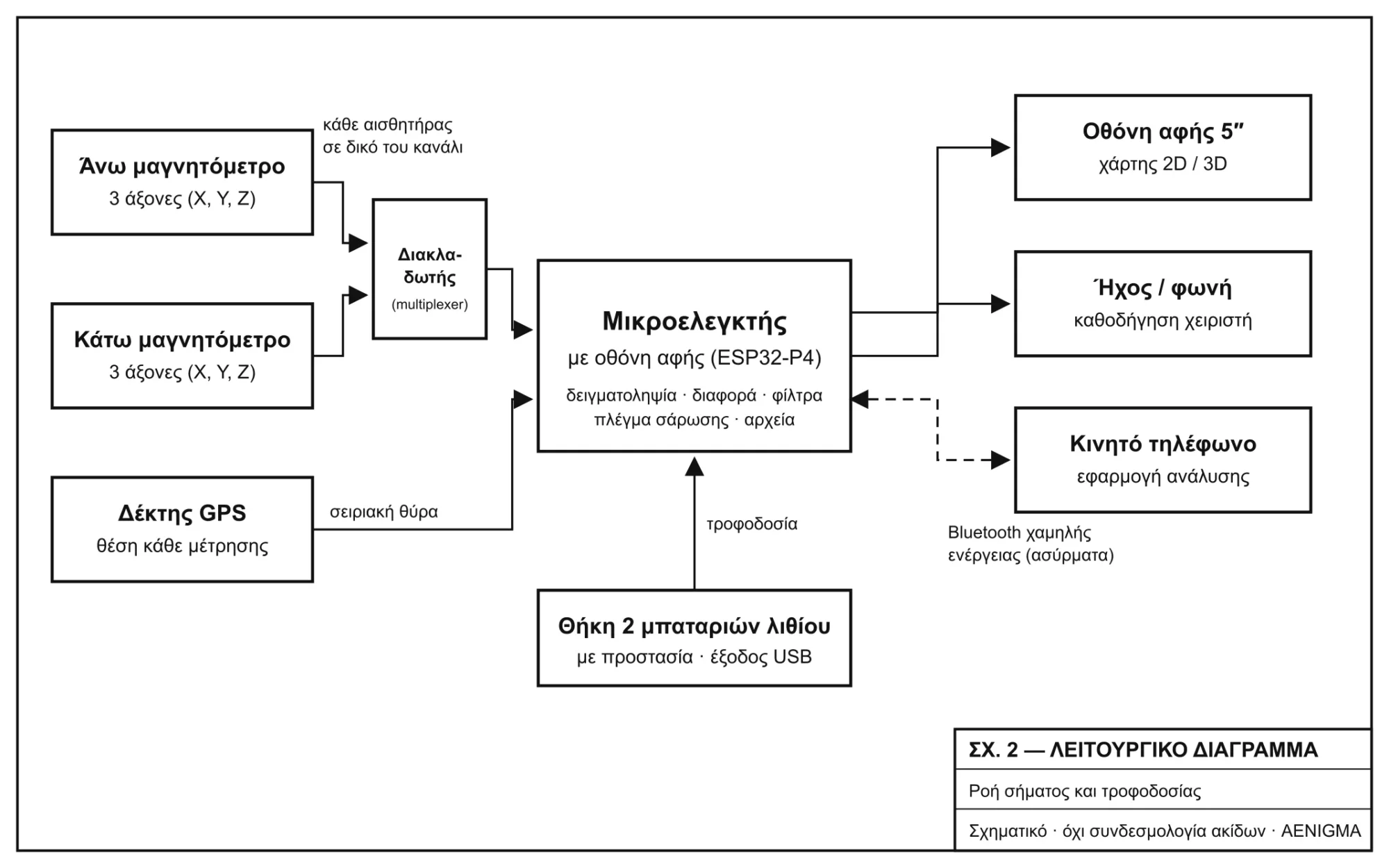
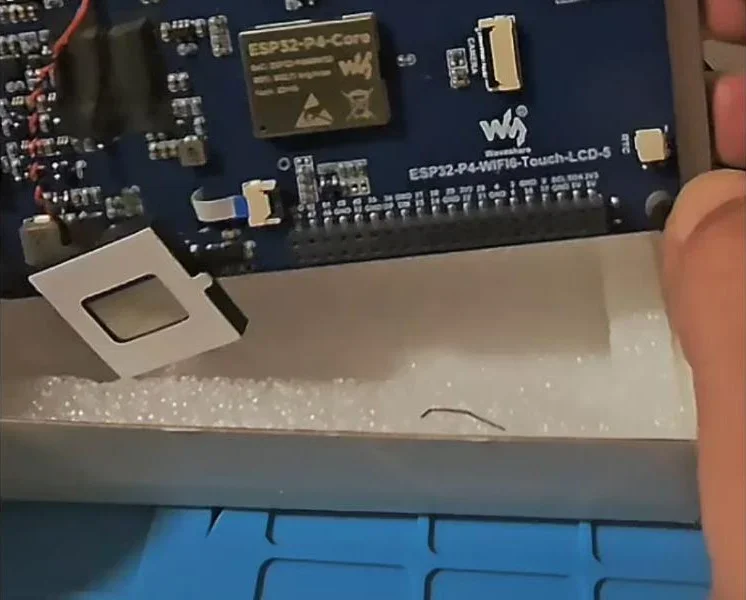
The components shown in the video Board with 5″ touchscreen and processor (ESP32-P4, with speaker and ready ports) — The "brain": sampling, map, voice 3-axis magnetometer × 2 — The two sensors of the gradiometer Multiplexer — Gives each sensor its own channel to the processor GPS receiver — Position of each measurement Battery holder with protection circuit and USB output — Power supply without changing batteries Lithium batteries × 2 — Rechargeable The layout: why "L-shaped" An L-shape with a handle was chosen (Fig. 1). The two sensors go into the vertical tube; the screen, the handle and the battery go on the horizontal arm, at the operator's end. The battery is about 40 centimetres away from the top sensor. The reason is noise. Batteries, the speaker and electronics have their own magnetic field. The further away they are from the sensors, the less they affect them. For the same reason, the tube and the supports must be made of non-magnetic material, without iron screws near the sensors. How they connect (Fig. 2) The two sensors pass through the multiplexer and reach the processor. The GPS receiver connects to a serial port. The battery holder powers the board from the USB port. The device sends the scans wirelessly to the mobile phone for analysis.
What we don't know
Fig. 2 shows the signal flow, not the pin-by-pin wiring. This has been announced for a future video.
What is claimed
The builder states in the video that all together, with the tube, the case and the cables, cost less than 150 euros. It is emphasised that the boards come with their connectors and no soldering is required. The multiplexer is necessary: without it, the two identical sensors cannot be distinguished from each other.
What is verified
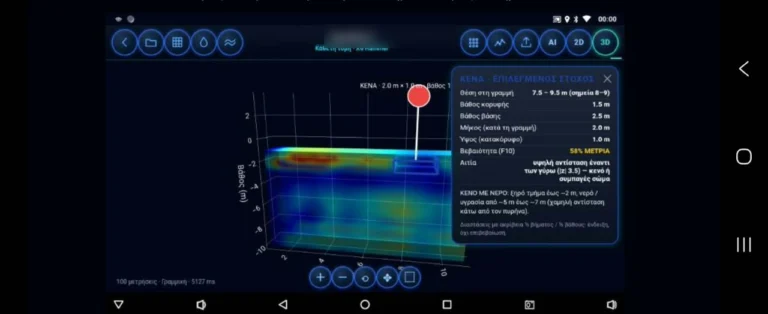
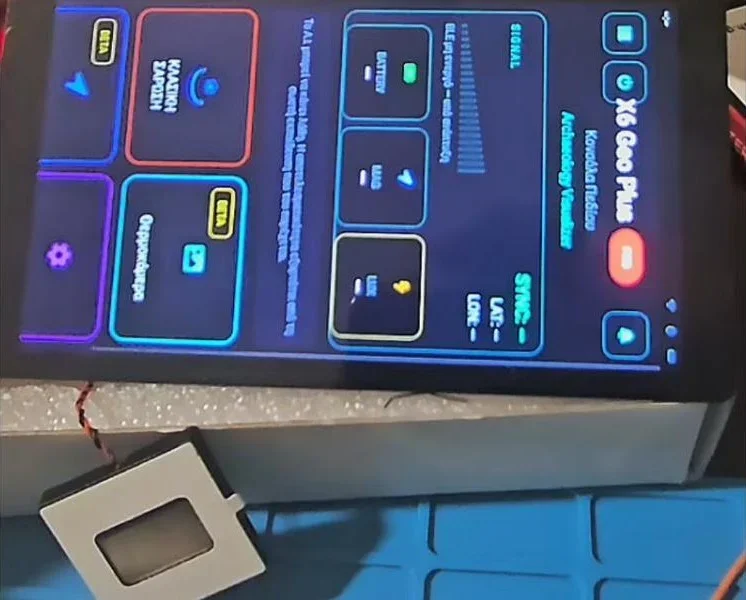
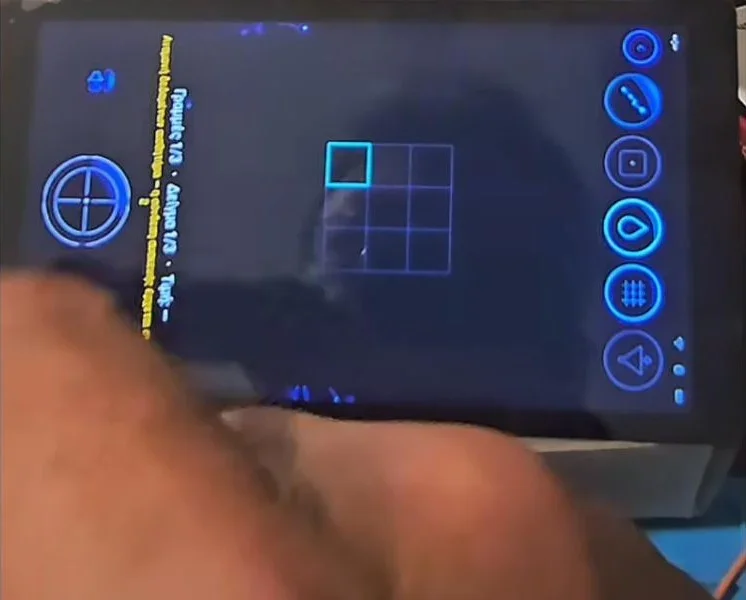
The software The device's program is provided by NOETIC Lab. As seen in the footage, from the screen you define the width, length and grid step, choose a zig-zag or parallel path and a starting point on the left or right, and the device guides you line by line. Before the scan starts, it checks the ambient noise and warns if there are metals nearby. The result appears as a two- and three-dimensional map on the device, without a mobile phone.
What would change our assessment
What to watch out for - The acquisition method matters as much as the instrument. Steady height, steady pace and the same orientation on every line. The zig-zag path is faster but can leave stripes on the map. - Keep metals away from you. Keys, a belt, or a mobile phone in your pocket will show up in the measurement. - Lawful use. The use of detection instruments is subject to the legislation of each country. In archaeological sites and near monuments, it is prohibited without permission from the competent authority.
Videos from the sources
Sources
- NOETIC Lab - Console Gradiometer (supports, primary)
Protocol AENIGMA-EF-0.1