Evidence: Unsubstantiated Explanation: Not enough data yet
White dwarf planets and what a second generation world really shows
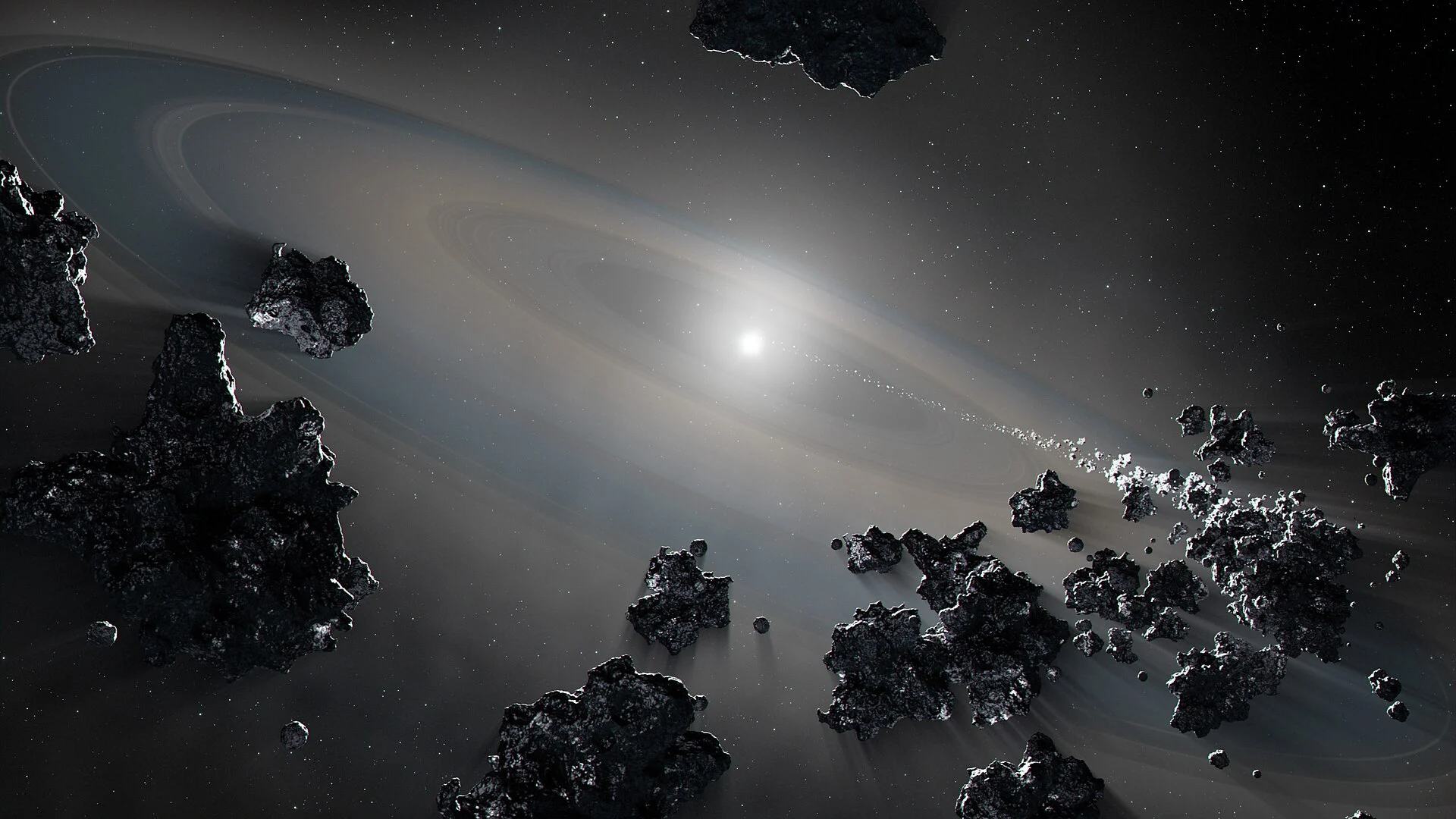
White dwarf planets represent some of the most unusual environments in modern astrophysics, raising questions about whether worlds can form anew after a star dies. A candidate body detected around a remnant star has drawn attention as a possible second-generation planet born from stellar debris. The findings hinge on chemical signatures of heavy elements in the stellar atmosphere, though definitive proof of a surviving new world remains open.
Why AENIGMA is covering this
The study of planetary systems around degenerate stars touches on fundamental questions regarding the life cycle of planetary systems and the ultimate fate of planetary architecture. Most stars in the universe will eventually end their lives as white dwarfs, making their immediate environments an important window into the distant future of solar systems like our own. Second-generation planets occupy a distinct niche in planetary astrophysics, historically documented in extreme systems such as millisecond pulsars. The discovery of planets around the pulsar PSR B1257+12 in the early 1990s demonstrated that worlds could condense from the debris of a supernova explosion, yet confirming an analogous process around a white dwarf has proven far more elusive. White dwarf atmospheres serve as natural cosmic spectrographs, providing an otherwise inaccessible tool for analyzing the bulk elemental composition of extrasolar material. When a terrestrial body or dust cloud falls onto a white dwarf, it reveals the elemental interior of exoplanetary matter down to subtle isotopic and chemical proportions. Evaluating claims of second-generation planets around compact stars provides essential clarity on how matter organizes itself across cosmic timescales. Following these investigations allows readers to understand the real boundary between verified spectroscopic discoveries and evolving theoretical interpretations.
What happened
Recent astronomical reporting by Naftemporiki highlighted the identification of a candidate exoplanet around a white dwarf, proposed to belong to a rare class of second-generation planets. Rather than being a primordial companion that orbited the parent star throughout its main sequence lifetime, this object is suspected of having formed from the enriched material expelled during the star's late evolutionary stages. The prospect of planetary formation after stellar death challenges standard chronologies of planetary systems. While thousands of exoplanets are known to orbit hydrogen-burning main sequence stars, remnants such as white dwarfs typically present harsh environments where inner planets are engulfed or destroyed during the giant phases. The proposal that discarded material could re-coalesce into a cohesive planetary body introduces an alternative pathway for planetary architecture. Astronomers have tracked chemical anomalies in white dwarf spectra for decades, but linking these atmospheric fingerprints directly to a newly coalesced body remains a complex observational task. The announcement has rekindled interest in how planetary systems reconfigure themselves after catastrophic stellar transformations.
What we know
White dwarfs are the compact remnants of stars that began their lives with masses up to around eight times that of our Sun. When such a star exhausts the hydrogen fuel in its core, it expands into a red giant and subsequently enters the asymptotic giant branch phase, pulsating and shedding its outer layers into space. What remains is an Earth-sized degenerate core composed primarily of carbon and oxygen, surrounded by a thin layer of hydrogen or helium. Because white dwarfs possess exceptionally high surface gravity, heavy elements naturally sink out of sight through gravitational settling. In an unperturbed white dwarf atmosphere, elements heavier than helium should descend into the interior within days to millennia, leaving behind an exceptionally pristine spectrum. When heavier elements are detected in the optical or ultraviolet spectrum of a white dwarf, astronomers infer that the star is actively accreting rocky or icy debris from an external reservoir. During the red giant and asymptotic giant branch phases, the star undergoes slow neutron-capture nucleosynthesis, commonly known as the s-process. This nuclear pathway generates heavy elements such as strontium, barium, and zirconium within the stellar interior, which are subsequently dredged up into the envelope. When this envelope is cast off into space, it carries distinct chemical markers that are fundamentally different from the primordial gas from which the star originally formed billions of years earlier. Planetary systems around remnant stars undergo intense gravitational disturbances as the host loses mass. Orbits widen, resonances shift, and inner bodies are frequently engulfed by the expanding stellar envelope. However, outer bodies such as asteroids, comets, or distant giant planets can survive this disruption, occasionally scattering debris inward toward the compact remnant over subsequent billions of years.
What we don't know
The candidate object lacks direct geometric or kinematic confirmation, leaving its true physical nature uncertain. Standard methods for exoplanet validation, such as transit photometry showing periodic dips in starlight or high-precision radial velocity measurements tracking orbital wobble, have not yet verified the body's mass, radius, or orbital period. It is not known whether the atmospheric signatures observed on the white dwarf arise from a single consolidated companion or from the ongoing accretion of a diffuse circumstellar debris ring. Disrupted asteroids, cometary fragments, or tidal breakup fragments can deposit similar elemental patterns onto the stellar surface without requiring the existence of an intact planet. The timescale and physical mechanisms of second-generation accretion disks around white dwarfs remain poorly constrained. Theoretical models differ on whether expelled envelope gas can retain sufficient density and cooling efficiency close to a hot stellar core to allow dust grains to settle, stick, and accrete into a substantial planet before being dispersed into the interstellar medium. Furthermore, the precise boundary conditions governing survival versus destruction during the giant envelope expansion are not fully established. Researchers do not yet know the minimum orbital radius at which a primordial planet could withstand envelope drag, meaning some alternative explanations for surviving outer bodies cannot be entirely eliminated through dynamical modeling alone.
What is claimed
The core hypothesis holds that the proposed planet coalesced directly from the enriched material shed by the host star during its red giant phase. Proponents point to the specific presence of heavy s-process elements detected in the atmosphere of the white dwarf as evidence of this secondary origin. According to this framework, when the expanding star expelled its outer layers, a fraction of the gas and dust remained gravitationally bound in a circumbinary or circum-remnant disk. Within this second-generation protoplanetary disk, dust grains collided and accumulated into larger planetesimals, eventually giving rise to a candidate planetary body. An alternative view—that the body is a primordial, first-generation planet that simply survived the star's red giant expansion—is argued to be ruled out by the observed chemical makeup. A primordial planet formed during the birth of the stellar system would reflect the composition of the original interstellar nebula, lacking the concentrated s-process nucleosynthetic products manufactured deep inside the star during its later evolutionary stages.
What is verified
Spectroscopic measurements confirm the presence of heavy elements in the white dwarf atmosphere that match the predicted nucleosynthetic products of late-stage stellar evolution. The detection of these specific elemental signatures demonstrates that the material polluting the star contains matter processed by the host itself during its giant phases. It is also verified that polluted white dwarfs routinely accrete external material, confirming that solid matter persists around compact remnants. Numerous spectroscopic surveys have established that roughly a quarter to a half of cool white dwarfs display metal lines, showing that leftover rocky bodies or dusty disks are widespread features of post-main-sequence systems. However, what remains unverified is the claim that this material has formed a discrete, gravitationally bound planet. The transition from observed atmospheric pollution to the identification of an intact planetary companion involves an inferential leap that has not been confirmed through independent orbital detection methods.
Competing explanations
- Possible: The planet coalesced from material shed by the host star during its red giant phase, as indicated by s-process elemental signatures detected in the white dwarf atmosphere.
- Ruled out: A primordial first-generation planet that survived stellar evolution would not carry the specific chemical enrichment pattern of heavy s-process elements observed.
What would change our assessment
The assessment of this candidate would shift significantly if definitive dynamical evidence for an orbiting companion were obtained. Periodic variations in the light from the white dwarf, detected through space-based transit surveys, could measure the object's radius and orbital period with high confidence. High-resolution radial velocity monitoring or precision astrometry could measure the gravitational tug of the body on the white dwarf, providing a direct determination of its mass. Confirming a planetary mass would conclusively separate the candidate from diffuse rings, small asteroidal swarms, or background noise. Detailed infrared observations could reveal the thermal emission of a dusty disk or the atmospheric emissions of a companion object. If infrared excesses show the distinct spectral features of warm dust grains rich in s-process elements, the physical environment connecting the stellar pollution to a surrounding disk could be mapped in detail. Conversely, if long-term photometric monitoring excludes periodic transits and radial velocity variations down to planetary mass limits, the candidate hypothesis would be weakened. In that case, the atmospheric s-process metals would be attributed entirely to the accretion of disrupted asteroidal remnants or cometary debris rather than a fully formed second-generation world.
Sources
- Ναυτεμπορική (supports)
Protocol AENIGMA-EF-0.1