Evidence: Unsubstantiated Explanation: Not enough data yet
Underwater volcanic geothermal power: did a seabed test produce electricity?
Underwater volcanic geothermal power has entered public discussion following reports of an experimental seabed trial conducted near the Axial Seamount. TechNews reported that Endurance Energy deployed a prototype system tapping 281°C hydrothermal fluids, producing net positive electricity for 8.7 seconds with a peak output of 16.5 kW. Evaluating this milestone requires understanding the complex boundary between brief subsea mechanical activation and durable offshore energy generation.
Why AENIGMA is covering this
The exploration of deep-sea hydrothermal vents as potential energy sources represents an ambitious frontier in marine engineering and renewable energy research. Axial Seamount is among the most comprehensively monitored submarine volcanoes on Earth, hosting scientific sensor networks and long-term ocean observatories that capture tectonic, volcanic, and biological processes. When novel engineering efforts intersect with such prominent geological features, examining the factual substance behind public announcements helps maintain clarity in reporting advanced technology. Submarine environments present some of the harshest operating conditions known to engineering, combining extreme pressures, corrosive chemical compounds, and complete logistical isolation. Distinguishing between a preliminary, several-second proof-of-concept test and a durable, deployable power generation system is essential for accurate public perception. By analyzing the engineering constraints of mineral deposition, thermodynamic efficiency, and benthic ecosystem protection, this coverage contextualizes emerging technological developments against established scientific realities.
What happened
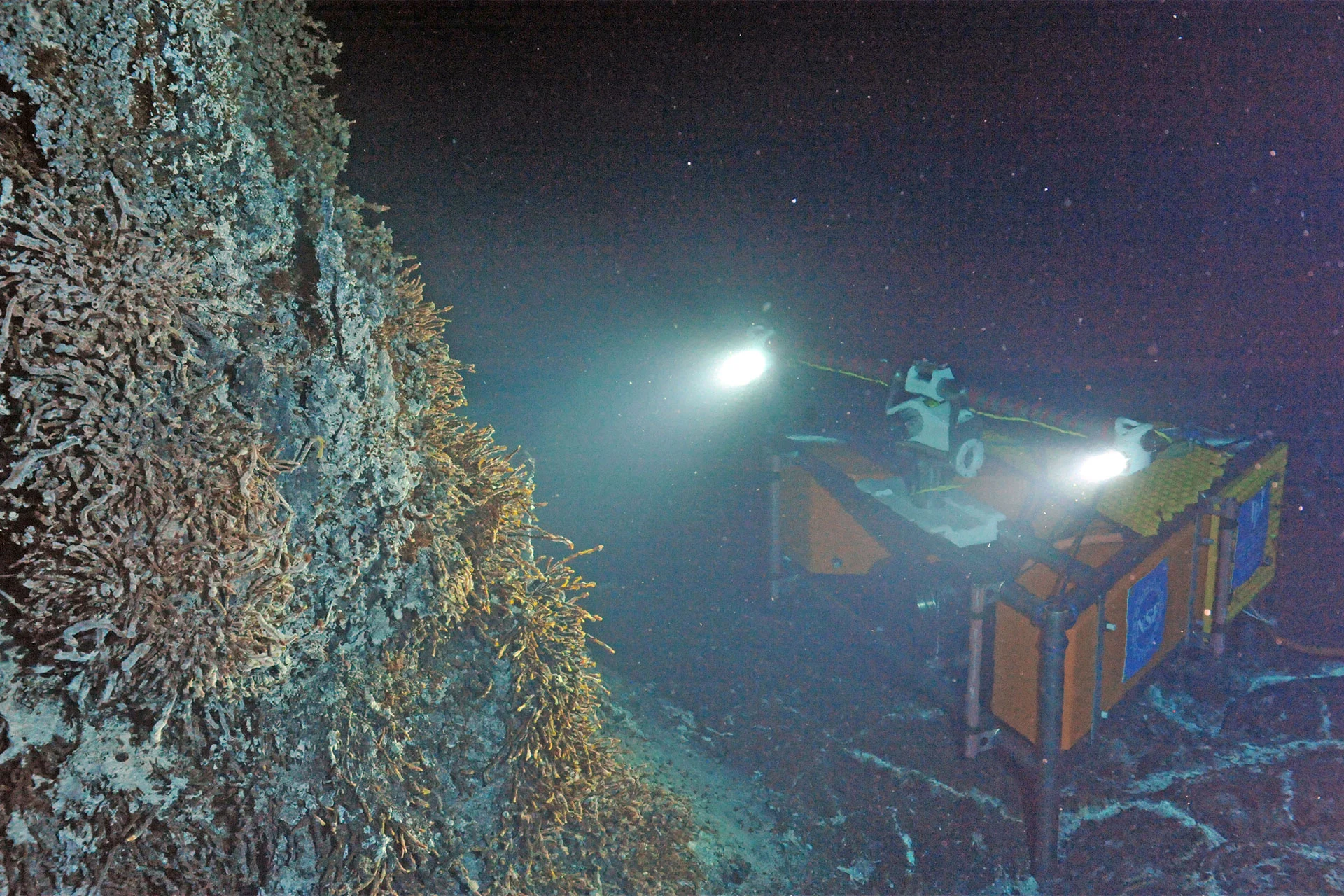
TechNews reported that engineering venture Endurance Energy completed an offshore operational test targeting geothermal energy from an active submarine volcanic feature. The trial took place in the vicinity of the Axial Seamount, a well-studied volcanic structure situated along the Juan de Fuca Ridge in the northeast Pacific Ocean. During the test, a specialized subsea prototype intercepted hydrothermal fluid emissions reaching temperatures of 281°C. According to the published account, the prototype system achieved net positive electrical generation for an operational span of 8.7 seconds. During this brief operational window, the apparatus logged a peak net power generation figure of 16.5 kW. The event has been characterized by observers as a notable technological milestone, representing an initial demonstration of direct in situ power extraction from deep-ocean hydrothermal vents. The deployment represents a rare physical attempt to operate an energy conversion mechanism directly within a benthic hydrothermal environment. Deep-sea volcanic vents release immense thermal energy into the abyssal ocean, but the extreme hydrostatic pressures, corrosive water chemistry, and logistical remoteness have traditionally kept such systems outside the reach of commercial power developers. The brief generation recorded during the trial marks a preliminary step into a technically formidable environment.
What we know
The factual baseline of this development rests on the technical report published by TechNews detailing the prototype run conducted by Endurance Energy. The report specifies that the apparatus was lowered into the benthic environment near the Axial Seamount, where it made contact with hydrothermal fluids venting at 281°C. During the test sequence, the system generated net positive electrical power for a continuous duration of 8.7 seconds, reaching a registered peak net output of 16.5 kW. Axial Seamount provides an established natural setting for deep-sea instrumentation. Rising approximately 1,400 meters below sea level along the Juan de Fuca Ridge, the volcanic caldera hosts an array of active hydrothermal vents, commonly known as black smokers and white smokers. These venting chimneys form where seawater percolates downward through the oceanic crust, becomes superheated by underlying magma chambers, leaches metals and minerals from surrounding basalt, and is expelled back into the cold abyssal waters. At seafloor depths, immense hydrostatic pressure prevents water from boiling at normal surface temperatures, allowing vent fluids to remain liquid at temperatures frequently exceeding 250°C to 300°C. Deep-sea geothermal conversion fundamentally relies on establishing a reliable thermodynamic cycle between superheated vent fluids and the surrounding near-freezing seawater. In standard thermal power engineering, heat exchangers transfer thermal energy from a primary working fluid into a secondary medium, such as an organic refrigerant used in Organic Rankine Cycles, or directly across thermoelectric solid-state generators. Ambient seawater at abyssal depths typically hovers near 2°C to 4°C, providing a steep temperature differential that theoretically maximizes Carnot thermodynamic efficiency. Translating this thermal differential into functional mechanical motion or solid-state electricity requires specialized downhole or subsea heat-exchange infrastructure capable of surviving intense external water pressures.
What we don't know
The available reporting leaves several significant mechanical and operational variables undocumented. Crucially, the internal architecture of the Endurance Energy power conversion mechanism has not been detailed in public technical literature. It remains unknown whether the 16.5 kW output was generated using a high-pressure subsea turbine, a closed-loop Organic Rankine Cycle, a Stirling engine, or solid-state thermoelectric generation modules. Each conversion architecture presents entirely distinct mechanical vulnerabilities, parasitic power requirements, and maintenance profiles when submerged at ocean depths. Another major unclarified challenge involves the handling of mineral precipitation and chemical scaling. Hydrothermal vent fluids are saturated with dissolved minerals, notably iron, copper, and zinc sulfides, along with high concentrations of silica and calcium. When these acidic fluids contact cooler metal surfaces or mix with alkaline seawater, rapid mineral precipitation immediately occurs, creating dense mineral crusts that can clog piping, coat heat exchangers, and seize moving parts within hours or days. The published details do not describe what alloys, thermal coatings, or anti-scaling mechanisms were employed to protect the prototype during its exposure to 281°C mineralized fluids. The broader energetic balance of the entire deployment sequence also remains unquantified over extended durations. While the system logged an 8.7-second burst of net positive power at 16.5 kW, the energy consumed by deployment winches, active pressure pumps, auxiliary telemetry, and actuator controls across the complete subsea mission has not been published. In offshore power engineering, the net energy return of an installation must consistently exceed the parasitic loads required to run pumps, dynamic positioning systems, and subsea conditioning equipment over months or years of continuous operation. Finally, long-term environmental interactions during continuous geothermal extraction in vent zones are currently unstudied. Hydrothermal fields support highly specialized benthic ecosystems populated by tubeworms, vent crabs, and chemosynthetic microorganisms that rely exclusively on sulfur-rich chemical effluents rather than sunlight. How artificial fluid diversion, thermal disruption, or vibration might alter localized venting dynamics and impact these fragile biological communities remains entirely unknown without comprehensive baseline studies.
What is claimed
TechNews reported that Endurance Energy successfully completed the world's first seabed volcanic geothermal power generation test. The primary technological claim asserts that an engineered prototype tapped 281°C hydrothermal fluids directly from a submarine volcanic vent structure at the Axial Seamount. Furthermore, the report claims that the system generated net positive electrical power for 8.7 seconds, reaching a peak net electrical capacity of 16.5 kW under deep-sea conditions. The broader implication emerging from these accounts is that deep-ocean hydrothermal vents can serve as viable, tap-ready geothermal resources for oceanic observation networks, autonomous underwater vehicles, or eventual grid connections. Promoters of subsea energy concepts argue that the constant, high-enthalpy thermal output of submarine volcanoes offers a reliable base-load energy source that is immune to surface weather fluctuations. The claim centers on the feasibility of capturing this extreme energy using self-contained subsea conversion units positioned directly adjacent to volcanic vent fields.
What is verified
At present, the documented verification for this event consists exclusively of the technical news report published by TechNews detailing the Endurance Energy trial. The reported parameters—specifically the deployment near Axial Seamount, the recorded 281°C fluid temperature, the 8.7-second generation span, and the 16.5 kW peak net generation—represent the known factual parameters of the trial as presented by the media source. Physical validation of deep-ocean engineering trials typically involves subsequent presentation of calibrated sensor logs, pressure-vessel telemetry, and mechanical performance charts at technical symposia or within maritime engineering publications. Independent verification of subsea electrical generation requires corroborating power meters that account for all internal electrical resistances, parasitic pump loads, and transmission losses. While the reported test reflects a recognized engineering effort at a documented geographic location, long-term operational validation and continuous electrical generation under prolonged exposure have not yet been demonstrated in open oceanographic literature. Consequently, the trial is properly understood as an initial, short-duration prototype test demonstrating brief electrical actuation. The current evidence status for sustained, scalable benthic volcanic power extraction remains unsubstantiated, with insufficient operational data available to determine long-term technological viability.
Competing explanations
- Possible: The prototype deployed near the Axial Seamount tapped 281°C hydrothermal fluids, generating net positive electricity for 8.7 seconds with a peak net power of 16.5 kW.
What would change our assessment
The assessment of submarine volcanic geothermal power would shift substantially if developers publish verified long-duration operational data. A transition from an 8.7-second electrical surge to uninterrupted continuous power generation over days, weeks, or months would provide the engineering community with definitive evidence that the system can manage severe mineral deposition and thermal fatigue. Demonstrating steady-state net power delivery while submerged under deep-sea pressures would confirm the practical viability of the thermodynamic conversion cycle. Detailed public disclosures regarding heat-exchange mechanics, metallurgic composition, and fouling prevention would also provide necessary technical confirmation. Engineers would look for documented solutions to the aggressive silica and metal-sulfide scaling that characterizes hydrothermal fluid interaction. Transparent mechanical schematics showing how working fluids are sealed, how external hydrostatic pressure is balanced, and how maintenance schedules can be managed remotely would clarify whether the technology can operate reliably without constant human intervention. Crucially, advancing this technology toward regular deployment would require rigorous, multi-faceted environmental monitoring protocols. Oceanographic authorities would require systematic assessments of seismic stability around the volcanic caldera, ensuring that fluid diversion or downhole tapping does not induce micro-seismic events or alter volcanic vent pressure profiles. Comprehensive environmental protocols must also evaluate the acoustic signatures of subsea machinery, verifying that operating turbines or pumps do not generate low-frequency acoustic noise that disrupts marine mammal navigation, communication, or feeding behaviors across adjacent ocean basins. Finally, independent ecological surveys conducted before, during, and after long-term fluid extraction trials would be essential to determine impacts on chemosynthetic vent communities. Monitoring biological assemblages around the venting zone would establish whether localized temperature shifts or chemical diversions threaten endemic benthic organisms, providing the regulatory clarity required for responsible deep-ocean energy research.
Sources
- 科技新報 TechNews (supports)
Protocol AENIGMA-EF-0.1