Evidence: Unsubstantiated Explanation: Not enough data yet
The Maya Calendar and What Its Mathematics Really Shows
Recent scientific reporting by Futura Sciences highlights unexpected mathematical sophistication in the Maya calendrical system, focusing on how scribes reconciled lunar cycles with ritual timekeeping. This research addresses long-standing debates over whether pre-Columbian astronomical tables functioned as standalone calculation tools or formed an interconnected mathematical framework. At present, the broader implications of these models remain unsubstantiated pending further textual and astronomical analysis.
Why AENIGMA is covering this
The study of ancient Mesoamerican astronomy is frequently obscured by sensationalism, public misconceptions, and modern esoteric interpretations. For decades, the Maya calendar has been subjected to popular misunderstandings that present pre-Columbian timekeeping through the lens of apocalyptic prophecies or alien interventions. Covering rigorous scientific evaluations published in outlets such as Futura Sciences helps restore the focus to actual historical and intellectual achievements. Clarifying the specific mathematical mechanics connecting the 260-day Tzolk'in and synodic lunar cycles demonstrates the genuine sophistication of ancient indigenous science. Pre-Columbian civilizations developed sophisticated mathematical traditions independently of Old World intellectual currents. Understanding their methods provides critical insights into the universal human capacity for abstract pattern recognition and systemic astronomical observation. Furthermore, this investigation highlights the disciplined nature of empirical ephemeris modeling in antiquity. By examining how Maya scribes tracked planetary cycles, calculated fractional remainders, and corrected for observational drift, modern readers can appreciate the true nature of ancient scientific inquiry. Separating documented epigraphic evidence from speculative claims ensures that the historical legacy of Mesoamerican scribes is recognized for its authentic intellectual rigor.
What happened
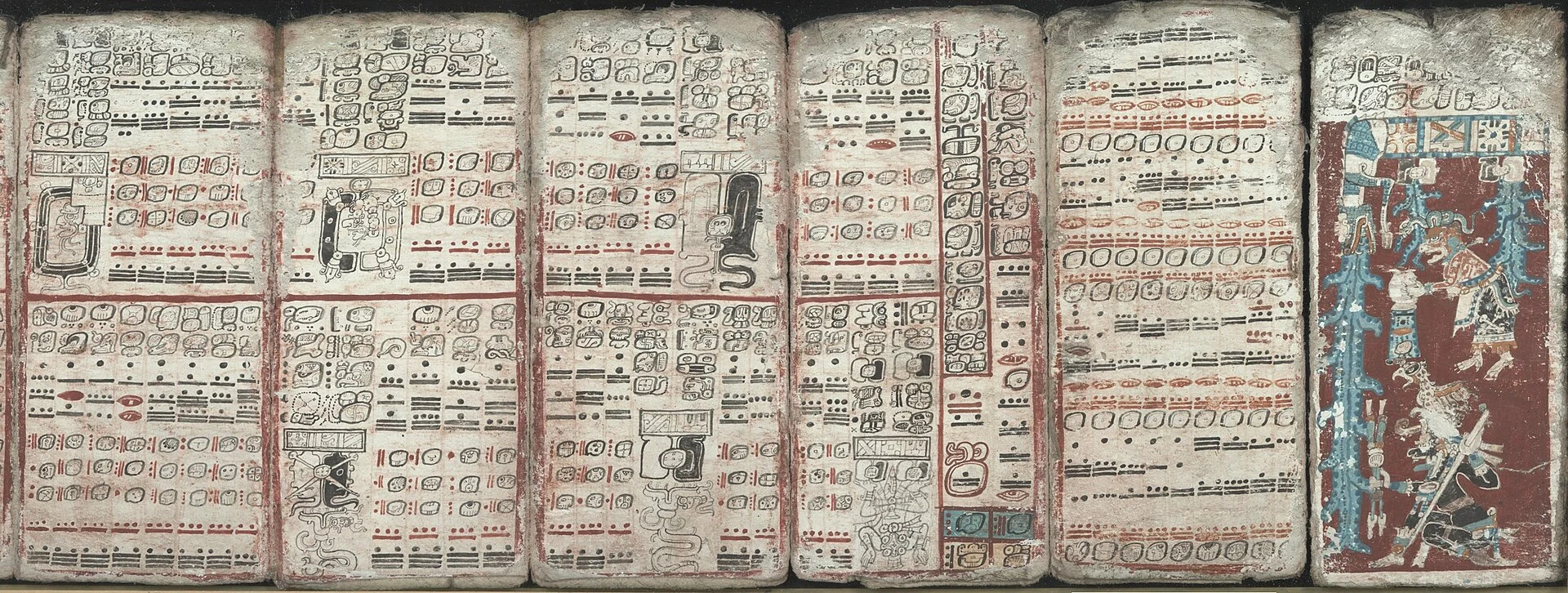
Science news outlet Futura Sciences reports that researchers have identified an unexpected layer of mathematical sophistication within the Maya calendar, suggesting pre-Columbian calculations were significantly more advanced than previously recognized. The reporting focuses on how astronomical records, preserved in surviving hieroglyphic codices, resolved complex observational problems across centuries. At the center of this evaluation is the relationship between observable celestial intervals and indigenous reckoning systems. Rather than viewing celestial records as isolated tallies of eclipse events, modern mathematical analyses suggest that Maya scribes developed integrated numerical structures capable of harmonizing distinct cycles. This development reopens critical questions regarding the computational limits of Mesoamerican astronomy prior to European contact. Mesoamerican calendrics have long fascinated epigraphers, mathematicians, and archaeologists. The Classic and Postclassic Maya civilizations developed elaborate writing systems and numerical notations based on a vigesimal, or base-twenty, positional system that included the use of zero. Surviving screenfold manuscripts, notably the Dresden Codex, contain detailed tables detailing planetary movements, lunar phases, and solar phenomena. While the reporting from Futura Sciences brings renewed international attention to these calculations, the wider scholarly consensus treats the claims with measured scrutiny. The computational framework represents a compelling model of pre-Columbian intellectual history, yet the evidentiary foundation currently remains categorized as unsubstantiated due to the need for deeper peer-reviewed verification across the limited surviving corpus of Maya codices.
What we know
Scholars have long verified that ancient Maya astronomers maintained exceptionally accurate records of celestial phenomena. Classical Mesoamerican civilization tracked time through multiple interlocking counts, most notably the 260-day ritual cycle known as the Tzolk'in, the 365-day solar cycle known as the Haab', and the Long Count system, which fixed historical and mythological events within an absolute chronological framework. The 260-day Tzolk'in operated through the combination of thirteen numerical coefficients and twenty named days. Running alongside the solar year, these cycles coincided every 18,980 days, forming the 52-year Calendar Round shared across central and southern Mesoamerica. Historical inscriptions on stone stelae, carved lintels, and painted ceramic vessels demonstrate that these cycles were systematically tracked across many centuries without interruption. Surviving Postclassic manuscripts provide direct insight into the computational mechanics employed by elite scribes. The Dresden Codex, preserved in Europe after the Spanish conquest, contains extensive tables tracking the synodic cycle of Venus, seasonal cycles, and eclipse intervals. These tables consist of long sequences of numbers accompanied by glyphic texts indicating specific ritual stations, mythological patron deities, and calculated astronomical horizons. The lunar series recorded on monumental stelae demonstrates that Maya astronomers systematically measured the length of synodic lunar months, which average approximately 29.53 days. Scribes grouped months into sets of five or six, alternating between 29-day and 30-day lunar counts to maintain alignment with observable new and full moons. This empirical foundation provided the exact mathematical baseline required to predict eclipse seasons with remarkable fidelity.
What we don't know
Significant gaps remain in our understanding of how Maya scribes developed and adjusted their astronomical models over long spans of time. The primary limitation stems from the catastrophic loss of indigenous records during the sixteenth century, when colonial authorities systematically burned thousands of screenfold books across the Yucatán Peninsula and highland Guatemala. Because only four undisputed Maya codices are known to have survived into modern times, researchers possess an extremely small sample of the civilization's extensive scientific literature. It is currently unknown whether the mathematical mechanisms identified in the Dresden Codex represented the absolute pinnacle of scribal innovation or if they were standard practice across urban centers during earlier eras. Inscriptions on monumental stone stelae record the results of astronomical calculations, but rarely reveal the scratchwork, scrap tallies, or draft tables that produced them. Scholars also do not know with complete precision how individual scribal schools resolved observational drift over multi-century intervals. While the codices preserve correction intervals, academic debates continue over whether these corrections were applied according to fixed computational rules or reassessed empirically whenever an expected celestial event failed to align with visual observation. The exact institutional mechanisms governing scribal education, record transmission, and observational instruments remain largely undocumented in the archaeological record. Furthermore, researchers continue to debate the degree of uniformity across different Maya regions. Variations in lunar counts between major cities, such as Palenque, Copán, Tikal, and Calakmul, indicate that while astronomical principles were universally shared, individual centers may have maintained localized observational sequences and calculation traditions.
What is claimed
The reporting publicized by Futura Sciences asserts that the mathematical architecture of the Maya calendar exhibits a level of internal integration and sophistication that exceeds conventional academic models. According to these interpretations, the calendar was not merely a ceremonial device combined with empirical tables, but a deeply unified mathematical structure designed to correlate disparate astronomical rhythms with extreme precision. A central focus of this interpretation involves the Dresden Codex eclipse tables. It is suggested that Maya astronomers identified eclipse warning intervals through the mathematical superposition and reconciliation of the synodic lunar cycle with the 260-day Tzolk'in ritual calendar. Under this model, the scribes relied on cumulative correction tables structured specifically to counter cumulative observational drift over generations, maintaining alignment between ritual intervals and the unpredictable geometry of solar and lunar nodes. This perspective challenges older, more traditional assumptions within the history of science. Previous models often posited that Maya scribes constructed the Dresden tables purely as dedicated, standalone prediction tools—essentially pragmatic, isolated lookup tables built to anticipate visible solar eclipses rather than components of a unified, comprehensive calendrical theory. The emerging proposal argues that these tables formed part of an overarching systemic synthesis that interlocked the solar year, lunar synodic periods, planetary intervals, and ritual cycles into a continuous, self-correcting computational matrix. Additionally, the discussion underscores the distinction between pre-Columbian empirical ephemeris modeling and modern esoteric speculation. Proponents of the computational analysis emphasize that ancient Mesoamerican scribes operated as rigorous mathematical practitioners who relied on empirical records, fractional arithmetic, and systematic adjustments, completely separate from modern mystical narratives that have historically distorted the public understanding of Maya timekeeping.
What is verified
Epigraphers and archaeoastronomers have firmly verified that the tables in the Dresden Codex function as operational eclipse warning systems. Pages 51 through 58 of the manuscript contain an unbroken sequence of 69 lunar half-years, spanning an interval of nearly 33 years. These sequences are partitioned into groups of six lunar months, punctuated intermittently by intervals of five lunar months, which precisely match the mathematical requirements for identifying eclipse nodes. Scholarly analysis has confirmed that the cumulative intervals in these tables align directly with the Saros cycle and the motion of the moon's orbital nodes. By organizing lunar counts into periods of 177 days, interspersed with 148-day intervals, the manuscript reflects a profound empirical mastery of the synodic and draconic cycles. Modern mathematical retrocalculations show that these intervals allowed scribes to determine every window during which a solar or lunar eclipse could occur anywhere within visual range. It is also verified that the base-twenty positional counting system used across Mesoamerica allowed scribes to handle exceptionally large numbers with ease. Surviving stone monuments record chronological calculations that project millions of years into the mythological past and the remote future. These verified calculations demonstrate that Maya scribal institutions possessed both the notation and the conceptual arithmetic necessary to manipulate large, overlapping temporal periods. What remains unverified, however, is the sweeping claim that these tables formed part of a universally applied, interconnected computational super-structure rather than highly sophisticated empirical adaptations tailored to specific ceremonial and political needs. The available evidence validates the accuracy of individual tables, but does not yet establish that scribes held a unified theoretical model linking every celestial cycle into a singular, mathematically reconciled cosmic formula.
Competing explanations
- Possible: The eclipse intervals were identified through the mathematical superposition and reconciliation of the lunar cycle with the 260-day Tzolk'in ritual calendar, using cumulative correction tables to counter observational drift.
- Unlikely: Traditional assumptions posited that Maya scribes constructed the Dresden tables purely as dedicated, standalone solar eclipse prediction tools rather than as part of a unified calendrical system.
What would change our assessment
A definitive change in the evidentiary assessment from unsubstantiated to verified would require newly discovered primary documentation or unambiguous structural demonstrations. The discovery of previously unknown Maya texts, whether preserved in dry cave environments or recovered from undisturbed archaeological contexts, could provide crucial missing links in the history of pre-Columbian mathematics. Scholars would require explicit written evidence demonstrating that scribal schools operated with a shared theoretical framework for unifying disparate planetary and ritual cycles. The recovery of scribal manuals, instructional exercises, or computational drafts demonstrating how correction tables were formally calculated would resolve ongoing debates regarding empirical observation versus abstract mathematical theorizing. Advancements in multispectral imaging and non-destructive digital recovery of damaged codices and painted stucco texts could also alter the baseline. If faded inscriptions in extant manuscripts or wall murals can be legibly reconstructed to show continuous, multi-century correction sequences that connect the lunar tables directly to the Long Count and Venus cycles, the unified-system hypothesis would gain substantial empirical backing. Conversely, the hypothesis would be weakened or dismissed if comprehensive mathematical modeling reveals that the apparent correlations are simply mathematical artifacts—inevitable statistical coincidences resulting from the manipulation of large whole numbers within a vigesimal base. Rigorous peer-reviewed publications demonstrating that the tables function exclusively through localized, ad-hoc adjustments would reinforce the traditional consensus that Maya eclipse reckoning operated as a standalone, specialized observational tool.
Sources
- Futura Sciences (supports)
Protocol AENIGMA-EF-0.1