Evidence: Insufficient data Explanation: Not enough data yet
Jupiter Occultation Behind the Moon and What the Sight Really Shows
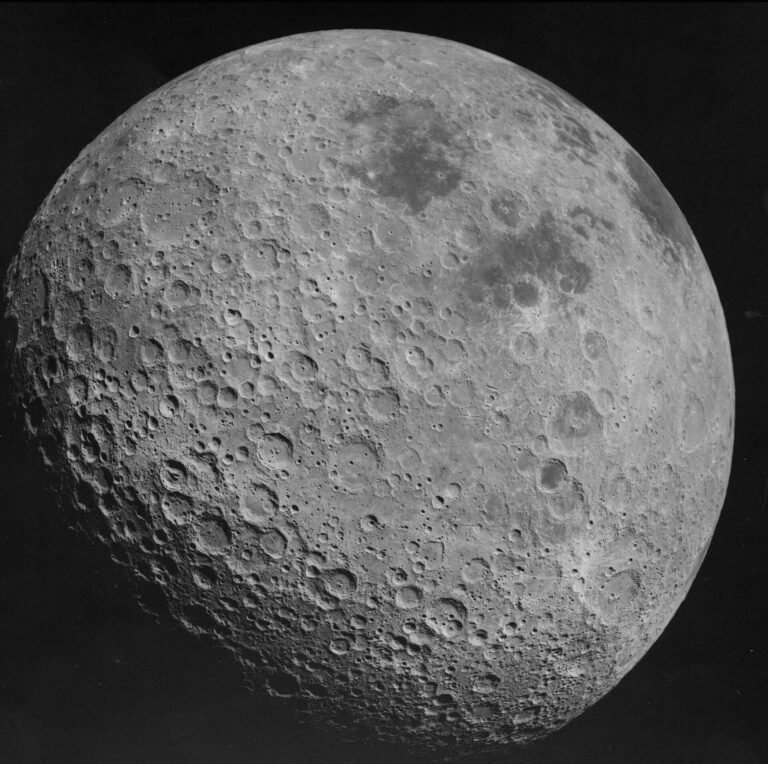
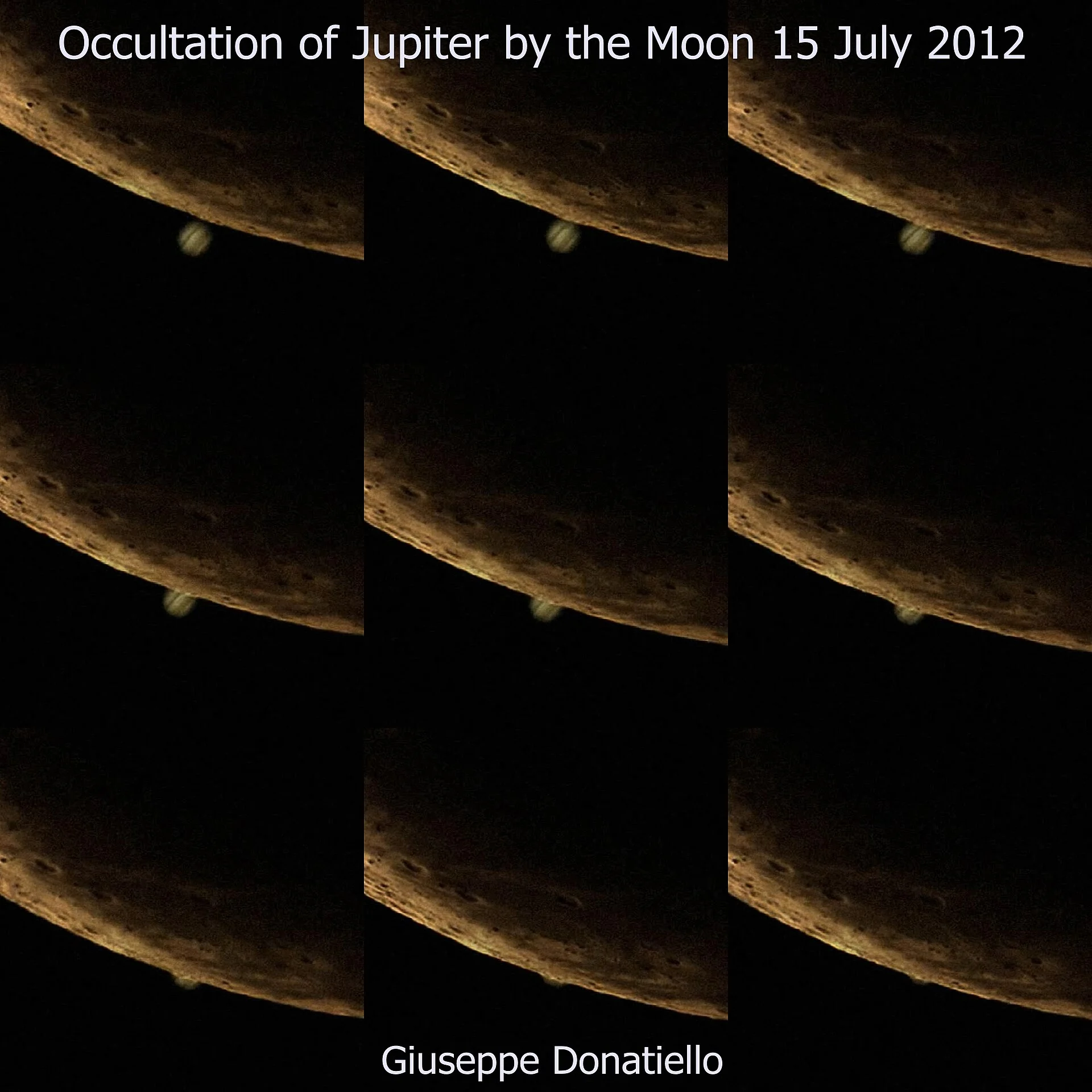
Jupiter will pass behind the lunar disk in an event described as a rare alignment by science media. Lunar occultations occur when the Moon's orbital path directly crosses our line of sight to a background celestial body. Observers across different latitudes experience varying visibility because lunar parallax alters the Moon's apparent position in the sky.
Why AENIGMA is covering this
Celestial alignments involving bright planetary bodies and the Moon consistently capture significant public interest. When prominent media outlets highlight an upcoming planetary occultation, explaining the underlying physics helps distinguish genuine astronomical dynamics from sensationalized framing. Providing objective analysis allows readers to understand why such events occur and how local geometry dictates what any given observer can see. Covering this phenomenon provides an opportunity to explain the critical role of lunar parallax in observational astronomy. Many casual observers assume that an astronomical event announced in global media will be visible uniformly across the entire planet. Examining the geometry of occultations clarifies why two observers separated by a few hundred miles can witness completely different celestial phenomena. Additionally, discussions of lunar occultations offer insight into how observational astronomy has evolved. Centuries before modern radar and spacecraft exploration, astronomers relied on occultations of stars and planets to measure distances, detect lunar atmospheres, and calibrate timekeeping. Understanding this scientific history enriches the public appreciation of an event that might otherwise be viewed merely as a fleeting sky spectacle. A calm, evidence-grounded review of the announced alignment ensures that skywatchers approach the event with realistic expectations. By focusing on verified orbital mechanics rather than dramatic headlines, readers can appreciate the precision with which modern science tracks the clockwork motion of our solar system.
What happened
A report published by Live Science describes an upcoming celestial alignment in which Jupiter disappears behind the Moon. The event is characterized as an uncommon planetary encounter occurring within a predictable cycle of orbital geometry. During such an event, the Moon passes directly between an Earth-bound observer and the gas giant, temporarily hiding the planet from view. Astronomers refer to this configuration as a lunar occultation. Because the Moon is the closest major natural body to Earth, its apparent diameter in the night sky is substantial enough to blot out distant stars and planets. When the Moon crosses the ecliptic near the apparent position of a bright planet, the planet seems to slip behind the lunar edge before emerging on the opposite limb. Public interest often surges during planetary occultations because the event involves two of the brightest objects visible to the unaided eye. The apparent disappearance is dramatic, taking place over a span of minutes as the leading edge of the Moon advances across the planetary disk. The visibility of such events depends strictly on the observer's geographic position and local atmospheric clarity. Media coverage typically highlights the visual spectacle of the event, drawing attention to the stark contrast between the bright lunar surface and the distant planetary sphere. While the phenomenon appears extraordinary to casual skywatchers, it represents an expected consequence of regular orbital motion. The geometry that allows this alignment to take place is governed by established gravitational dynamics.
What we know
The mechanics of planetary occultations are fundamentally anchored in the geometry of the solar system. The Moon moves along an orbit inclined by roughly five degrees relative to the ecliptic plane, which represents the apparent path of the Sun and the general orbital plane of the major planets. Because of this orbital inclination, the Moon crosses the ecliptic at two points known as orbital nodes during every monthly orbit around Earth. Whenever the lunar orbital path brings the Moon close to the ecliptic while a bright planet occupies the same celestial longitude, an occultation can take place. Jupiter moves much more slowly across the celestial sphere than the Moon, taking nearly twelve Earth years to complete a single orbit around the Sun. Consequently, the Moon repeatedly passes the vicinity of Jupiter once every sidereal month, though the Moon usually passes slightly above or below the planet from our vantage point. Occultations occur in cyclical clusters known as occultation seasons. During a favorable phase of the Moon's nodal precession, which takes approximately 18.6 years to complete, the lunar trajectory repeatedly intersects the apparent position of a specific planet for several consecutive months. Observers located along the proper geographic track can witness these events systematically during such intervals. Parallax plays a decisive role in determining which regions of Earth can witness a lunar occultation. Because the Moon is relatively close to Earth, its apparent position relative to the distant celestial background shifts significantly depending on the observer's geographic latitude and longitude. An observer at high northern latitudes might see the Moon pass well south of Jupiter, while an observer near the equator might see a direct occultation, and someone in the southern hemisphere might see Jupiter pass entirely north of the Moon.
What we don't know
The provided reporting does not contain the exact universal time coordinates or the localized geographical visibility bands for this specific event. While the general phenomenon is announced, precise ephemeris parameters defining where on Earth the occultation will be visible are absent from the immediate brief. Without these specific parameters, it remains unknown which continents, hemispheres, or time zones will fall within the path of direct occultation. It is also not specified whether the event occurs against the Moon's illuminated limb or its dark, unlit edge. The visibility and visual contrast of an occultation vary dramatically depending on whether the planet disappears behind the sunlit lunar surface or behind the unlit portion of a crescent or gibbous phase. Disappearances behind a dark lunar limb are far more striking because the planet appears to vanish abruptly into empty space before the lunar body is visible. Local atmospheric factors and daylight conditions are likewise unrecorded. An occultation that occurs during local daytime hours can only be tracked using specialized optical equipment, whereas a nighttime occultation allows naked-eye and binocular observation. Without local geographic coordinates and time stamps, the real-world viewing conditions for specific observer communities cannot be verified from the source material alone. Furthermore, the precise mathematical duration of the occultation ingress and egress remains unstated in the available records. The time required for Jupiter's visible disk to be obscured depends on the relative velocity of the lunar limb and the angle of intersection. These geometric details require direct ephemeris modeling rather than generalized announcements.
What is claimed
The primary claim reported by Live Science is that Jupiter will disappear behind the Moon tomorrow in an alignment described as occurring once in a decade. This framing emphasizes the rarity and visual drama of the upcoming alignment. The reporting presents the event as a rare celestial spectacle accessible to skywatchers. Popular descriptions of astronomical events frequently employ framing that accentuates rarity, referring to occurrences as happening once every decade or once in a generation. In planetary dynamics, such phrases typically refer to the specific configuration visible from a particular geographic territory, rather than the worldwide frequency of the underlying physical phenomenon. When a publication announces an alignment as a decade-scale rarity, it usually reflects the interval between occurrences visible from a specific continent or major population center. The claim focuses on the direct disappearance of the solar system's largest planet behind Earth's natural satellite. It suggests that observers within the viewing corridor will witness a clear occultation. The narrative encourages public observation, presenting the event as an exceptional opportunity to view planetary mechanics in action. Such claims highlight the visual appeal of seeing a bright planetary disc vanish behind lunar terrain. The presentation frames the event as an accessible natural demonstration of orbital mechanics. While the visual effect is real, the specific description relies on general terminology rather than full astronomical coordinates.
What is verified
Astronomical verification demonstrates that lunar occultations of planets are standard, fully predictable astronomical occurrences governed by orbital mechanics. The motion of the Moon and the outer planets is modeled with extreme accuracy using modern planetary ephemerides. These models account for gravitational perturbations from the Sun, planets, and the non-spherical gravitational fields of both Earth and the Moon. Historical records confirm that occultations of Jupiter have been observed and documented for hundreds of years. Early modern astronomers used occultation timings to refine their measurements of lunar orbital tables and to study the topography of the Moon. Because the lunar surface is covered with mountains and impact craters, the disappearance of a planet or star behind the lunar limb can provide high-resolution data regarding the limb profile. It is also verified that the rarity of a lunar occultation depends entirely on observer location. While an occultation of Jupiter by the Moon may occur somewhere on Earth several times in a single year during an active occultation series, any single fixed point on the Earth's surface will only fall inside the visibility path infrequently. This geographic dependency validates the intuition of rarity felt by local skywatchers, even though the alignment itself is a recurring feature of celestial geometry. Scientific institutions calculate the paths of lunar occultations using topocentric coordinates, which adjust for the exact position of the observer on Earth's ellipsoidal surface. These calculations confirm the timing of both ingress, when the planet first touches the lunar limb, and egress, when it reappears on the other side. The validity of the underlying orbital phenomenon is thoroughly supported by existing dynamical principles.
Competing explanations
- Possible: Standard celestial mechanics and orbital geometry cause the Moon to pass directly between Earth and Jupiter along a specific visibility path.
What would change our assessment
The current assessment reflects insufficient specific data in the initial report concerning observation coordinates, local timing, and ephemeris tables. To verify the precise nature and local visibility of the claimed alignment, observers require published topocentric ephemerides from recognized astronomical databases. These data sets provide exact second-by-second timelines for ingress and egress based on geographic coordinates. Confirmation of the specific viewing path across Earth's surface would definitively determine which regions experience a complete occultation and which experience a near-miss or conjunction. In areas outside the central occultation path, observers witness an appulse, where Jupiter passes extremely close to the edge of the Moon without being obscured. Detailed orbital tracks published by standard astronomical agencies would immediately clarify these boundary zones. High-resolution observational logs and photographic records captured by ground-based observatories during the event would provide empirical confirmation of the alignment. Photometric measurements of the event can record the gradual dimming of Jupiter's apparent brightness as its disk and atmospheric bands are progressively blocked by the lunar limb. Such observational records confirm the timing predictions calculated by ephemeris models. Clarification regarding the specific criteria used to describe the event as a once-in-a-decade occurrence would also refine the analysis. If the claim refers to visibility from a specific metropolitan area or continent, defining those geographical boundaries resolves any ambiguity regarding the alignment's reported rarity.
Sources
- Live Science (supports, primary)
Protocol AENIGMA-EF-0.1